
Teaching Spanish can be both rewarding and challenging, especially when trying to keep students engaged and motivated. One of the strategies that has worked wonders in my classroom is incorporating cuentos de hadas (fairy tales) into lessons. These timeless stories are not only familiar to students but also provide a rich foundation for building language skills in a fun and meaningful way.
Fairy tales offer a unique advantage, because many students already know them in their first language. This familiarity creates a natural bridge to learning Spanish, making the transition smoother and more enjoyable. By combining structured narratives, relatable characters, and interactive activities, cuentos de hadas can transform your teaching approach and inspire your students to embrace the language.
Why Use Cuentos de Hadas in Spanish Lessons?
Fairy tales captivate students’ imaginations while providing endless opportunities for language practice. Whether you’re focusing on vocabulary, comprehension, or speaking skills, these stories offer a versatile and engaging framework.
Here are some tried-and-true ways to incorporate cuentos de hadas into your teaching:
Mini Books: A Gateway to Cuentos de Hadas
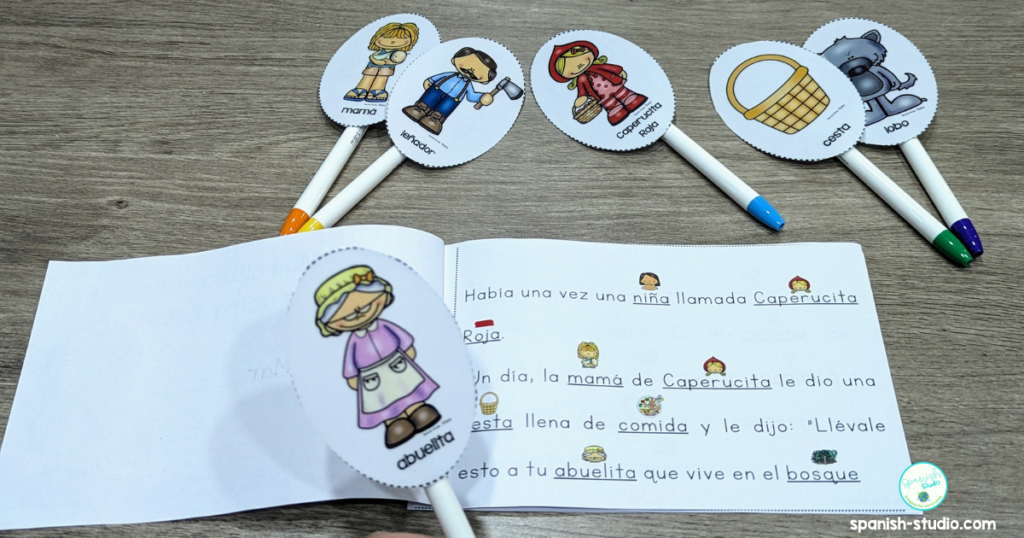
Mini books are an excellent way to introduce cuentos de hadas in Spanish. By simplifying the language and pairing it with visuals, students can follow along easily and start building their vocabulary. For example, create a mini book for Caperucita Roja (Little Red Riding Hood) with short sentences and colorful illustrations. This activity helps students grasp key phrases and sentence structures in a fun, approachable format.
Puppets: Bringing Cuentos de Hadas to Life
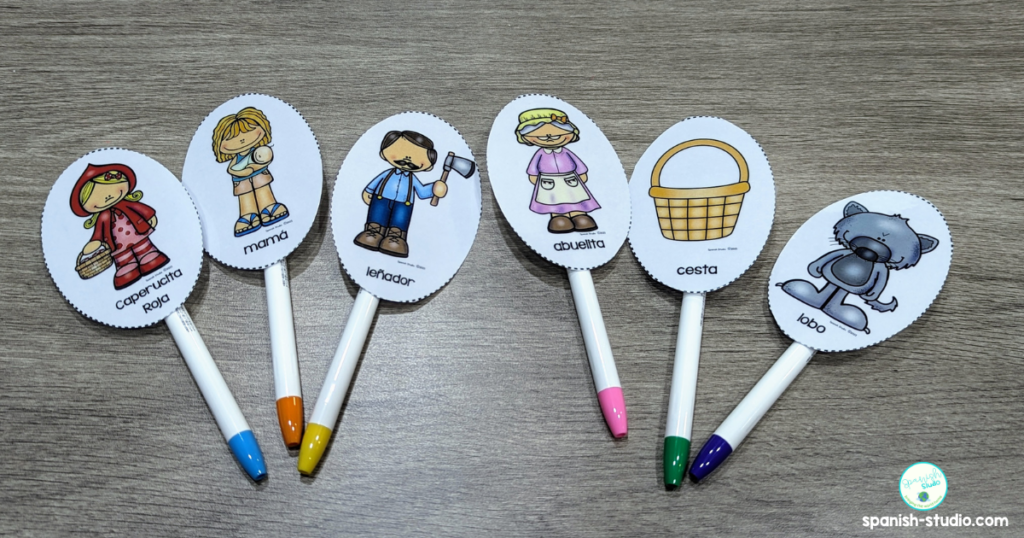
One of the best ways to make cuentos de hadas interactive is through puppets. Encourage students to create finger or stick puppets for the characters, and use them to retell the story in Spanish. This activity is not only engaging, but also reinforces vocabulary, builds storytelling skills, and boosts confidence in speaking.
Chit Chat Messages
Fairy tales naturally lend themselves to discussion, making them perfect for conversation practice. Use prompts like, “¿Qué piensas del lobo en la historia?” (What do you think about the wolf in the story?), to get students talking in Spanish. This activity promotes fluency, while keeping the mood light and playful.
Reading Comprehension Questions
After reading a fairy tale, ask students comprehension questions to test their understanding and encourage critical thinking. Questions like, “¿Qué aprendió Caperucita Roja al final de la historia?” (What did Little Red Riding Hood learn at the end of the story?) challenge students to reflect on the story while practicing sentence formation.
Character Traits: Describing Personalities in Cuentos de Hadas
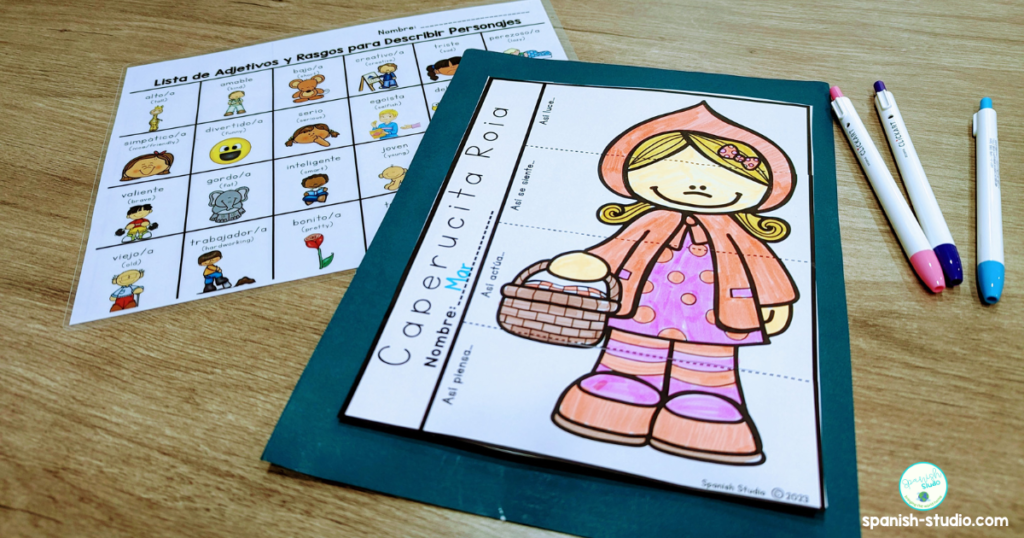
Help students explore the characters in more depth by describing their traits in Spanish. Use worksheets that prompt students to describe characters like el lobo (the wolf) or Caperucita (Little Red Riding Hood) using adjectives. Including visuals and word banks ensures the activity is accessible for all learners.
Sequencing Events: Organizing Cuentos de Hadas
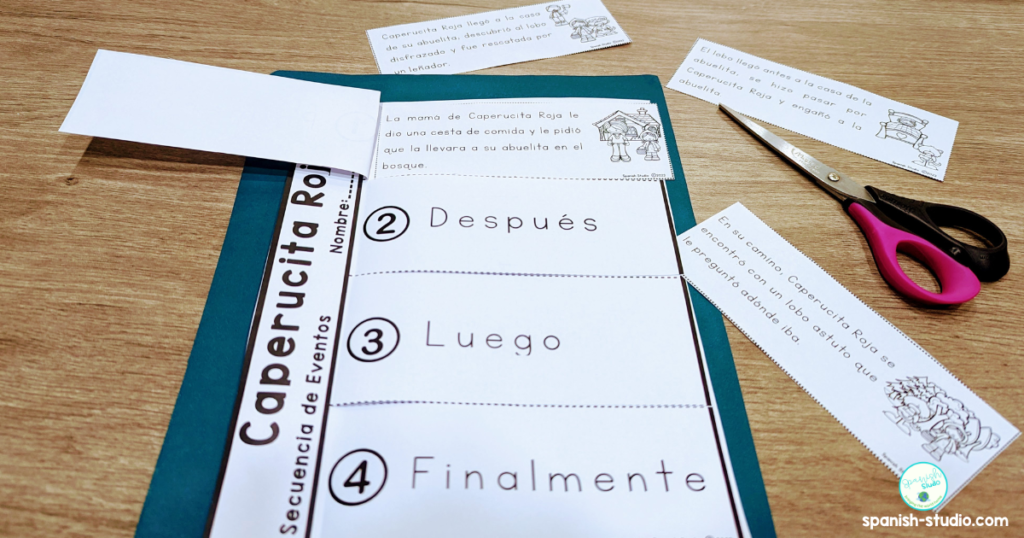
Sequencing activities are a fantastic way to teach story structure and reinforce comprehension. Provide visuals or sentence strips representing key events in the fairy tale, and have students arrange them in chronological order. This hands-on activity helps students understand narrative flow while practicing Spanish.
Describing Setting
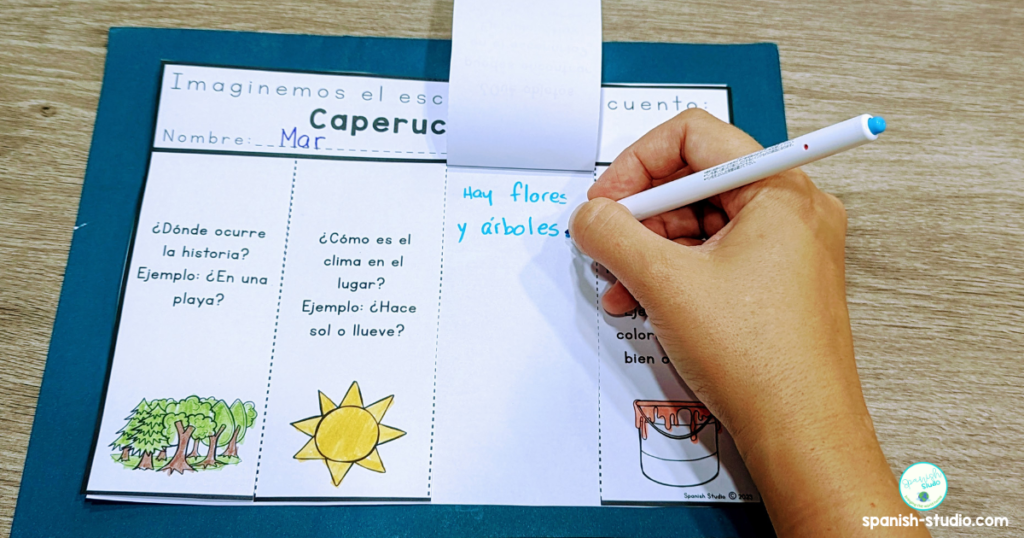
Encourage students to describe the fairy tale’s setting with rich, descriptive language. Provide a list of adjectives like misterioso (mysterious) or tranquilo (peaceful) to help them build their vocabulary. This activity not only enhances language skills but also brings the story to life through their words.
Vocabulary Word Work

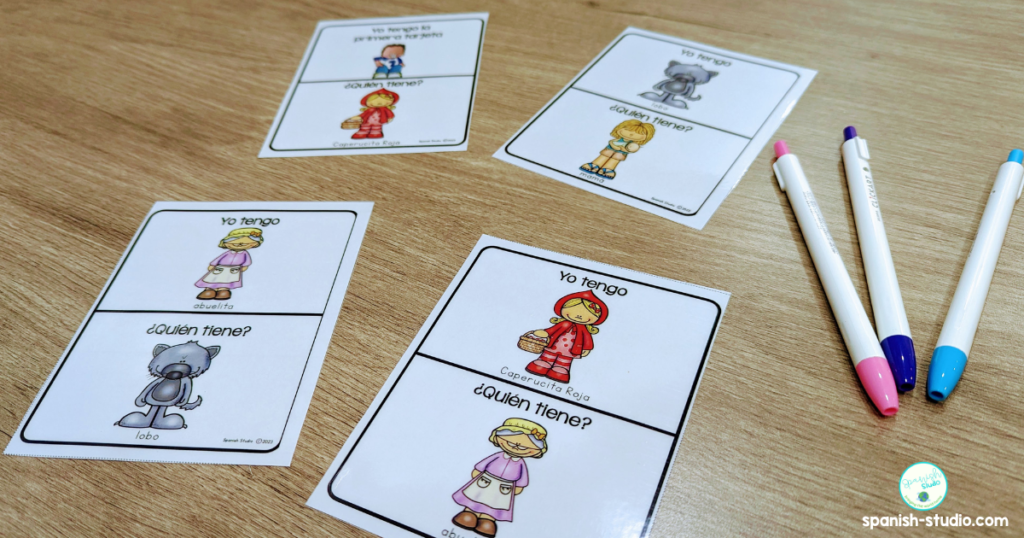
Expand students’ Spanish vocabulary with engaging word work activities. Create interactive exercises, such as word puzzles, matching games, or fill-in-the-blank tasks, using vocabulary from the fairy tale. Flashcards are another excellent tool for reinforcing new words; try using them in games, drills, or paired activities.
For even more creative ways to use flashcards in your lessons, check out “10 Ways to Use Spanish Flashcards in the Classroom”.
Exploring Cuentos de Hadas through Movement
Incorporate a kinesthetic approach by organizing outdoor activities related to the fairy tale. For example, plan a scavenger hunt where students search for objects that relate to the story’s vocabulary, such as leaves, flowers, or trees for Caperucita Roja. Encourage students to label these objects in Spanish, turning language learning into an exciting adventure.
Memory Game and Lotería: Fun and Cultural Enrichment
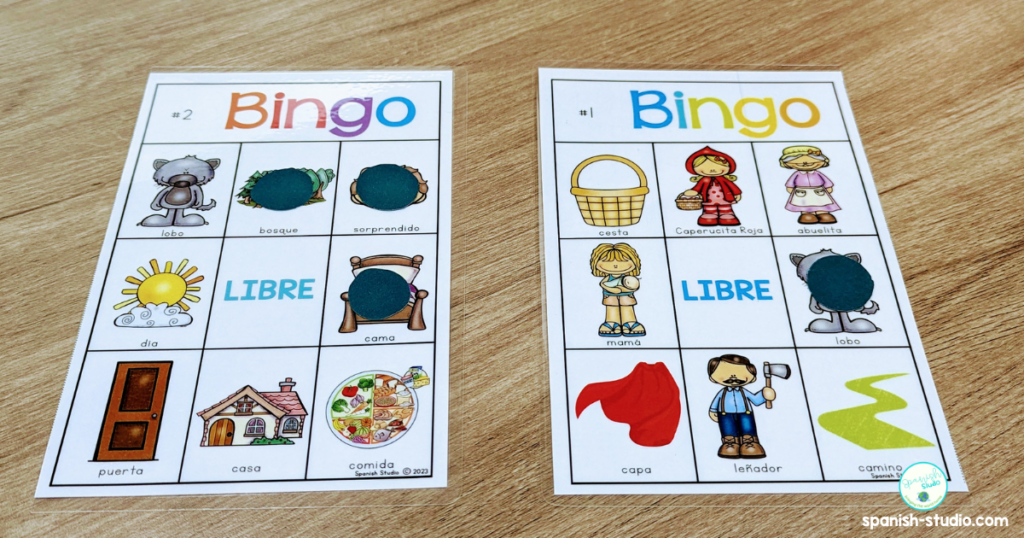
Games like memory matching and Lotería (Mexican bingo) are fantastic tools for reinforcing vocabulary while immersing students in cultural traditions. Use story-related images and vocabulary to design these games. They’re not only fun but also highly effective for vocabulary retention and cultural awareness.
Interactive Exploration of Surroundings
A great way to make a fairy tale come alive is through an interactive exploration of the students’ environment. Encourage your students to actively engage by searching for and labeling objects related to the story. For instance, if the fairy tale is set in a forest, students can look for and label items like trees, leaves, or animals in Spanish. This hands-on activity not only strengthens vocabulary retention, but also connects the story to the real world, making the learning experience more tangible and meaningful.
Fairy tales are an invaluable tool for teaching Spanish, because of their familiarity and adaptability. Children who know these stories in their native language can transition to Spanish more naturally, making the learning process enjoyable and effective.
By using techniques like mini books, puppets, conversation prompts, comprehension questions, worksheets, sequencing activities, and vocabulary exercises, teachers and parents can craft a dynamic and immersive Spanish learning experience.
If you’re looking for engaging stories to read with your students or children, explore this list of 10 Classic Spanish Fairy Tales for Children and Adults Alike. These tales are sure to captivate young learners while enhancing their language skills.
Don’t forget to adapt activities to suit different learning styles and include movement-based tasks to keep children motivated.
Together, we can help our students develop fluency, critical thinking, and a lifelong love for the Spanish language. ¡Manos a la obra!
Interested in more?
Download my FREE Guide: “Simple Ways to Teach Spanish Like a Pro (even if you don’t speak Spanish)”