
Day of the Dead in Spanish is Día de los Muertos. You’ll also see Día de Muertos, and both are correct. It’s a Mexican holiday on November 1 and 2 for remembering loved ones who have passed.
It isn’t a sad holiday, and it isn’t the Mexican version of Halloween. Families build altars, cook favorite foods, and play music. That’s what makes it good for teaching Spanish: the words come attached to things kids can see, make, and taste.
Below you’ll find what the holiday means, the vocabulary to start with, and activities for home or the classroom.
How Do You Say Day of the Dead in Spanish?
Día de los Muertos is pronounced DEE-ah deh lohs MWEHR-tohs. Día de Muertos drops the “los.”
To wish someone a happy Day of the Dead, say ¡Feliz Día de los Muertos!
What Is Día de los Muertos?
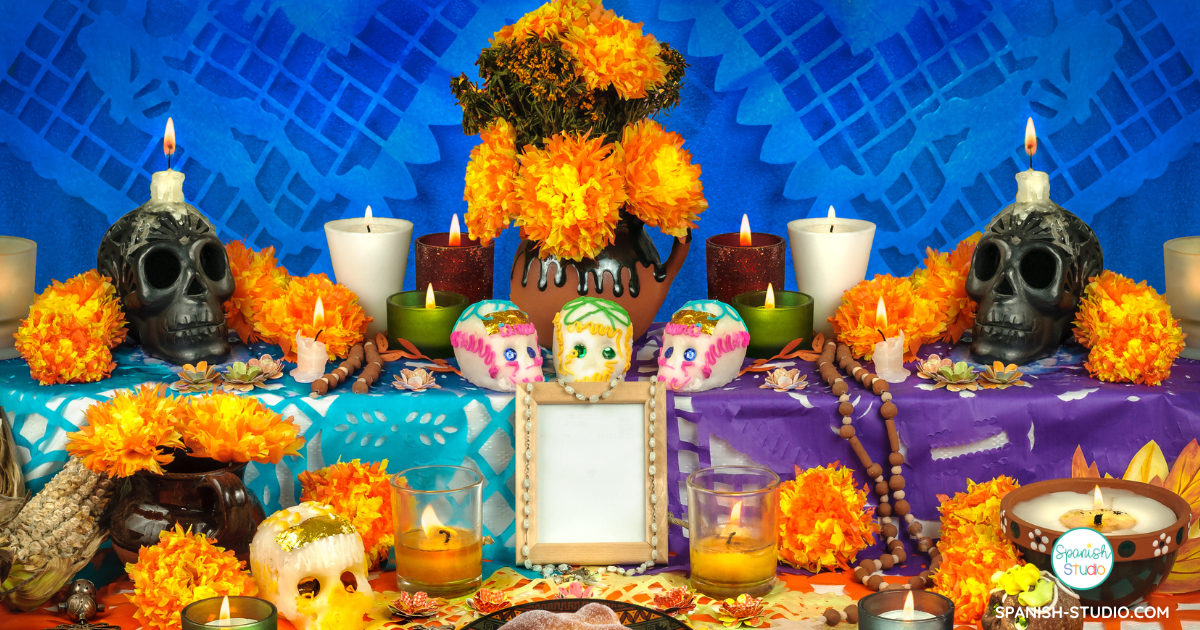
It’s a holiday for remembering the people you love who have passed. Families build an ofrenda (an altar) with photos, candles, flowers, and their favorite foods.
It’s celebrated mainly in Mexico, and it’s also observed in other parts of Latin America and in the United States. The tradition has Indigenous roots. Over time it lined up with the Catholic days of All Saints’ and All Souls’, which is why it falls on November 1 and 2. In many families, November 1 remembers children and November 2 remembers adults.
Customs vary by region and by family, so treat this as a starting point.
What Goes on an Ofrenda?
- Photos (las fotos) of the people being remembered
- Candles (las velas)
- Marigolds (las flores de cempasúchil). The tradition says their bright color and strong scent help guide spirits home.
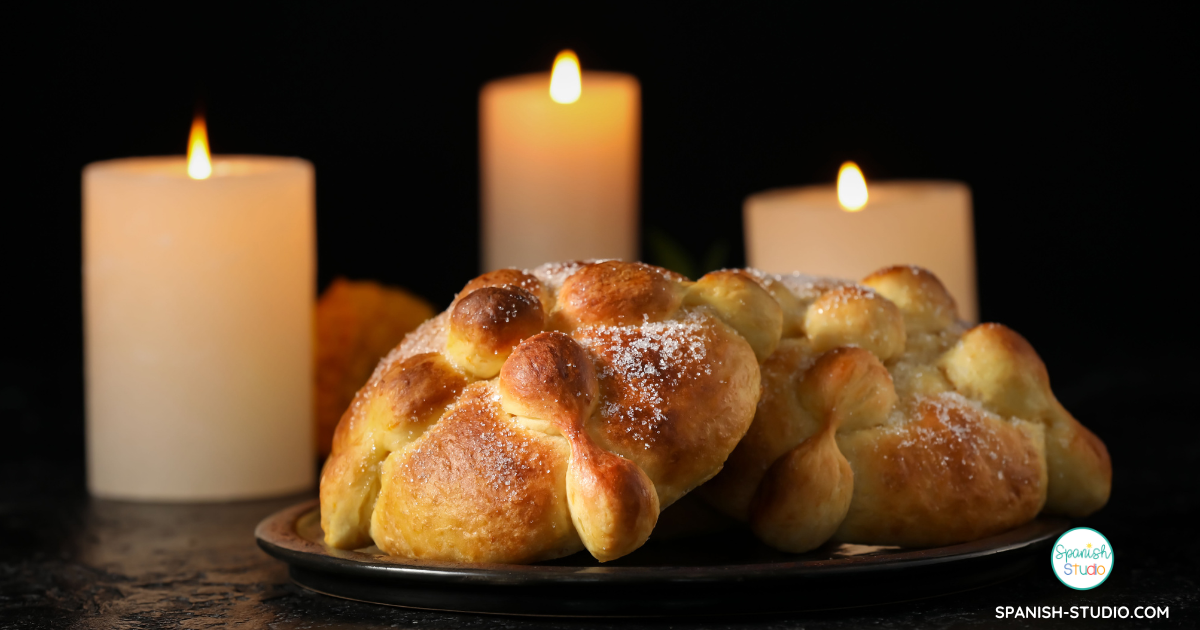
- Pan de muerto, a sweet bread made for the holiday
- Favorite foods of the people being remembered
- A glass of water (el agua). The tradition says the spirits arrive thirsty after a long journey.
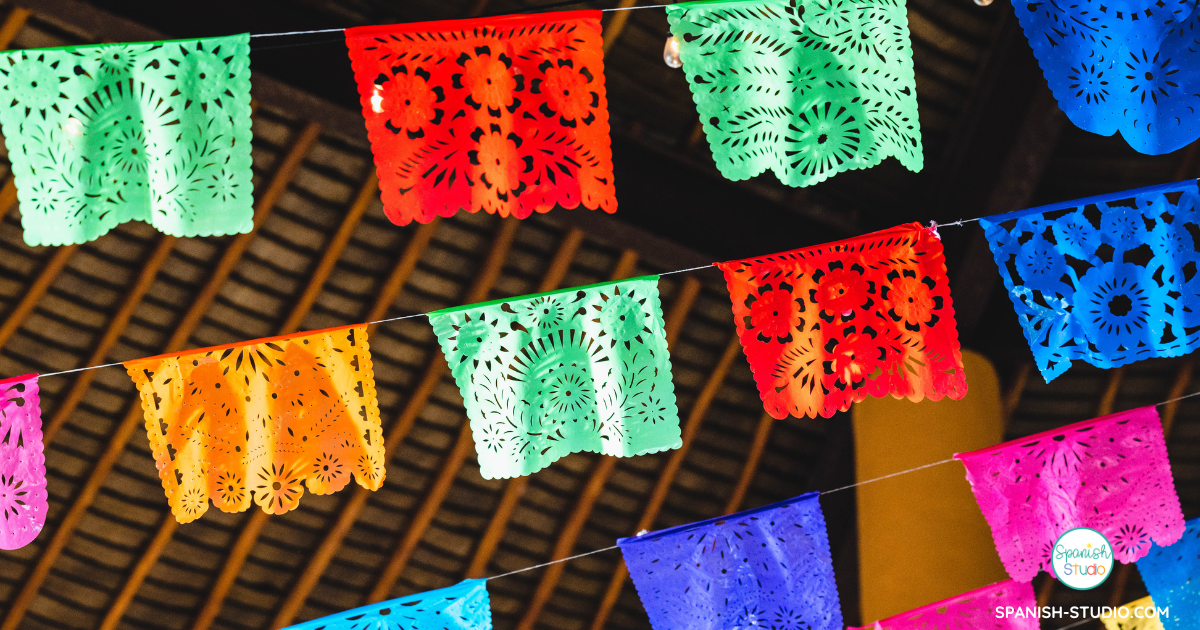
- Papel picado (cut paper) and sugar skulls (calaveras de azúcar) as decoration
Día de los Muertos vs. Halloween
They land in the same week, which is why they get mixed up. They’re not the same. Halloween is about costumes, candy, and a little fright. Día de los Muertos is about remembering people you love.
That difference is a great conversation to have with kids. Ask what they think each holiday is about, and let them work out the contrast themselves. If you’re teaching both, here’s my post on Halloween in Spanish.
Day of the Dead in Spanish Vocabulary
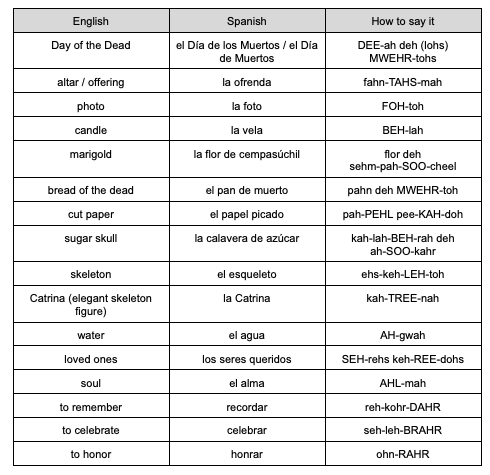
Easy Day of the Dead Sentences in Spanish
- ¡Feliz Día de los Muertos! (Happy Day of the Dead!)
- Pongo una foto en la ofrenda. (I put a photo on the ofrenda.)
- Recuerdo a mi abuela. (I remember my grandmother.)
- Su comida favorita es el pan. (Her favorite food is bread.)
- Me siento feliz cuando pienso en ella. (I feel happy when I think about her.)
- La Catrina es un esqueleto elegante. (La Catrina is an elegant skeleton.)
Say one, have kids repeat it, then swap in different words.
Day of the Dead in Spanish Activities
Watch “Coco”
The film Coco is a good way to introduce the holiday. After watching, talk about the customs, the characters, and the message. The Los Angeles Public Library has a short post, Coco and the Day of the Dead, that connects the film to the real traditions behind it. Link what kids saw to the ofrenda and the marigolds in this post.
Coco has skeletons and some intense scenes, so preview it first if your kids are young. Common Sense Media has a parents’ guide.
Make an Ofrenda or Papel Picado
Have kids make their own ofrenda or papel picado, using these Día de los Muertos crafts. Label each piece in Spanish: la foto, la vela, las flores, el agua. They use the vocabulary while their hands are busy.
Remember Someone in Spanish
Ask kids who they’d put on an ofrenda: ¿A quién quieres poner en la ofrenda? Then give them a sentence to borrow: Me siento feliz cuando pienso en ________. Some kids may have lost someone, so let them share only as much as they want to.
I wrote more about teaching feelings here: Emotions in Spanish That Go Beyond Vocabulary.
Cook Pan de Muerto
Make pan de muerto together. It’s a real-life way to practice food and cooking words in Spanish.
Visit the Library
Check out books, documentaries, and displays about the holiday at your local library. Read a book together and have kids point out what they recognize from the ofrenda.
Pair It with Mexico
Día de los Muertos is a Mexican tradition, so it works well next to a country study. Here’s how I teach countries in Spanish: Discovering Countries in Spanish: Engaging Language Learning Adventures. If you want a ready-made unit, see my Countries in Spanish: Mexico resource.
Projects for Older Students
- Collage: Students make a collage that shows what the holiday means to them, with labels in Spanish.
- Instagram post: Students design a post about what they learned, written in Spanish.
- Podcast: Students record a short podcast in Spanish about Día de los Muertos.
Day of the Dead Games and Printables in Spanish
- Memory game: Match Día de los Muertos images and words.
- I Have, Who Has?: A group game that practices the vocabulary and builds teamwork.
- Bingo: Call out the words in Spanish while kids mark their cards.
- Lotería: A Mexican game, with a Día de los Muertos theme.
- Write the Room: Kids walk around the room, find hidden words, and write them down.
- Crossword: Clues in Spanish, with answers drawn from the holiday vocabulary.
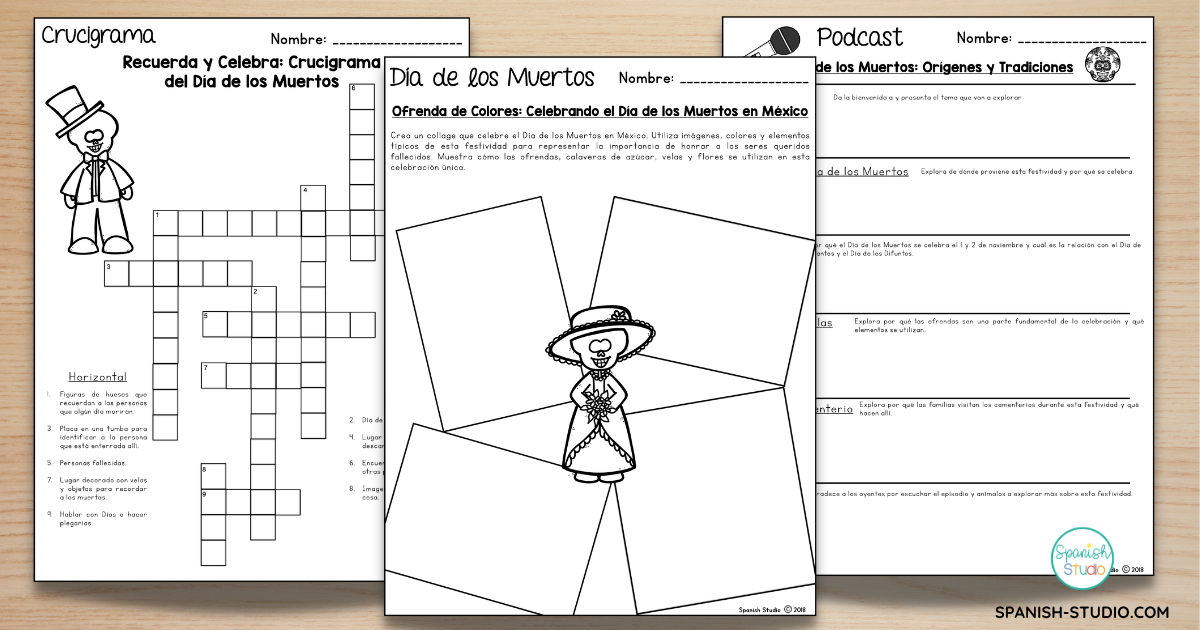
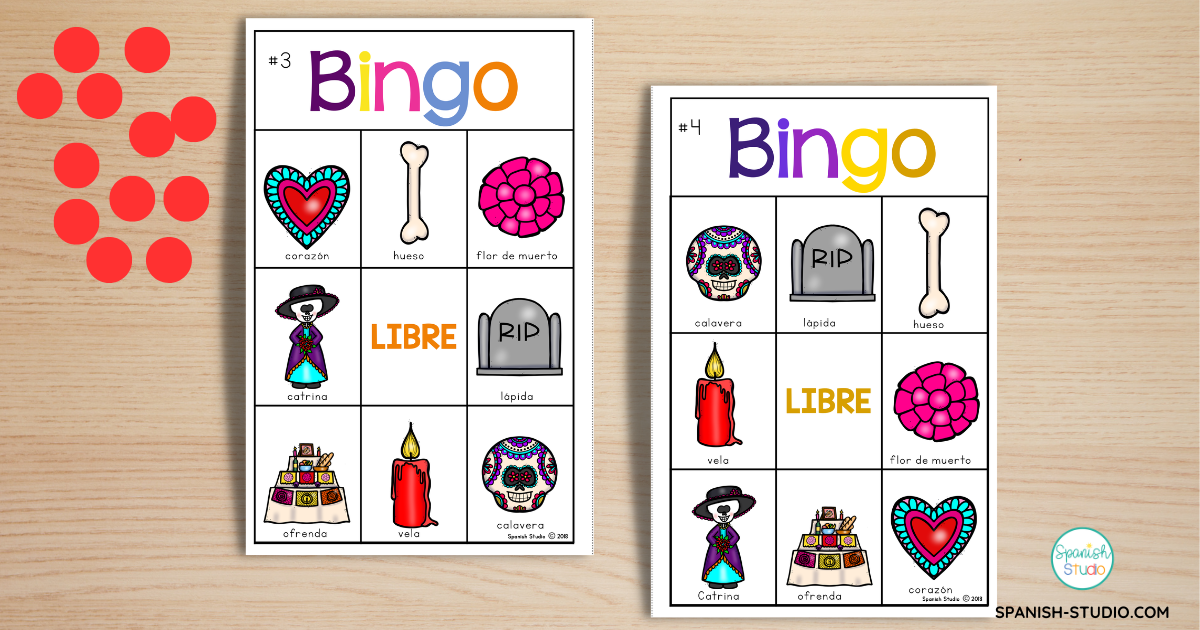
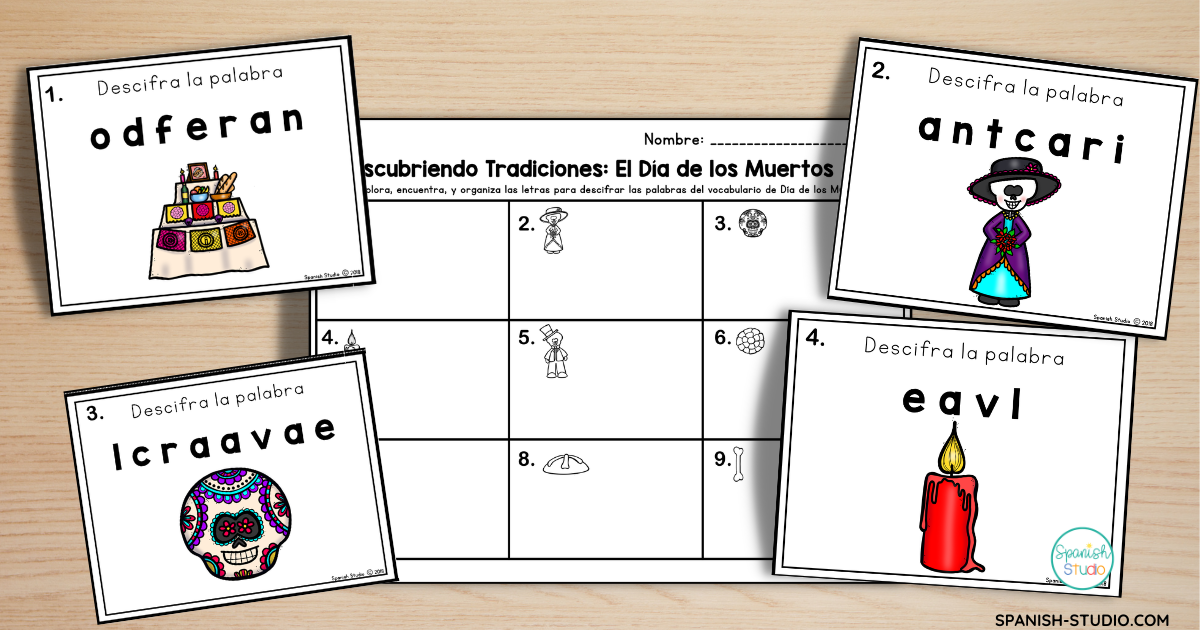
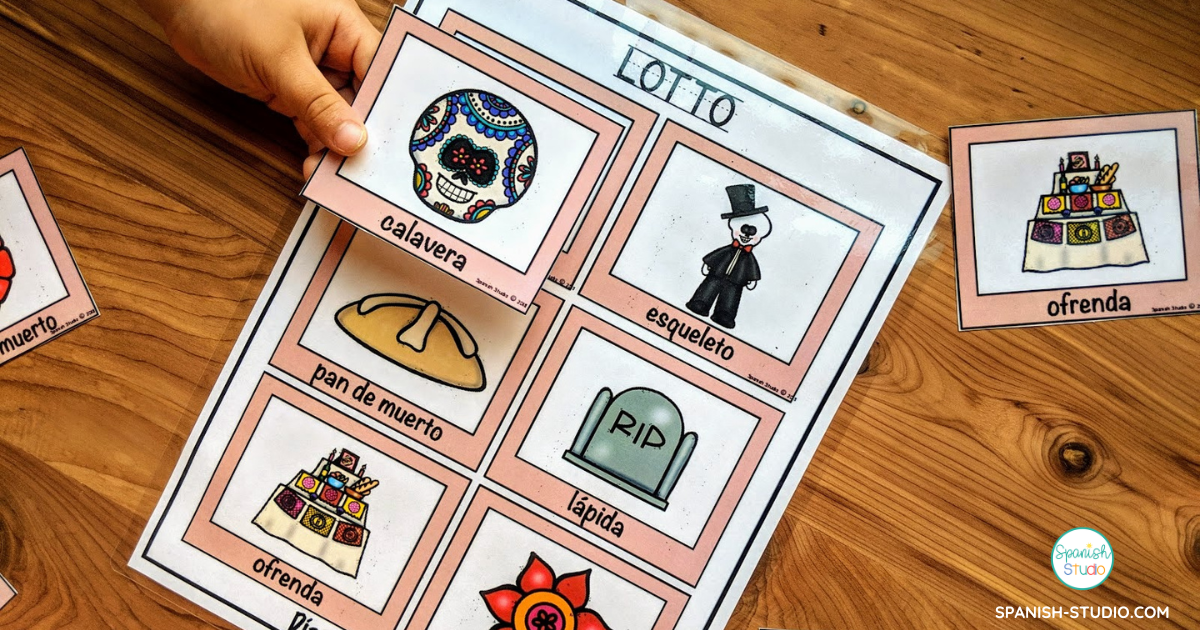
If you’d rather not make all of this yourself, my Day of the Dead in Spanish pack has a reading passage, a comprehension check, an inferencing worksheet, vocabulary practice, a Pan de Muerto recipe page, a podcast sheet, an Instagram sheet, and games like memory, Lotería, bingo, and I Have, Who Has?
Frequently Asked Questions About Day of the Dead in Spanish
How do you say Day of the Dead in Spanish?
Día de los Muertos or Día de Muertos. Both are correct.
How do you say Happy Day of the Dead in Spanish?
¡Feliz Día de los Muertos!
What does Día de los Muertos mean?
It means “Day of the Dead.” It’s a holiday for remembering loved ones who have passed, with an ofrenda, favorite foods, flowers, and candles.
When is Día de los Muertos?
November 1 and 2. In many families, November 1 remembers children and November 2 remembers adults.
Where is Día de los Muertos celebrated?
Mainly in Mexico. It’s also observed in other parts of Latin America and in the United States.
Is Day of the Dead the same as Halloween?
No. Halloween is about costumes and candy. Día de los Muertos is about remembering loved ones. They fall in the same week, which is why people mix them up.
What is an ofrenda?
An altar built to remember people who have passed. It usually has photos, candles, marigolds, favorite foods, and a glass of water.
Why is there a glass of water on the altar?
The tradition says the spirits arrive thirsty after a long journey. Customs vary by family and region.
Is Día de los Muertos too scary for kids?
It’s a celebration of remembering loved ones, not a scary holiday. Some kids may have lost someone, so let them share only what they want to.
What is a good Day of the Dead activity for kids?
Making a paper ofrenda and labeling each item in Spanish.
Interested in more?
Download my FREE Guide: “Simple Ways to Teach Spanish Like a Pro (even if you don’t speak Spanish)”