
Most reading struggles in Spanish don’t begin with decoding. Instead, they begin much earlier with listening. That’s why phonological awareness Spanish instruction matters more than we sometimes realize.
Before students can read with confidence, they need the ability to hear, isolate, blend, and manipulate sounds in spoken words. When phonological awareness in Spanish is strong, decoding feels logical instead of overwhelming.
Reading doesn’t start with letters.
It starts with ears.
What Is Phonological Awareness in Spanish?
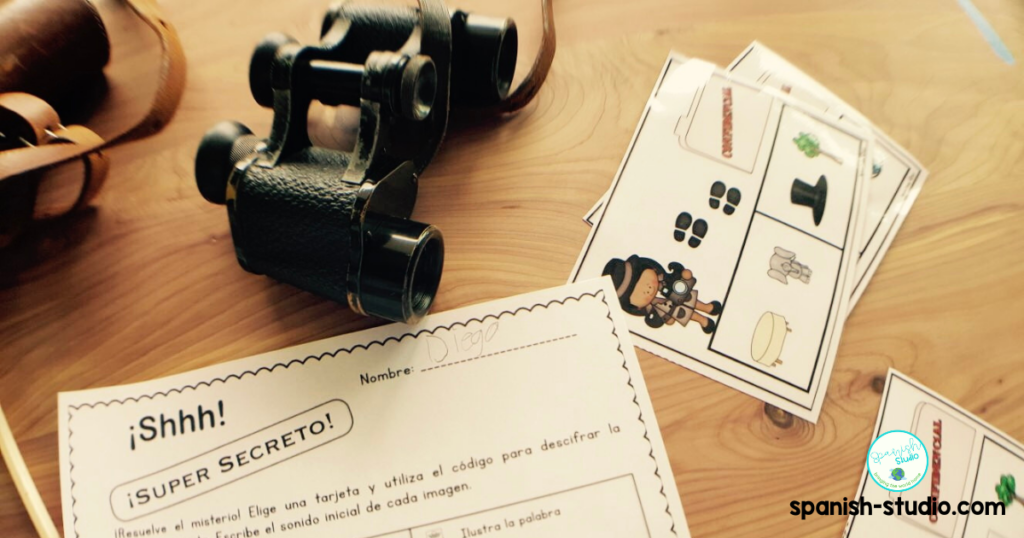
At its core, phonological awareness in Spanish is a student’s ability to work with sounds orally before connecting them to print. This foundational literacy skill is widely supported in reading research and highlighted by organizations like Reading Rockets.
For example, students must learn to:
- Recognize and clap syllables
- Identify beginning and ending sounds
- Blend phonemes into words
- Segment words into individual sounds
- Manipulate phonemes to create new words
Although Spanish offers the advantage of consistent sound-letter relationships, students still need structured opportunities to explore how spoken words are built. Without that awareness, decoding feels mechanical rather than meaningful.
When students can clearly hear how sounds shift within words, reading begins to feel logical.
What This Looks Like in the Classroom
In practice, phonological awareness Spanish instruction works best when it is active and consistent.
Rather than long lessons, short and intentional routines tend to be more effective. Over time, these small moments build strong listening habits.
Building Words to Strengthen Phonological Awareness in Spanish
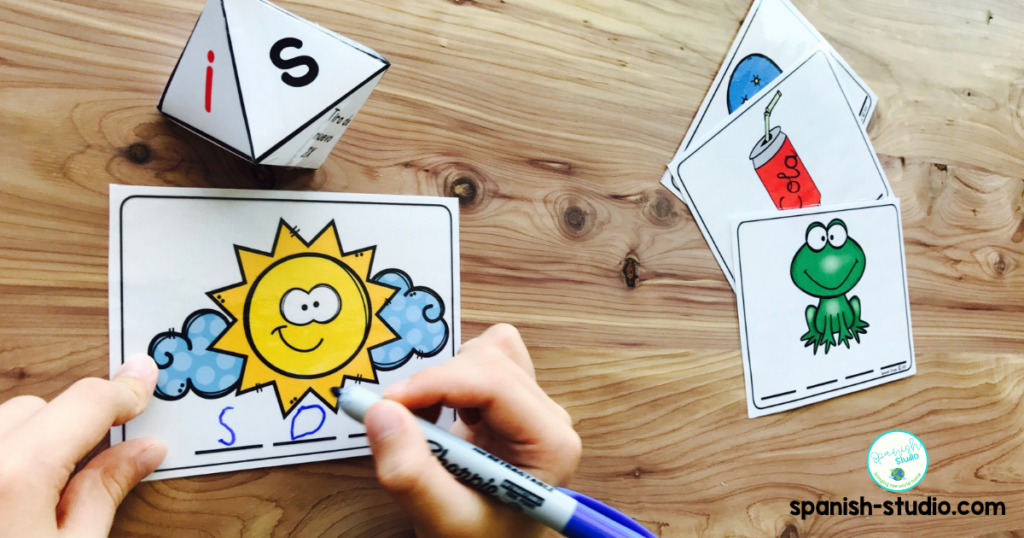
One simple approach involves students rolling letter dice and matching the sounds to picture cards. After that, they say each sound slowly, blend them together, and check whether the word matches the image.
As a result, the focus remains on listening instead of memorizing.
Instead of guessing whole words visually, students construct them through sound.
Becoming Sound Detectives
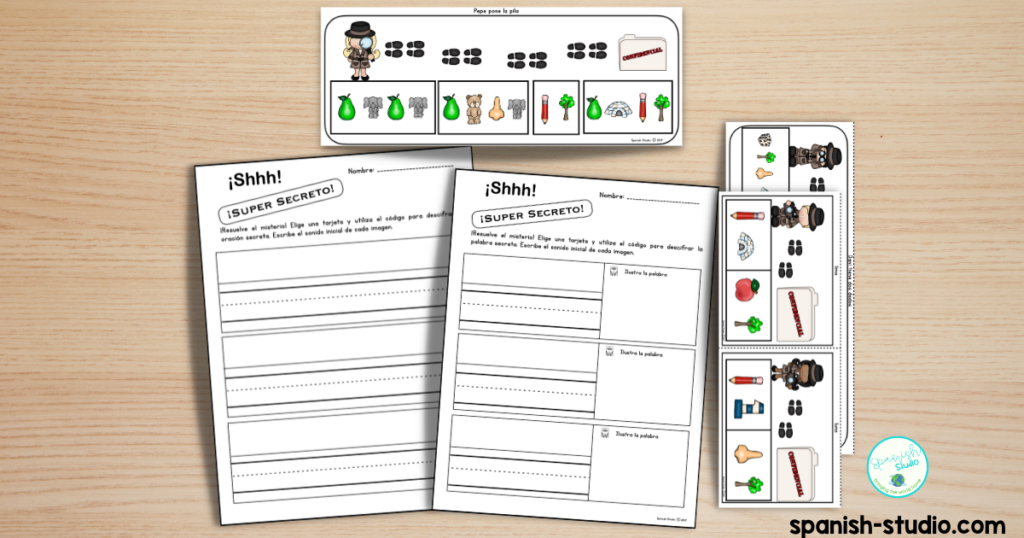
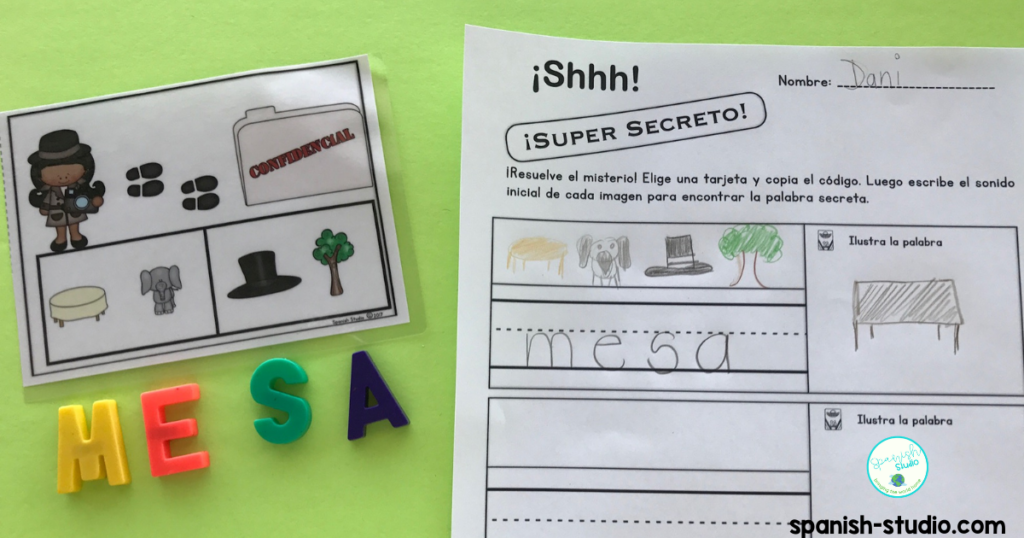
Another engaging strategy involves turning students into “sound detectives.”
First, they look at picture cards. Then, they isolate the initial sound of each one. Finally, they blend those sounds together to decode a hidden word or short sentence.
Because there is a mystery element involved, students tend to slow down and listen more carefully. In turn, their sound discrimination improves.
Manipulating Sounds with Movable Pieces
As students grow more confident, phoneme manipulation deepens their understanding.
Using movable pieces, they can change the first, middle, or final sound in a word. For instance, they might:
- Change the first sound in casa
- Replace the final sound in sol
- Swap the middle vowel in mesa
When students physically adjust the sounds and say the new word aloud, they begin to see how flexible language truly is. Consequently, decoding becomes less intimidating and more intuitive.
In addition, when we pair this sound work with other hands-on vocabulary strategies , such as sorting, matching, and comparing related words, students begin to connect sounds with meaning. As a result, phonological awareness in Spanish supports not only reading readiness, but overall language development.
Short, Daily Sound Practice
Importantly, phonological awareness Spanish instruction does not need to be lengthy to be effective.
Sometimes, it only takes one focused question:
“If I change the first sound in lata to /p/, what word do I get?”
Even a five-minute daily routine can make a noticeable difference. Over time, those small, consistent sound challenges prevent larger reading difficulties.
Why Phonological Awareness in Spanish Changes Everything
When phonological awareness in Spanish is strong, students:
- Decode with greater accuracy
- Spell with more confidence
- Avoid guessing
- Read more fluently
- Approach text with less frustration
Without strong listening skills, students often rely on memorization. However, when they truly understand how sounds function, reading feels structured and predictable.
As a result, confidence grows.
And once reading feels logical, it clicks.
A Final Thought
If reading in Spanish feels harder than it should, consider pausing before introducing more text.
Instead, listen closely to your students.
Are they able to isolate sounds without seeing the word?
Can they manipulate phonemes comfortably?
Do they blend smoothly and confidently?
Phonological awareness in Spanish is what happens before reading clicks. Therefore, strengthening this foundation first can make everything else feel lighter.
Interested in more?
Download my FREE Guide: “Simple Ways to Teach Spanish Like a Pro (even if you don’t speak Spanish)”