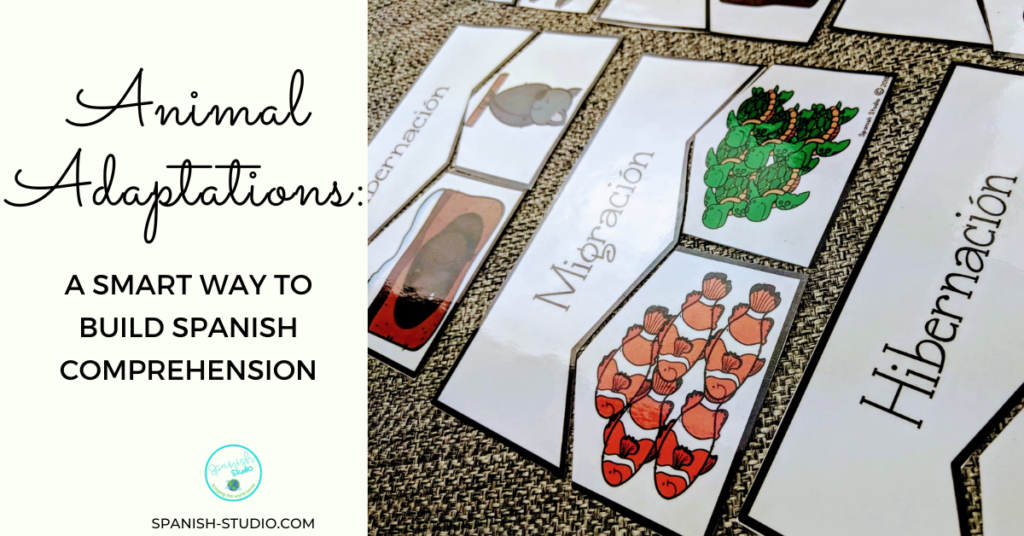
Animal adaptations are one of those topics that naturally pull students in. Animals are familiar, visual, and interesting. Because of that, this theme works especially well when the goal is to build Spanish comprehension without adding stress.
Instead of rushing through new vocabulary or long explanations, how animals survive allow students to hear and read the same language again and again. Over time, meaning sticks.
Using real images and short videos, like those found in PBS LearningMedia, helps students connect new ideas to what they already know while keeping the focus on comprehension rather than memorization.
What Are Animal Adaptations?
When introducing animal adaptations, it helps to start simple. The goal is understanding, not memorizing definitions.
Use short sentences and visuals to guide the conversation:
- Los animales viven en diferentes lugares.
- Los animales tienen adaptaciones.
- Las adaptaciones ayudan a los animales a sobrevivir.
Pictures, real-life examples, and quick discussions are usually enough. At this stage, repetition matters more than detail.
Use Short Texts to Teach Animal Adaptations in Spanish
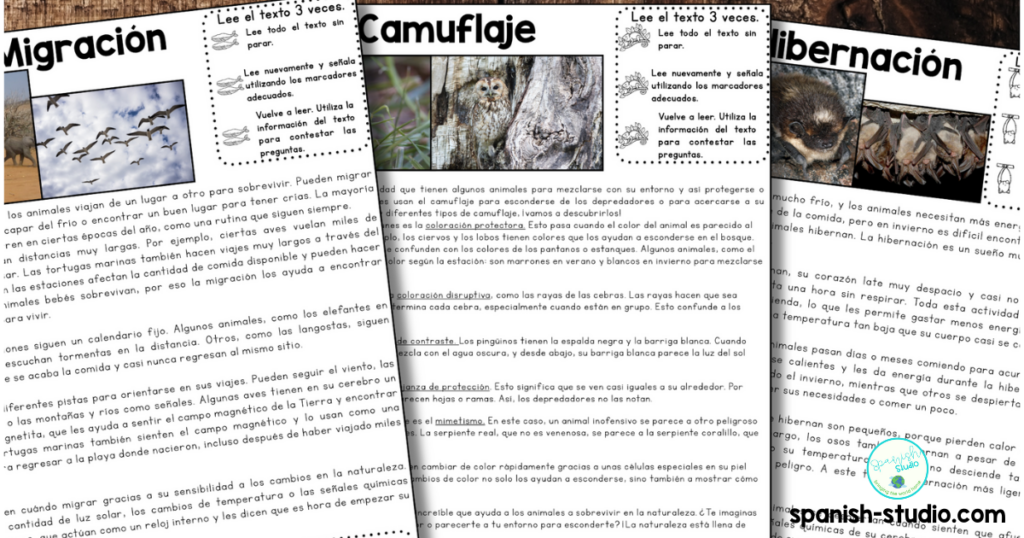
Short reading passages are one of the most effective ways to teach ways animals adapt while supporting Spanish comprehension.
Because the texts are brief, students can reread without feeling overwhelmed. This builds confidence and supports deeper understanding.
A simple close-reading routine works well:
First read
Students focus on the main idea.
¿De qué trata el texto?
¿Habla de un animal o de una adaptación?
Second read
Students look more closely at vocabulary and key details.
They can highlight words, match ideas to pictures, or sort examples.
Third read
Students show understanding through a graphic organizer, a short response, or a discussion.
This structure keeps expectations clear and predictable.
Teaching Physical and Behavioral Animal Adaptations
Animal adaptations are easier to understand when they are grouped clearly.
Focus on two main types:
Physical adaptations
These are body features, such as camouflage, fur, or sharp teeth.
Behavioral adaptations
These are actions, such as hibernation or migration.
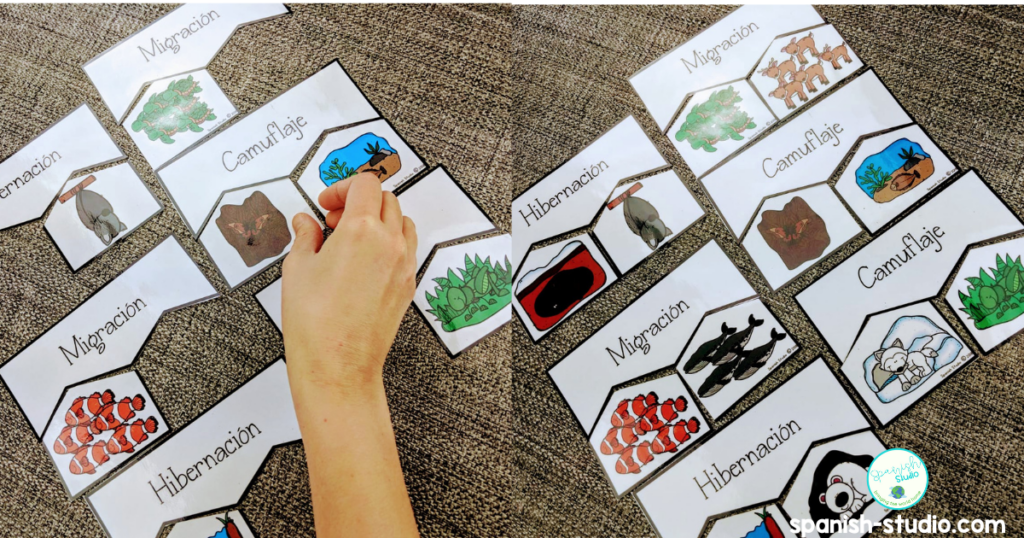
Sorting examples, cutting and gluing, or organizing ideas visually helps students process information while continuing to use Spanish in a meaningful way.
Reinforce Spanish with Familiar Literacy Activities
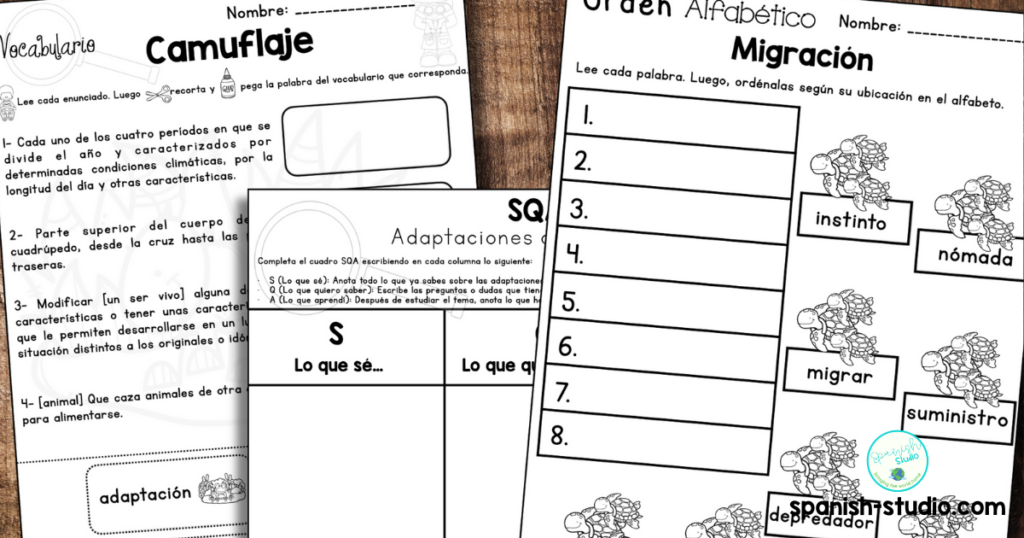
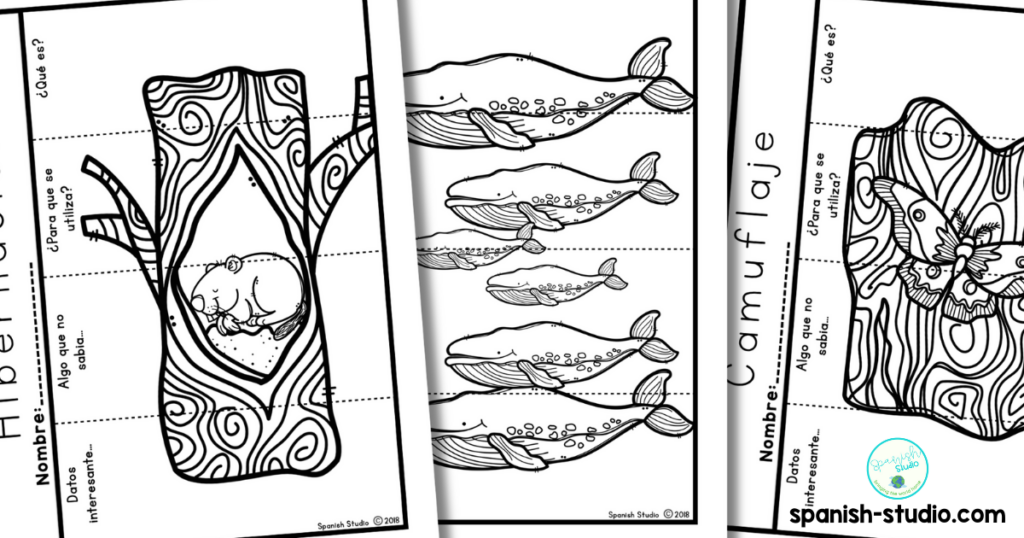
How animals survive also give you a natural way to reinforce literacy skills students already know.
Activities that work well include:
- ABC order with adaptation vocabulary
- Facts graphic organizers
- Short writing prompts
- Simple word work or games
Because the content stays the same, students can focus on language instead of figuring out new directions.
Support Different Learning Styles When Teaching Animal Adaptations
Students understand animal adaptations best when they interact with the content in different ways.
Reading, talking, sorting, highlighting, and moving pieces all support comprehension. These small shifts make lessons more accessible and keep students engaged without adding complexity.
Extending Animal Adaptations Learning in Spanish
Animal adaptations are easy to connect to other science topics later on. Habitats, life cycles, and ecosystems all build naturally from this theme.
When students reuse familiar language across topics, Spanish feels more manageable and meaningful.
If you’re looking for hands-on, ready-to-use activities that follow this same comprehension-first approach to teaching animal adaptations, having consistent texts and routines already in place can make planning much easier.
Keeping Animal Adaptations Simple and Effective
Teaching about animal survival strategies does not require long explanations or heavy vocabulary lists. Short texts, repeated language, and clear routines are enough.
When lessons stay focused and intentional, students learn science content while continuing to grow in Spanish, calmly, confidently, and with curiosity.