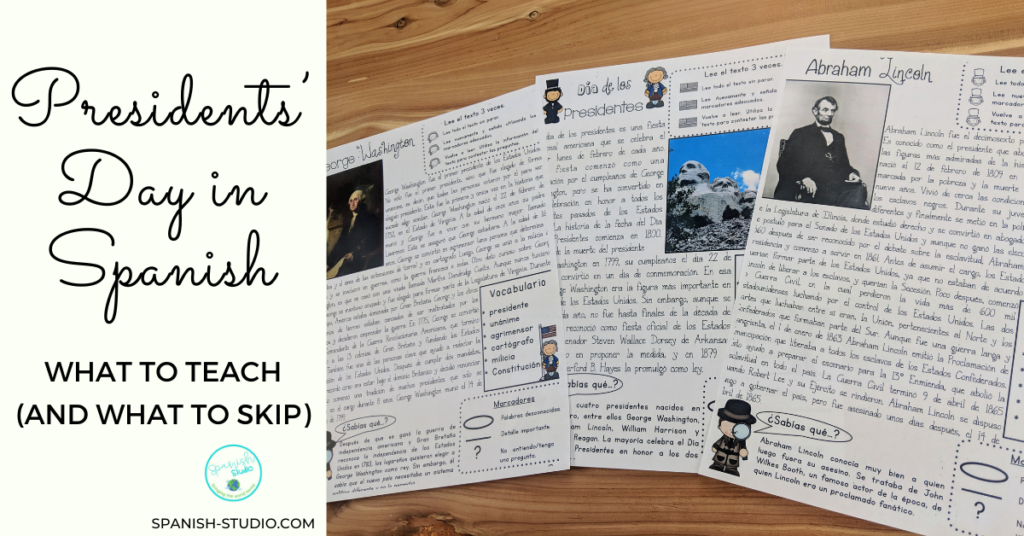
Teaching Presidents Day in Spanish is a great chance to connect language learning with history, without doing too much. Instead of trying to cover everything, this holiday works best when lessons stay focused on comprehension, repeated language, and routines students already know.
When students revisit ideas through short texts and familiar activities, learning feels clear, calm, and meaningful. As a result, students stay engaged without feeling overwhelmed.
What Is Presidents Day in Spanish?
Before introducing historical figures, it helps to start with the purpose of the holiday. Using simple and repeatable language makes a big difference.
For example, useful sentence frames include:
- Es el Día de los Presidentes.
- Celebramos a los presidentes del país.
- Los presidentes son líderes importantes.
At this stage, visuals and anchor charts are especially helpful. In addition, brief discussions allow students to share ideas. Long explanations are not needed. Instead, clarity comes from repetition.
Use Short Reading Texts When Teaching Presidents Day in Spanish
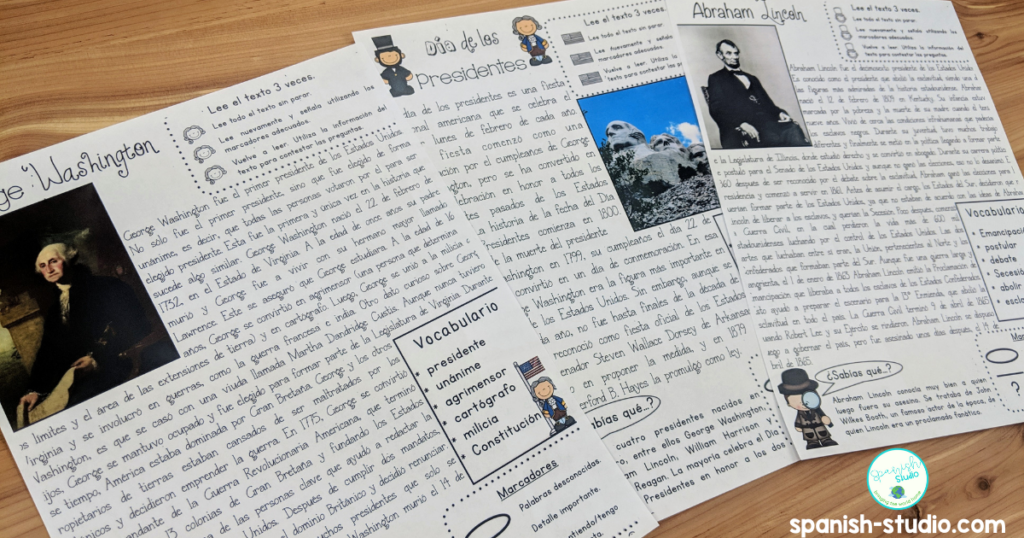
One effective way to teach Presidents Day in Spanish is by using short, student-friendly reading texts. These passages help students focus on meaning while building confidence as readers.
A simple close-reading routine can look like this:
First read
First, students focus on the general idea.
- ¿De qué habla el texto?
- ¿Es sobre un presidente o una celebración?
Second read
Next, attention shifts to vocabulary and key details.
Students might highlight words, match vocabulary to images, or complete a short activity.
Third read
Finally, students show understanding.
They can answer comprehension questions, complete a graphic organizer, or write a short response.
Because the routine stays the same, expectations feel clear and predictable.
Focus on Key Presidents
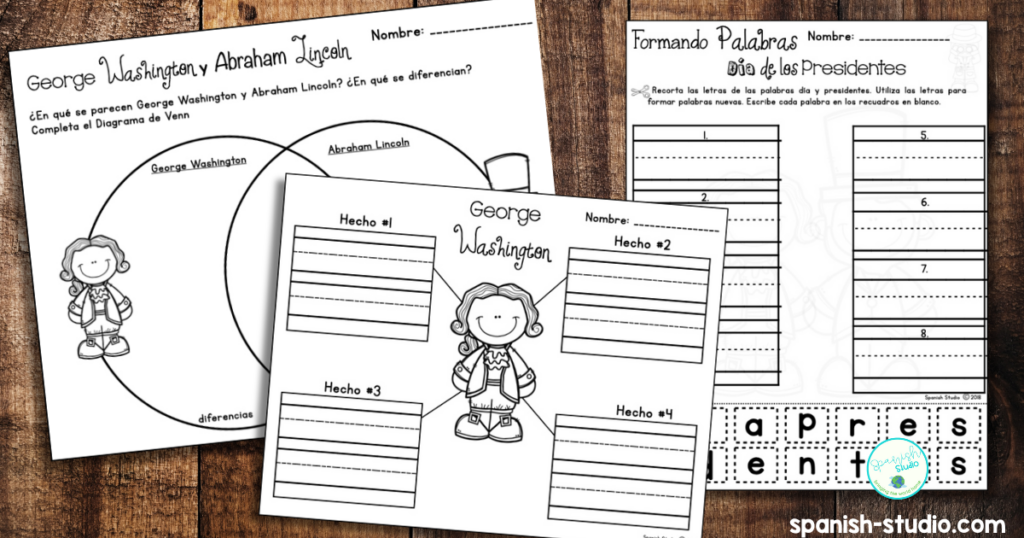
For elementary students, George Washington and Abraham Lincoln are often the easiest presidents to explore during Presidents Day in Spanish.
Effective activities include:
- Reading short biographies in Spanish
- Identifying basic facts
- Comparing both presidents using a simple Venn diagram
To keep information accurate and age-appropriate, many teachers use primary sources for Presidents Day in Spanish, such as simplified documents and images from the National Archives. These sources provide reliable background while still supporting meaningful discussion.
Familiar Literacy Activities That Support Presidents Day in Spanish
Presidents Day in Spanish also works well as a way to reinforce literacy skills students already practice.
For example, activities that work well include:
- ABC order using vocabulary from the texts
- Facts graphic organizers
- Short writing prompts about what students learned
- Vocabulary practice through word work or simple games
Because students already know these routines, they get repeated exposure to content without it feeling repetitive.
Support Different Learning Styles
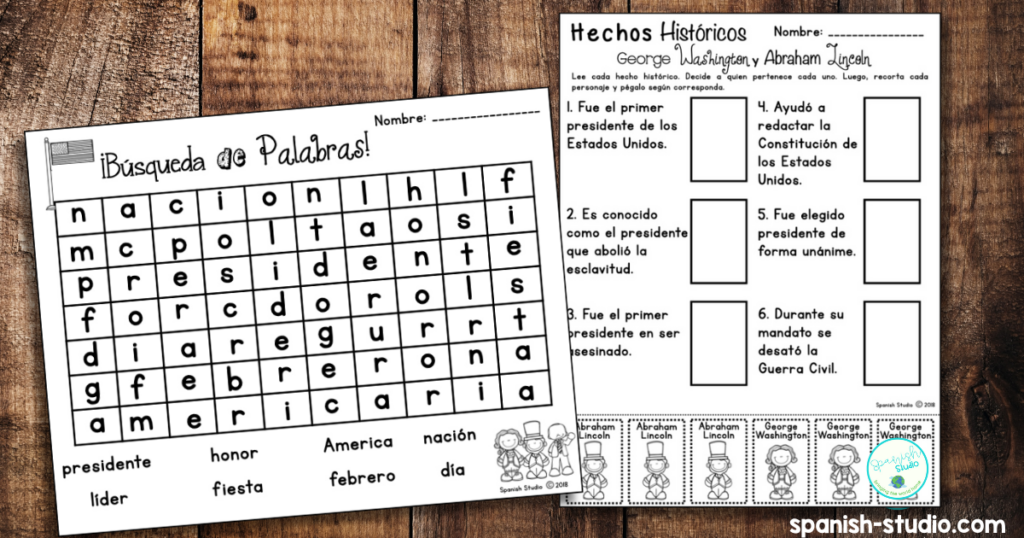
Students learn best when they interact with information in different ways. For this reason, adding visual, tactile, and movement-based elements is important.
For example, highlighting text, sorting information, talking through ideas, and using graphic organizers all support comprehension. Together, these strategies make Presidents Day content more accessible for all learners.
Extending History Learning in Spanish
Presidents Day can also be a starting point for other history themes in Spanish. As late February and March continue, students can explore new topics while keeping the same routines.
For instance, moving into Women’s History Month activities in Spanish is a natural next step. This allows students to apply the same comprehension-focused approach to new content.
Keeping Presidents Day in Spanish Simple and Intentional
Teaching Presidents Day in Spanish does not require covering every detail or memorizing dates. Instead, short texts, repeated language, and purposeful activities lead to stronger understanding.
When lessons stay focused and intentional, students learn about history while continuing to grow in Spanish in a way that feels natural and manageable.