
There’s something about Spanish teacher appreciation week that always feels important… but doesn’t always go the way we expect.
You want students to slow down and really think about what they want to say. You want it to feel genuine, not just another activity to check off.
But when you add Spanish into the mix, it becomes something more. Now you’re not just celebrating, you’re helping students express something real in another language.
Why Spanish Teacher Appreciation Feels Different for Students
This is one of those rare moments in your classroom where students already have something to say.
They know who they’re writing to.
They know how they feel.
That changes everything.
Instead of trying to come up with ideas, they’re focused on expressing them.
And that’s where language starts to feel more natural.
Where It Can Feel Difficult for Students
Even when students are ready, there’s often a pause. You can see it, they’re thinking, but the words don’t come out.
Not because they don’t care, but because they don’t yet have the language to express what they’re thinking.
That’s where small supports matter.
Simple sentence starters like:
“Gracias por ______.”
“Me gusta cuando ______.”
“Eres un/a maestro/a ______.”
give students a clear way to begin. It’s a similar idea to how students build confidence when they’re learning to express emotions in Spanish, starting with structure makes it easier for language to come naturally.
Once they get started, most of them don’t want to stop.
Simple Spanish Teacher Appreciation Ideas That Actually Work
When planning Spanish teacher appreciation ideas, it’s easy to overcomplicate things.
A longer writing assignment.
A multi-step project.
That’s usually when the meaning starts to fade.
What students really need right now is the chance to say one clear thing.
One sentence that feels real.
That’s what makes it memorable.
Making Spanish Teacher Appreciation Activities More Personal
There’s also something powerful about giving students time to make their work their own.
When they can color, decorate, and personalize what they’re creating, the pressure lowers.
They think more, take their time, and begin to connect more deeply to the message. Research also shows that practicing gratitude in the classroom can positively impact student well-being and relationships, which makes these moments even more meaningful beyond the language itself.
And that’s when the language begins to come more naturally.
What You’ll Notice When It Works
The change isn’t dramatic, but it’s clear.
Students who usually write very little begin to write more. Others who hesitate get started faster. And those who rely on English begin to try Spanish first.
It’s not because the activity is more complex.
It’s because it feels more meaningful.
An Easy Way to Start Spanish Teacher Appreciation in Your Classroom
You don’t need to plan something elaborate to make this work.
Having a simple format students can follow, something they can write on, personalize, and complete with confidence, makes everything easier.
It keeps the focus on the message instead of the struggle.
A Final Reflection
Spanish teacher appreciation doesn’t have to feel like something extra.
It can become one of the most natural opportunities for students to use Spanish in a real way.
When students care about what they’re saying… they show up differently.
Free Resource for You
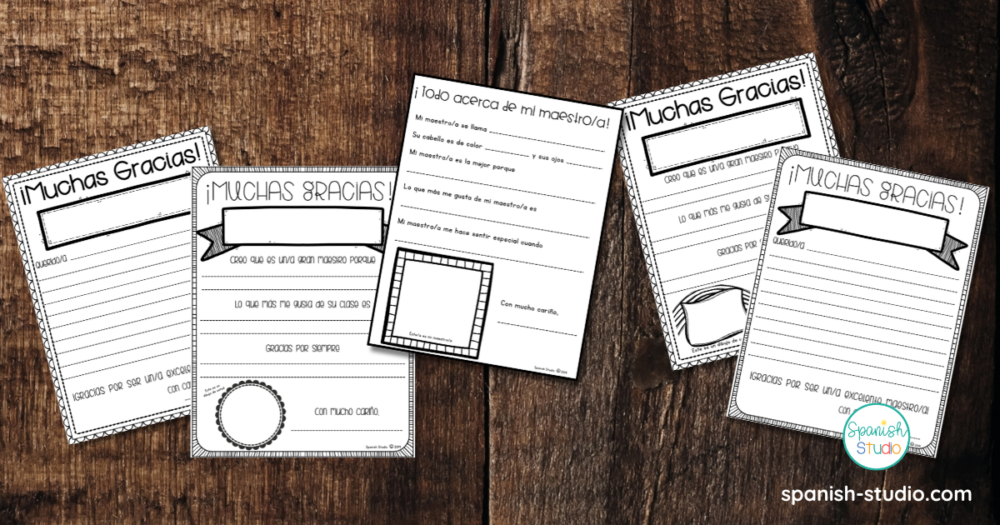
If you want something simple to use right away, I created a FREE set of Teacher Appreciation Cards in Spanish that students can fill out and color.
They’re easy to print, flexible for different levels, and give students just enough structure to express something meaningful, without turning it into a big project.
Interested in more?
Download my FREE Guide: “Simple Ways to Teach Spanish Like a Pro (even if you don’t speak Spanish)”