
I often hear teachers say: “My students can read some words, but they struggle with new ones or when they try to spell them.”
If that sounds familiar, you’re not alone. The good news is that there’s a simple, proven way to help: teaching students to break words into syllables in Spanish.
As an Orton-Gillingham interventionist and a mom raising three bilingual kids, I use syllable work every week, both with students and at my kitchen table. It’s one of the fastest ways I know to turn hesitant readers into confident ones.
Breaking words into syllables doesn’t just make reading easier. It helps students spell more accurately, decode new words and build confidence. And you don’t need complicated worksheets or endless drills to make it work.
Why Syllables in Spanish Matter
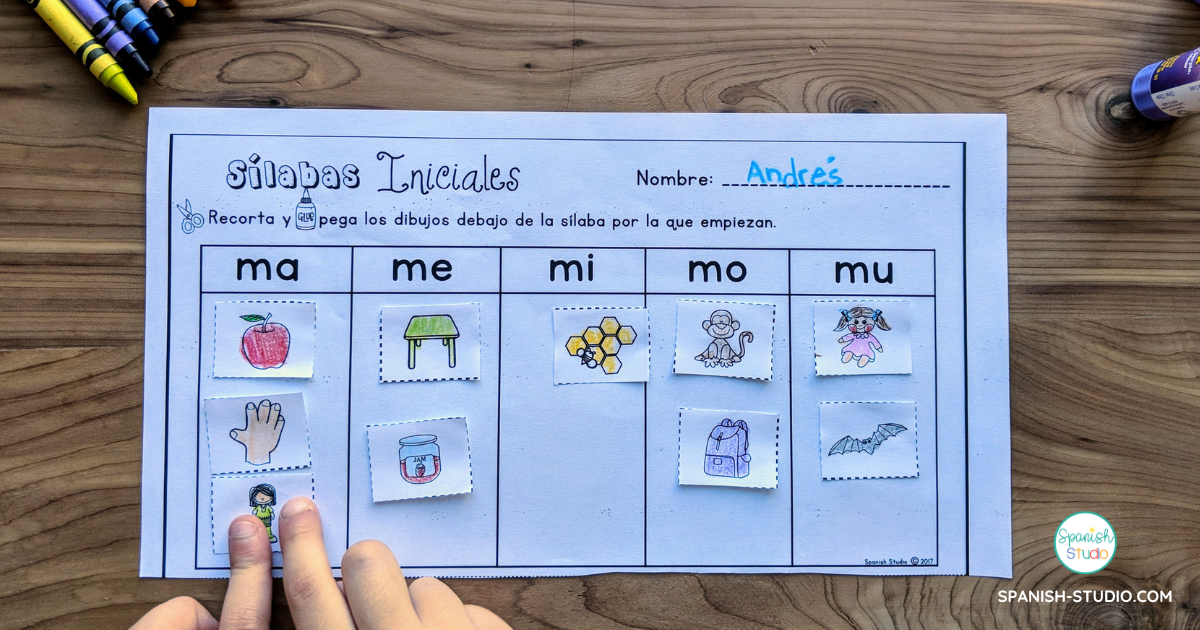
Spanish is built on syllables. Most words follow clear, predictable patterns, which makes syllables the natural “chunk” for reading. As Colorín Colorado explains, Spanish reading instruction usually starts with the five vowels and then combines them with consonants to form open syllables like ma, me, mi, mo, mu.
When students can split words into parts, reading and writing suddenly feel doable. A word like ballena can feel overwhelming at first. Break it into ba-lle-na, and it becomes three small, clear pieces.
Research supports this too: a 2022 meta-analysis found a strong link between phonological awareness and reading in Spanish.
If your students are still learning letter sounds, start there first. My post on how to teach the alphabet in Spanish sounds walks you through it.
How to Divide Syllables in Spanish: 5 Simple Rules
You don’t need to teach these all at once, but it helps to know them yourself:
- Every syllable has a vowel. me-sa, sol, a-mi-go
- One consonant between two vowels goes with the next vowel. ca-sa, pe-lo, lu-na
- Two consonants between vowels usually split. gan-so, car-ta, al-fom-bra
- Blends with l or r stay together (bl, br, cl, cr, dr, fl, fr, gl, gr, pl, pr, tr). li-bro, a-bra-zo, pla-to
- ch, ll and rr never split. co-che, ca-lle, pe-rro
Bonus: When i or u sits next to another vowel, they usually stay in the same syllable (pie-dra, cua-dro). Two strong vowels (a, e, o) separate: le-ón, po-e-ta.
Hands-On Ways to Practice Syllables in Spanish
Students learn best when they can see, touch and say the sounds.
Clap it out. Have students clap once for each syllable: ca-sa, sa-po. Add a short chant with hand gestures using “I do, you do” so students copy you.
Color-code. Write each syllable in a different color, like al-fom-bra, so the patterns become visual and easy to remember.
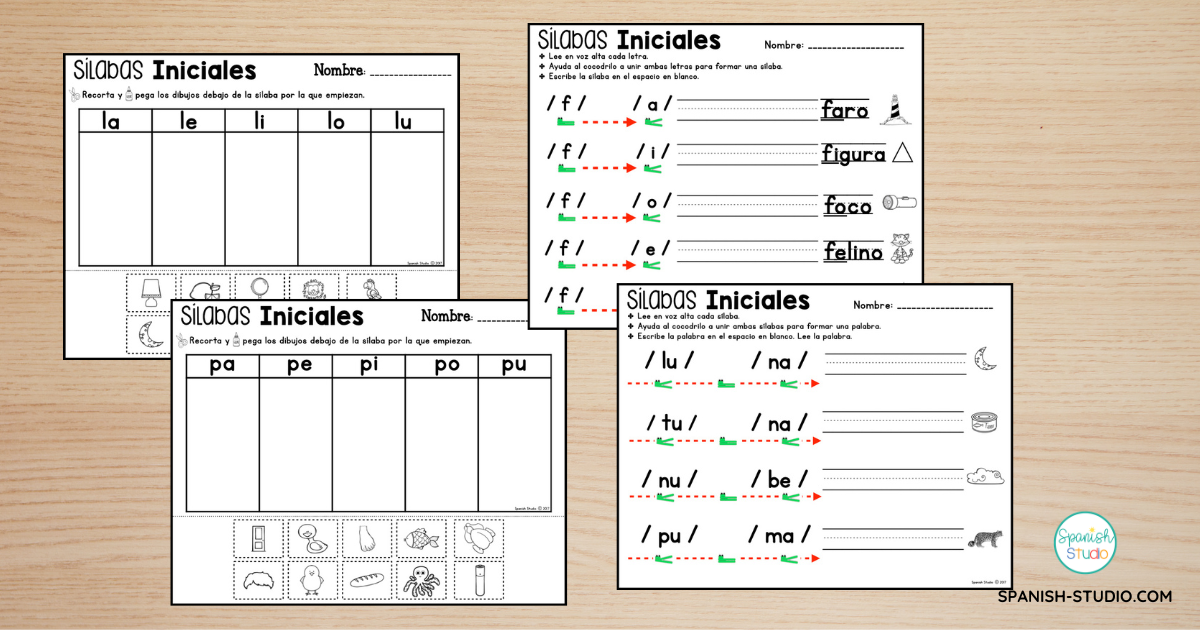
Sort by initial syllable. Group mesa, mano and mantequilla under ma-, and pato, papá and palo under pa-.
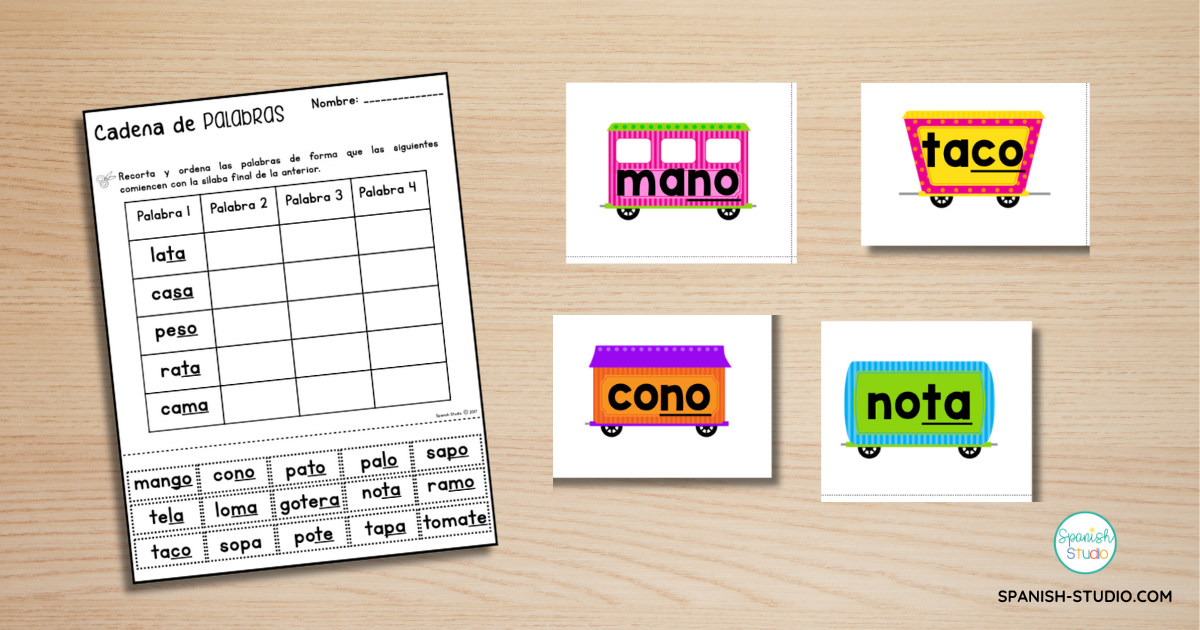
Blend and swap syllables. Say the syllables separately, then blend them: co-mi-da → comida. Then swap one to make a new word: ca-sa → ca-ma, ga-to → pa-to.
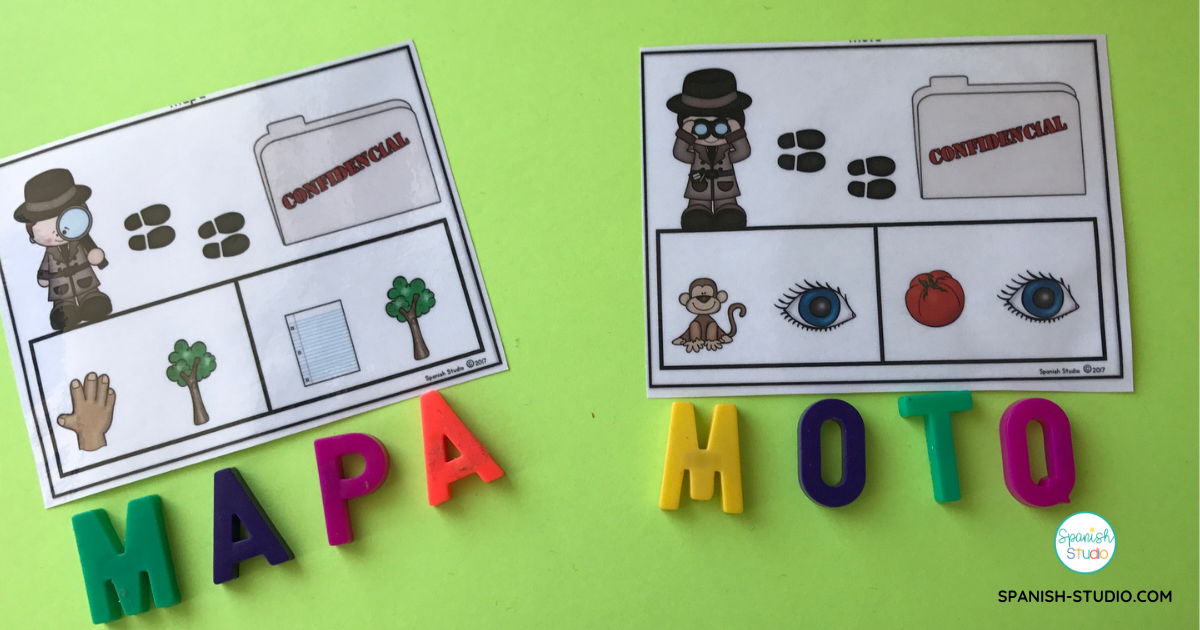
Play sound manipulation games. Change one vowel or consonant to make a new word: sol → sal, casa → cosa, pelo → pero.
Tap and write. Count the syllables, tap each one on a finger, then write the word: pa-la-bra → palabra, es-co-ba → escoba.
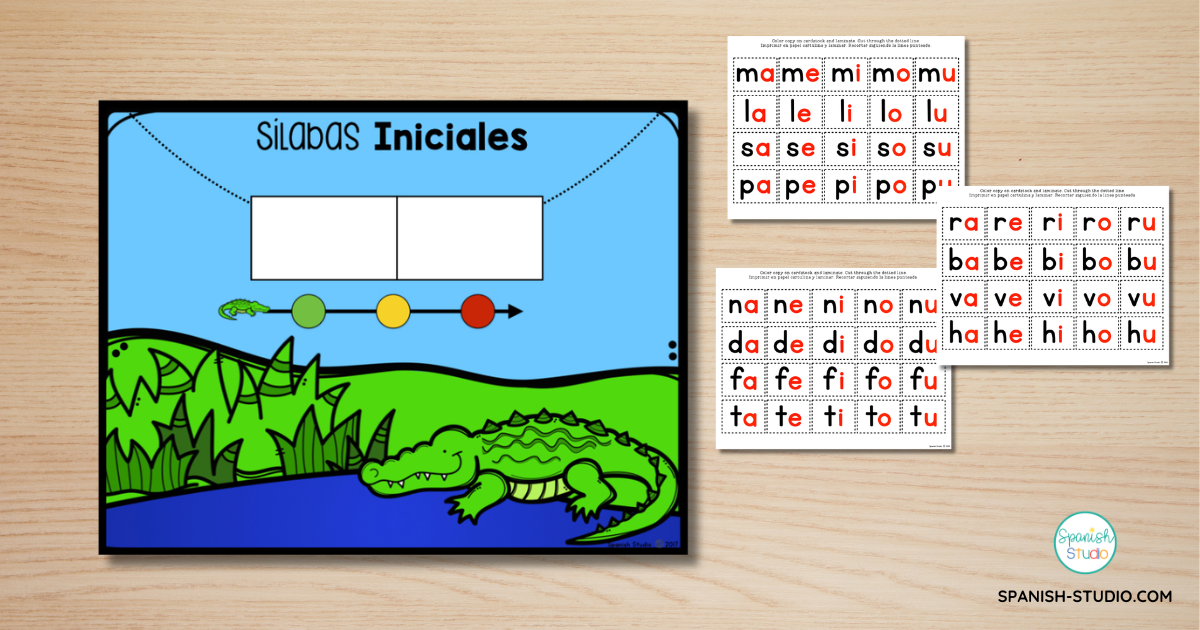
Want these ready to go? My Sílabas Iniciales / Syllables in Spanish resource includes sort-and-glue pages, blending mats, a train puzzle for swapping syllables, and a spin-the-wheel board game, all in color and black and white.
Make Syllables in Spanish Part of Your Weekly Routine
Syllable practice works best as a routine. Here’s a simple weekly rotation:
- Monday: Clapping and chants with familiar words
- Tuesday: Blending and swapping syllables
- Wednesday: Sorting and matching by initial syllable
- Thursday: Tapping and writing words
- Friday: Sound manipulation games to end on a playful note
This way, students touch, say, blend, swap and write syllables in many different ways. That keeps them engaged, and syllables become a tool they use for fluent reading and accurate spelling.
Why Multi-Sensory Practice Works
Students don’t learn syllables from seeing or hearing them once. What makes patterns stick is repetition through different senses: saying syllables aloud, clapping, seeing color-coded patterns, manipulating sounds and writing words. This is the heart of Orton-Gillingham instruction.
Try it with any new vocabulary: count the syllables, say them, clap, then write the word. Before long, students notice patterns on their own.
Once students decode by syllables, they’re ready for richer sentences. They can add adjectives in Spanish to make their writing more expressive and try these Spanish reading comprehension strategies.
Frequently Asked Questions
1- What is the most common syllable in Spanish?
Open syllables, a consonant followed by a vowel (ma, pe, lu), are the most common, and they’re the best place to start.
2- At what age should kids learn syllables in Spanish?
Most children are ready in kindergarten through 2nd grade, once they know the vowel sounds and some consonants.
3- Do syllables in Spanish help with English reading?
Yes. Breaking words into parts is a skill students can use in both languages, which makes it especially valuable for bilingual learners.
Ready to Get Started?
Grab my Sílabas Iniciales / Syllables in Spanish activities and give your students hands-on, no-prep syllable practice for centers, small groups or independent work.
Still building letter sounds? The Spanish Alphabet Bundle is the perfect first step.
And don’t forget to download my FREE guide: Simple Ways to Teach Spanish Like a Pro (even if you don’t speak Spanish).