
Teaching the water cycle in Spanish can feel tricky at first.
Learners are introduced to words like evaporación and condensación, but without the right support, those words can stay separate from meaning. They might recognize them, but not fully understand how everything connects.
What tends to make the biggest difference is not adding more explanations. It’s giving students more ways to interact with the same idea.
What Makes the Water Cycle in Spanish Easier to Learn
The water cycle is actually one of the most supportive topics for Spanish learners.
It follows a clear sequence. It repeats. It gives students something concrete to talk about, even though the concept itself is not always visible.
Because of that, students naturally begin to reuse the same language.
Students begin to hear it, see it, and say it. And little by little, it starts to make sense.
Starting the Water Cycle in Spanish with What Students See
Before focusing on vocabulary, it helps to slow down and look at the process together.
Instead of asking students to name the stages right away, you might begin with simple observations. What do they notice? What is happening first? What changes next?
Those small conversations lower the pressure and build understanding first.
Then, when the vocabulary is introduced, it has somewhere to attach. This kind of approach supports language learners by focusing on understanding before accuracy, a principle often highlighted by resources like Colorín Colorado.
Make the Water Cycle in Spanish Visible
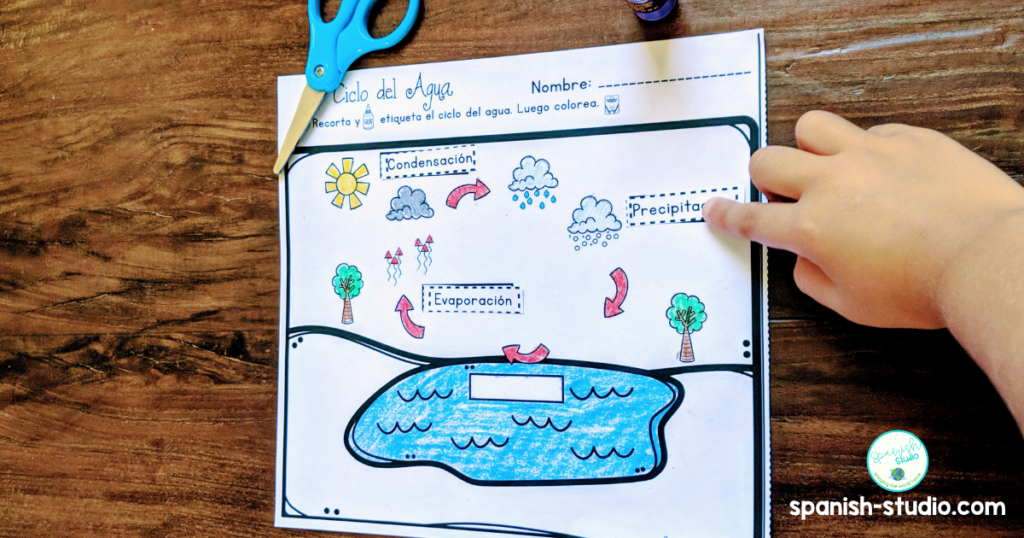
One of the most helpful shifts is turning the process into something students can actually move and rebuild.
When students arrange the stages, connect pieces, or label parts of the cycle, they begin to see how everything fits together. The learning becomes less abstract and more tangible.
Even simple activities like reconstructing the cycle or matching images to words can deepen understanding in a way that a worksheet alone cannot.
Keep Reading Short and Purposeful
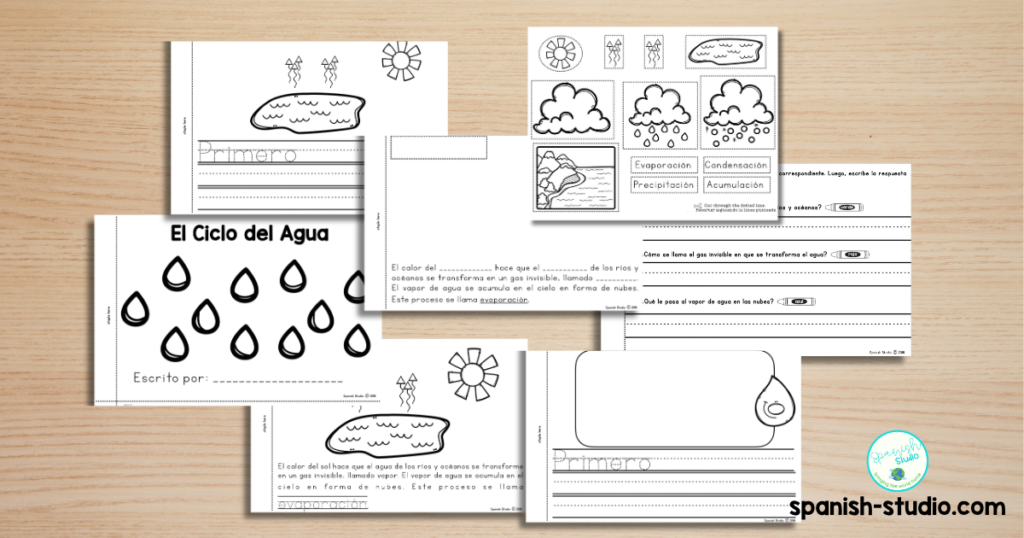
Long passages can feel overwhelming, especially when students are still building vocabulary.
Short, structured reading works much better here.
Small informational texts or mini books about the water cycle give students repeated exposure to the same ideas without cognitive overload. They can read, revisit, and make sense of the content at their own pace.
Adding simple comprehension questions helps guide their thinking without making the task feel heavy.
Let Students Talk Through the Process
At this stage, speaking doesn’t need to be complicated.
At first, short, supported phrases help students begin and gradually build from there. As they describe what happens first, what comes next, and what changes, they start organizing the process in their minds.
Those small oral rehearsals often make writing much easier later on.
Repetition That Doesn’t Feel Repetitive
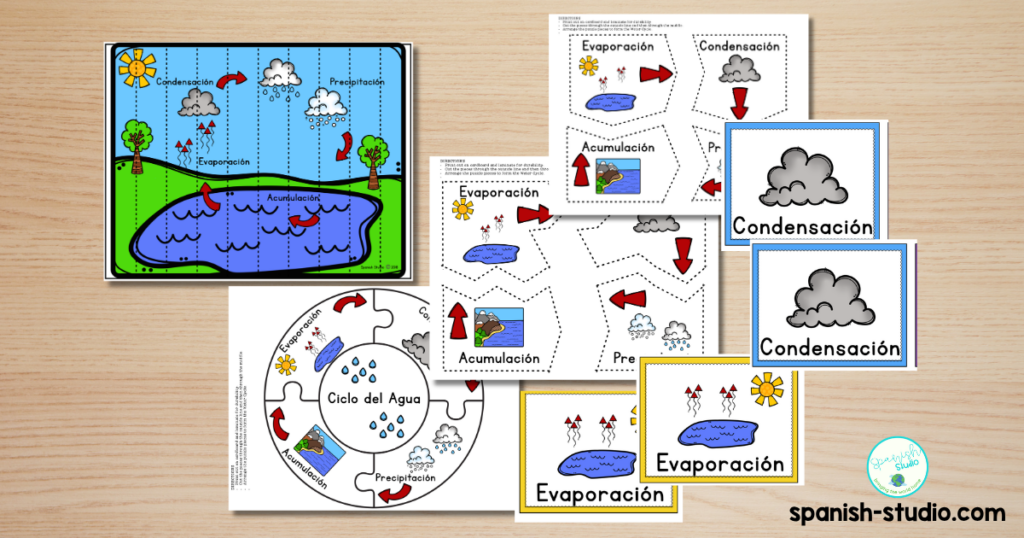
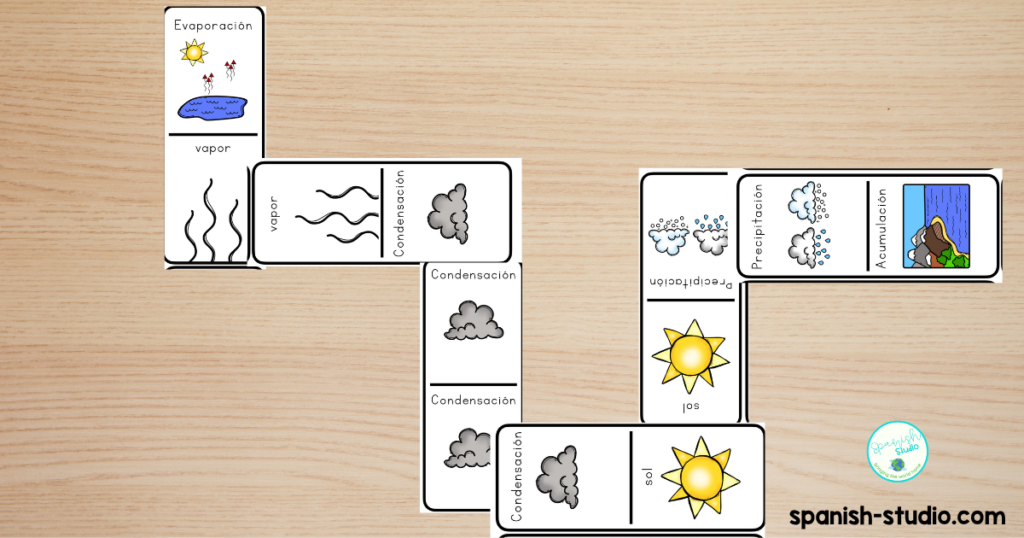
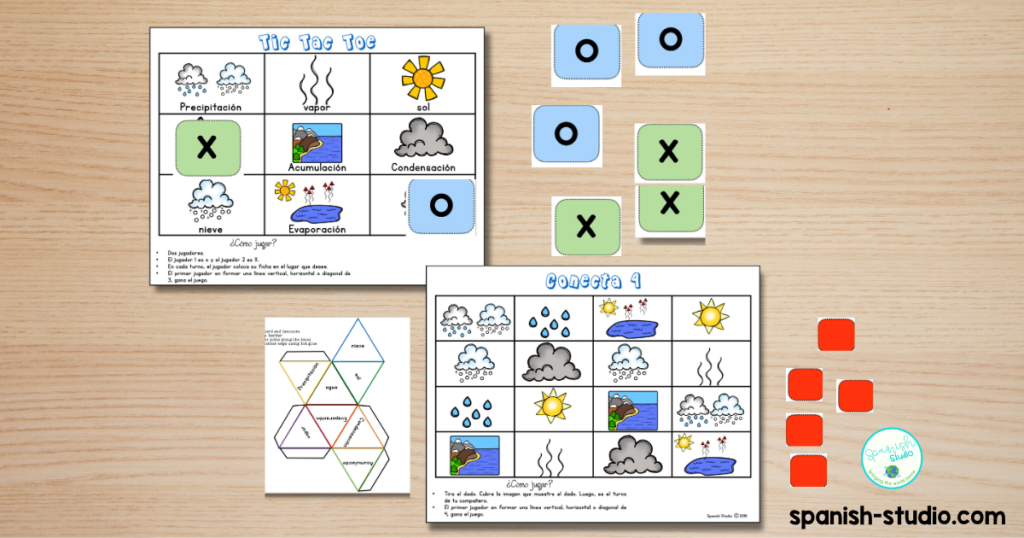
This is usually where everything starts to come together.
Instead of repeating the same activity, students revisit the same concepts in different ways. They might work with puzzles one day, play a simple matching game the next, or reconstruct the cycle again in a new format.
The content stays the same, but the experience changes.
That’s what helps the learning stick. When vocabulary is revisited through different formats , like matching, sorting, or comparing related words, students engage more deeply with meaning. These types of hands-on vocabulary strategies can also be applied in other areas of language learning.
Supporting Writing in a Manageable Way
When students are ready to write, keeping it simple makes a big difference.
Labeling the stages, completing short sentences, or working through guided mini books allows them to express their understanding without feeling overwhelmed. Over time, those small pieces begin to connect into fuller explanations.
What Teaching the Water Cycle in Spanish Looks Like in Practice
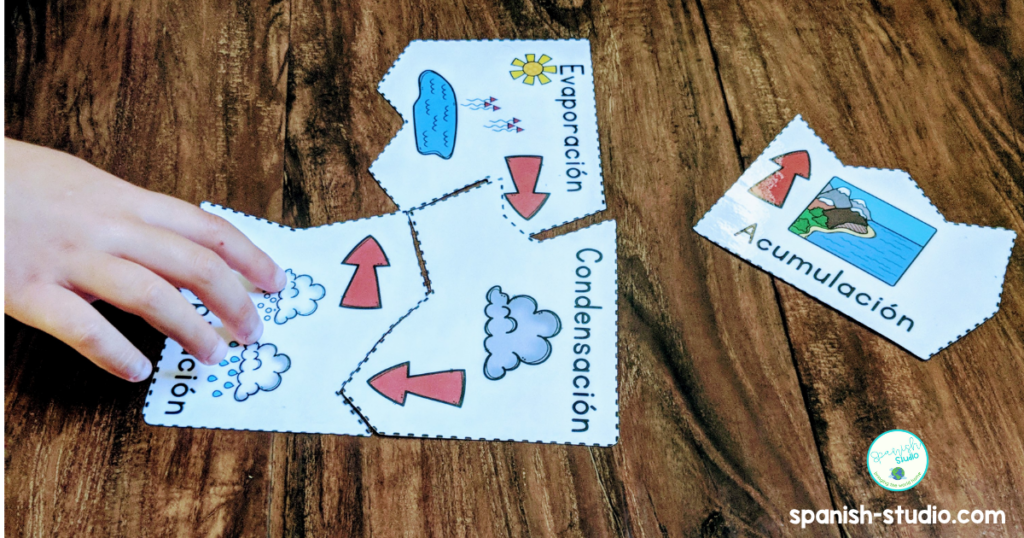
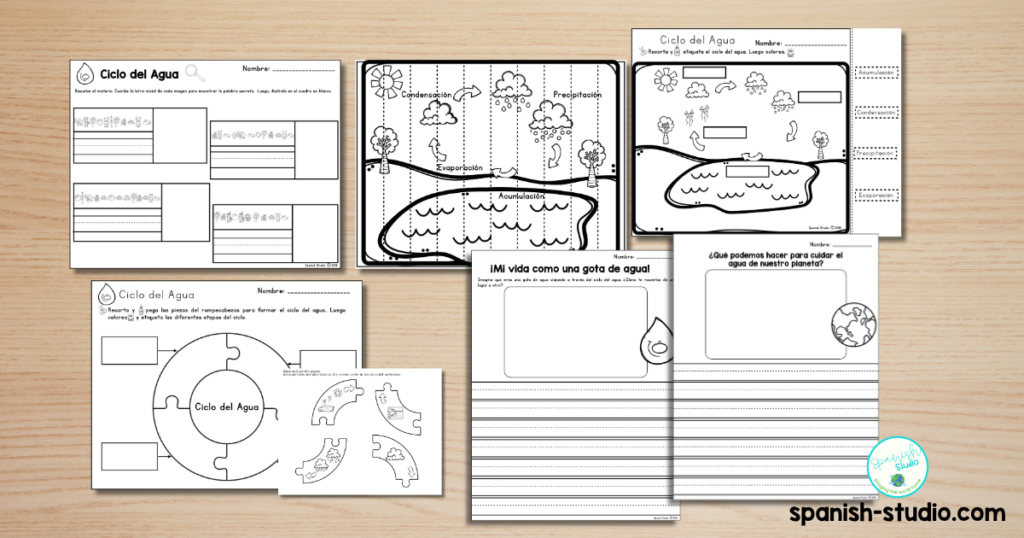
In many classrooms, this ends up looking like a mix of small, intentional activities.
In practice, a short passage might be introduced about the water cycle, then complete a quick comprehension check. Later, they might rebuild the cycle using puzzle pieces, label each stage, or work through a mini book where they explain the process in their own words.
At another point, they might play a simple game, match vocabulary to images, or decode key words by focusing on initial sounds.
Nothing feels overly complicated on its own. But together, these experiences give students multiple entry points into the same concept.
Why It Works
When teaching the water cycle in Spanish, understanding grows through repetition, interaction, and clarity.
Students don’t need more information.
They need more opportunities to connect with it.
And when they see it, say it, build it, and revisit it in different ways, the language begins to feel natural.
That’s when it clicks.
Interested in more?
Download my FREE Guide: “Simple Ways to Teach Spanish Like a Pro (even if you don’t speak Spanish)”