
Teaching adjectives in Spanish can seem simple at first. Students can usually spot them, and they may even memorize a few common ones like grande, pequeño or bonito.
But when it’s time to use them in speaking or writing, something doesn’t click. The words stay separate and never connect to real language. Frustrating, right?
As a native Spanish speaker raising three bilingual kids in the U.S., I’ve seen this at home and in the classroom. More rules and explanations aren’t the answer. What works is giving students meaningful, repeated chances to use adjectives in ways that stick.
Why Adjectives in Spanish Matter
Adjectives aren’t just vocabulary. They’re what let students expand their language.
Instead of saying:
- La casa
Students start saying:
- La casa grande
- La casa blanca
- La casa bonita
This small shift is huge. Students go from naming things to describing them, and from basic communication to more expressive language. Their confidence grows fast.
The Two Rules Students Need to Know
You don’t need a long grammar lesson. Two ideas cover most of what beginners need.
1. Adjectives go after the noun (most of the time).
In English we say “the big dog.” In Spanish we say el perro grande.
2. Adjectives match the noun.
They agree in gender and number:
- el gato negro → la gata negra
- el gato negro → los gatos negros
Adjectives that end in -e or a consonant, like grande, verde or azul, stay the same for masculine and feminine: el lápiz azul, la mochila azul.
Show these patterns with real examples instead of a chart of rules. Students pick them up faster when they notice them on their own.
Want more examples of how agreement works? SpanishDict’s guide to noun-adjective agreement is a great reference for you and older students.
Start Teaching Adjectives in Spanish With Familiar Words
Before any grammar, start with what students already know.
Show a simple picture of a dog, a house or a backpack, and ask: ¿Qué observas?
Students will naturally describe it: grande, pequeño, rápido, colorido. That’s your starting point. Once they’re already thinking in descriptions, adjectives in Spanish feel natural instead of forced.
Make Adjectives Visible and Concrete
Adjectives get easier when students can see them and move them around.
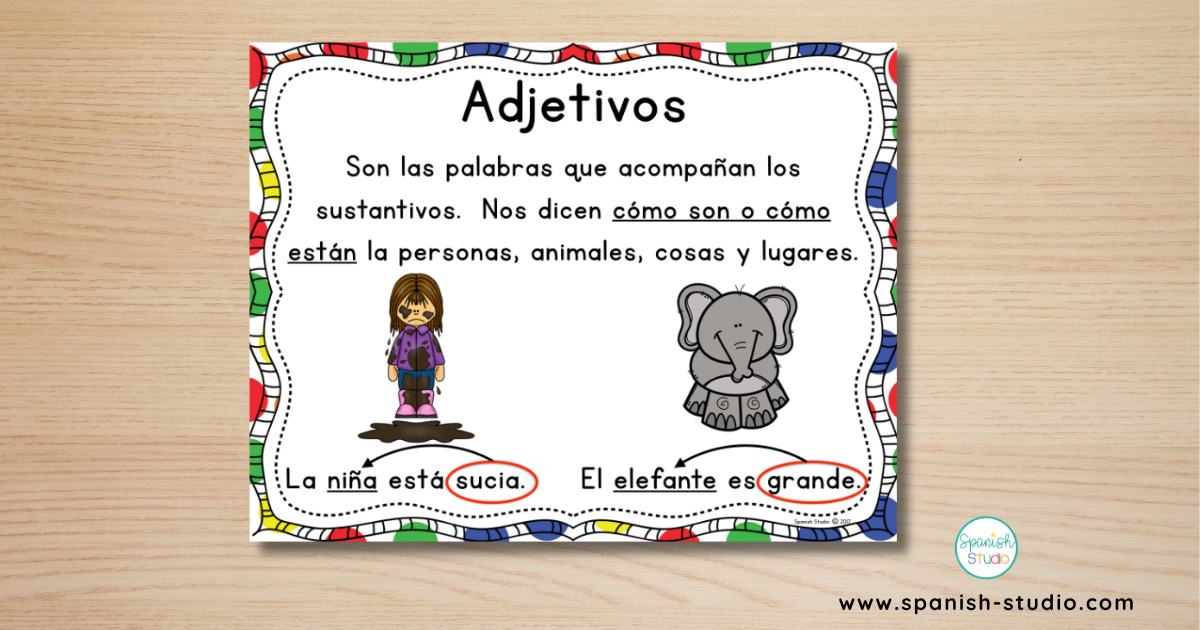
A classroom poster showing adjectives next to nouns helps students make the connection, and keeping it on the wall reinforces it without interrupting the lesson.
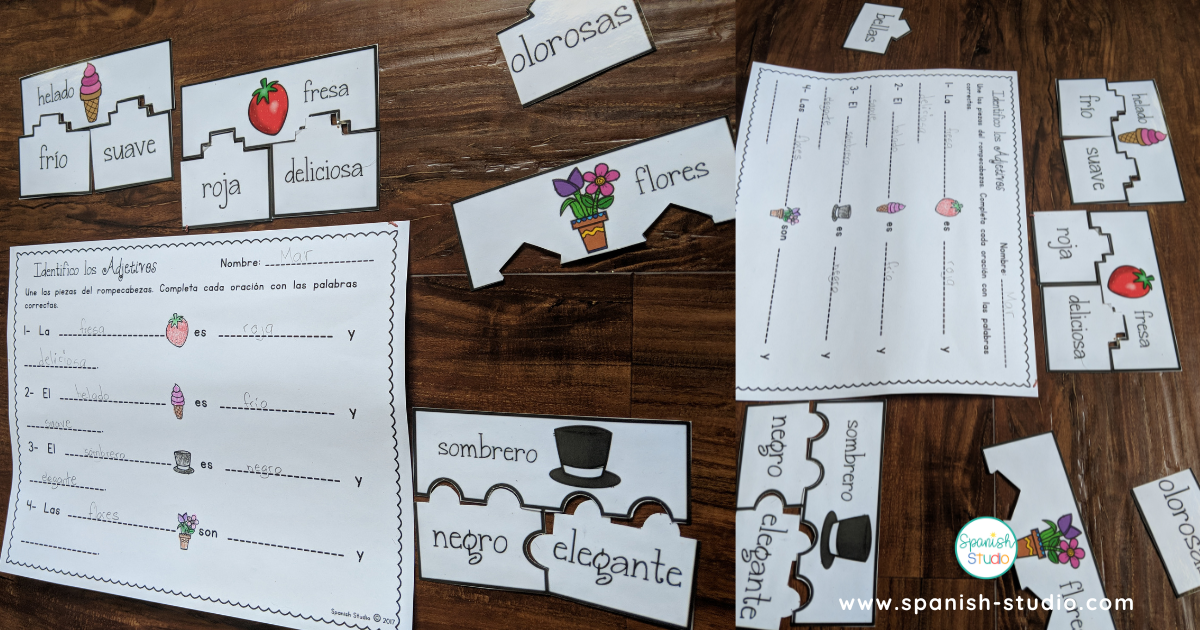
Hands-on activities go a step further. When students match nouns to adjectives, sort words or build short sentences, memorizing turns into noticing patterns.
Fun Ways to Practice Adjectives in Spanish
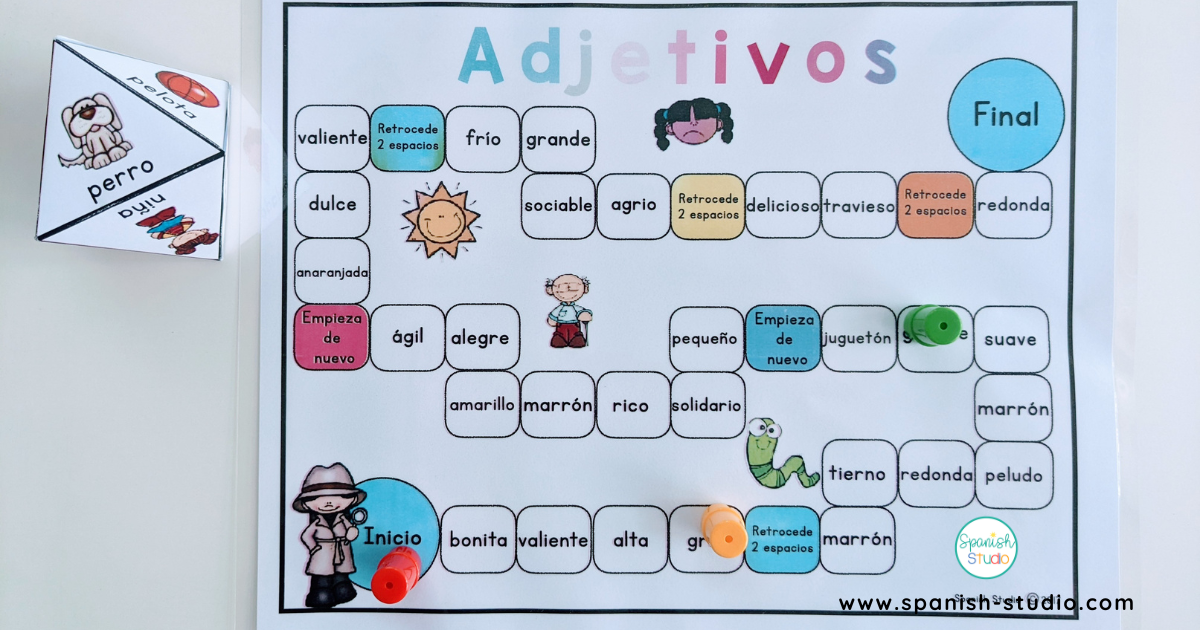
This is where the magic happens. Learning sticks when it’s interactive and fun.
Students can:
- Play a board game where they roll a noun and move to an adjective that fits.
- Put together sentence puzzles that connect nouns and adjectives.
- Match adjectives to nouns with cut-and-glue activities.
All of these are ready to print in my Adjectives in Spanish resource, so you can start practicing tomorrow with no prep.
The content stays the same, but the experience changes, and that’s what helps students take the language in.
For more hands-on ideas, see Solar System in Spanish: Engaging Activities Your Students Will Love.
Help Students Notice Adjectives in Context
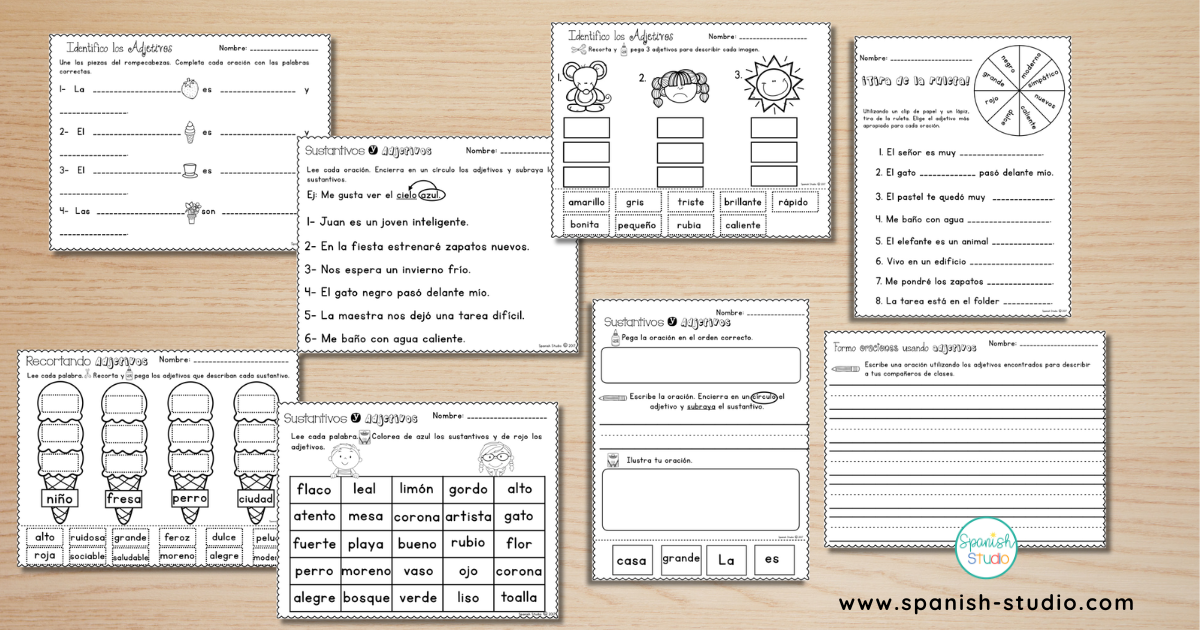
Over time, students go from using adjectives to recognizing them in sentences.
Short, simple reading passages work best. Students circle the adjective and underline the noun, which helps them see how the two work together.
Activities where students read, identify and illustrate a sentence turn adjectives into real tools for communication.
Build Confidence Through Speaking
Adjectives support speaking naturally. Even short phrases let students express themselves clearly. When students describe classmates with positive adjectives (Sofía es amable. Mateo es divertido.), the language comes alive and builds connection in the classroom.
Repeating the same words in different formats, like sorting, matching and building sentences, gives students the confidence to take risks. They move from:
- El perro
to:
- El perro grande y rápido
That growth comes from repeated practice, not memorization.
What This Looks Like in the Classroom
In practice, teaching adjectives in Spanish is a mix of small, intentional moments:
- A visual introduction with a color poster
- Hands-on matching or sentence-building activities
- Board games, puzzles or cut-and-glue activities
- Short reading passages where students find the adjectives
- Speaking activities where students describe their classmates in positive ways
Each activity is simple, but together they give students many ways to connect with, use and remember adjectives.
Frequently Asked Questions
1- Do adjectives in Spanish always go after the noun?
Usually, yes. A few common ones, like bueno, malo, mucho and numbers, often go before the noun: un buen día, muchos libros.
2- How do I teach agreement to young learners?
Start with pairs they can see, like gato negro / gata negra. Color-coding masculine and feminine endings helps a lot.
3- What are good first adjectives to teach?
Colors, sizes (grande, pequeño), and common describing words (bonito, feliz, rápido, alto).
Why It Works
The goal isn’t just recognizing adjectives. It’s using them. Students need to see, hear, say and apply adjectives in meaningful ways. When they do, adjectives stop feeling like separate vocabulary words and become part of how students naturally communicate.
A board game, sentence puzzles, a spin-the-wheel game and cut-and-glue activities give students the repeated, hands-on practice they need. You can use them with the whole class, small groups or independent work, and they support visual, tactile and kinesthetic learners.
Ready to make adjectives stick? Get the Adjectives in Spanish activity bundle here and give your students fun, no-prep practice they’ll actually enjoy.
Interested in more?
Download my FREE Guide: “Simple Ways to Teach Spanish Like a Pro (even if you don’t speak Spanish)”