
If you’ve tried to practice the alphabet in Spanish with your kids, you may have noticed something frustrating. They can sing the whole abecedario, but put a word in front of them and they’re stuck.
That’s because singing letter names and actually reading are two different skills. Kids need the sounds, practiced in a sensible order, in ways they can see, hear, and touch.
This guide walks you through the Spanish alphabet itself, what makes it different from English, the order to teach the sounds, and simple activities that work at home or in the classroom.
The Spanish Alphabet at a Glance
The Spanish alphabet has 27 letters. It’s the English alphabet plus one: ñ.
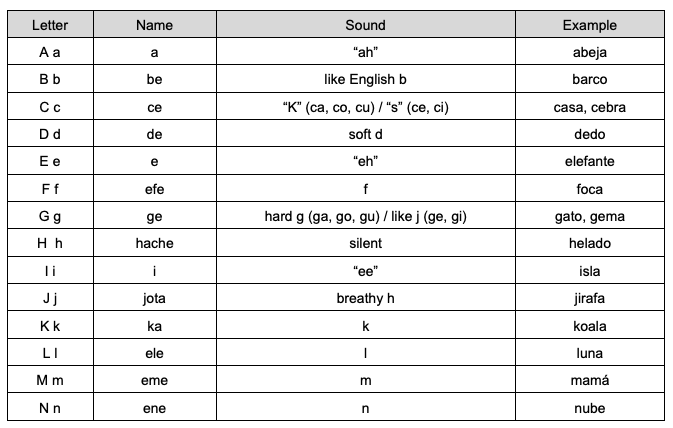
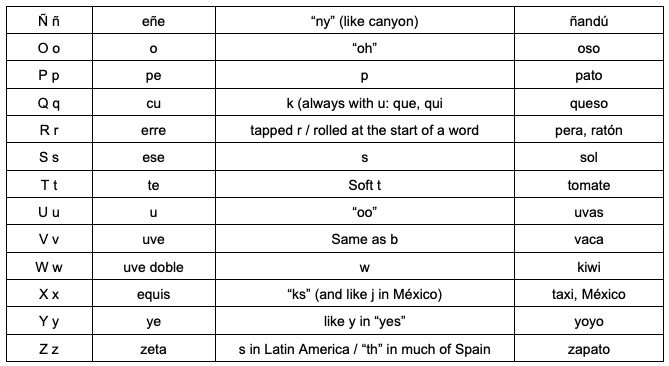
You’ll hear some letters called different names depending on where people are from. B is often be larga or be alta, V is ve corta or ve baja, W is doble ve or doble u, and Y is i griega. The Real Academia Española recommends uve, uve doble and ye, but all of these are understood.
What about ch, ll and rr? Since 2010 they’re officially dígrafos (two letters that make one sound), not separate letters. Kids still need to learn them as sounds, though. Chocolate, lluvia and perro won’t make sense otherwise.
Why the Spanish Alphabet Is Easier (and Where Kids Still Trip Up)
Here’s the good news: Spanish is very consistent. Most letters make the same sound every time, and the five vowels never change. A is always “ah.” E is always “eh.” Once kids know the sounds, they can sound out almost any word.
That’s also why sounds matter more than names. Knowing that M is called eme doesn’t help a child read mamá. Knowing that M says /m/ does.
A few letters still cause trouble, especially for kids who also speak English:
- The vowels. English-speaking kids often read Spanish e as “ee” and i as “eye.” Practice vowel sounds on their own until they’re automatic.
- H is silent. Helado starts with the “eh” sound, not an “h.”
- B and V sound the same. That’s fine for reading. It only matters for spelling later.
- C and G change before e and i. Casa vs. cebra, gato vs. gema.
- R and RR. The tap in pera and the roll in perro take time. Keep practicing without pressure.
Focus on One Sound at a Time
One mistake many parents and teachers make is trying to teach all the letters at once. Children need enough time to listen to, practice, and connect each sound before moving on.
In Spanish, the order matters even more, because reading starts with syllables. A sequence that works well:
- The five vowels: a, e, i, o, u
- Consonants that show up everywhere: m, p, l, s, t
- Then: d, n, f, r, b, v, c (ca, co, cu), g (ga, go, gu)
- Later: j, ñ, ll, y, ch, h, z, qu, rr
- Last: k, w, x (they’re rare in Spanish)
As soon as kids know the vowels and one consonant, they can start blending:
ma · me · mi · mo · mu
Then come real words: mamá, mima, ama, mío.
One of my favorite moments as a teacher and mom is watching a child connect sounds together and realize they can actually read. That excitement is priceless.
If you want to go deeper, here’s how syllables in Spanish build on this step, and what phonological awareness in Spanish looks like before reading clicks.
Use Songs to Reinforce Letter Sounds
Kids love repetition, and music makes it painless.
Rockalingua’s “Abecedario” is an easy one to start with. Just remember that most alphabet songs teach letter names. After singing, go back and practice the sounds: “A says /a/, like abeja.”
Add movement to make it stick:
- clap each sound
- trace letters in the air
- find objects that start with the sound you’re singing
Build Literacy Skills Through Reading
The more children hear Spanish read aloud, the more familiar they become with its sounds, words, and patterns.
Nursery rhymes, rhyming books, picture books and repetitive stories all work well. You’ll find favorites in my top 20 children’s Spanish books, plus ideas for using Spanish nursery rhymes.
The goal is not perfection. The goal is exposure.
Hands-On Ways to Practice the Alphabet in Spanish
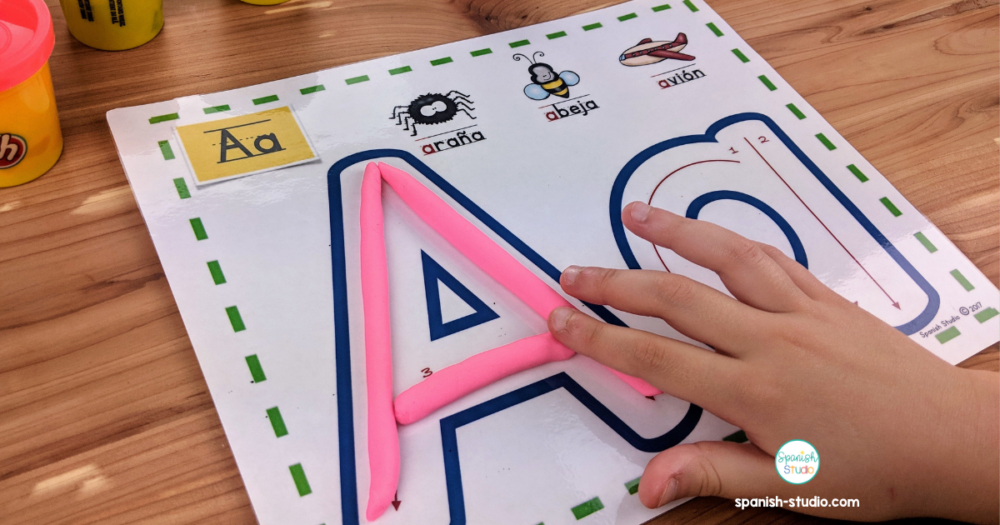
Young children learn best when they can touch, move, and interact with what they’re learning. A worksheet has its place, but it shouldn’t be the only way a child meets a letter.
Forming letters. Play dough, sand trays, tracing cards and dry erase boards all let kids build the letter shape while saying the sound out loud.
Sorting. Uppercase and lowercase. Letters and pictures. Pictures by beginning sound. Sorting makes kids look closely and make decisions, which is where the learning happens.
Puzzles. They reinforce letter recognition, matching and vocabulary at the same time, and kids can do them on their own.
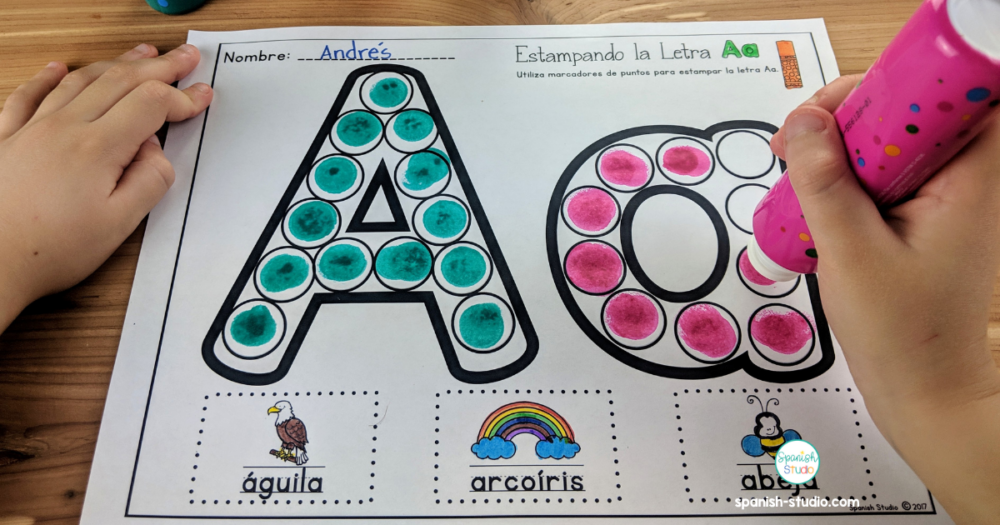
If you’d like this ready to print, my Spanish Alphabet BUNDLE covers all 27 letters. Each letter set includes:
- letter puzzles
- uppercase/lowercase mats
- initial sound clothespin mats
- play dough and dry erase formation mats
- a letter lacing card
- beginning sound worksheets
- trace-and-write pages
- a letter mini book
You can also buy each letter set on its own.
Practice the Alphabet in Spanish with Learning Centers
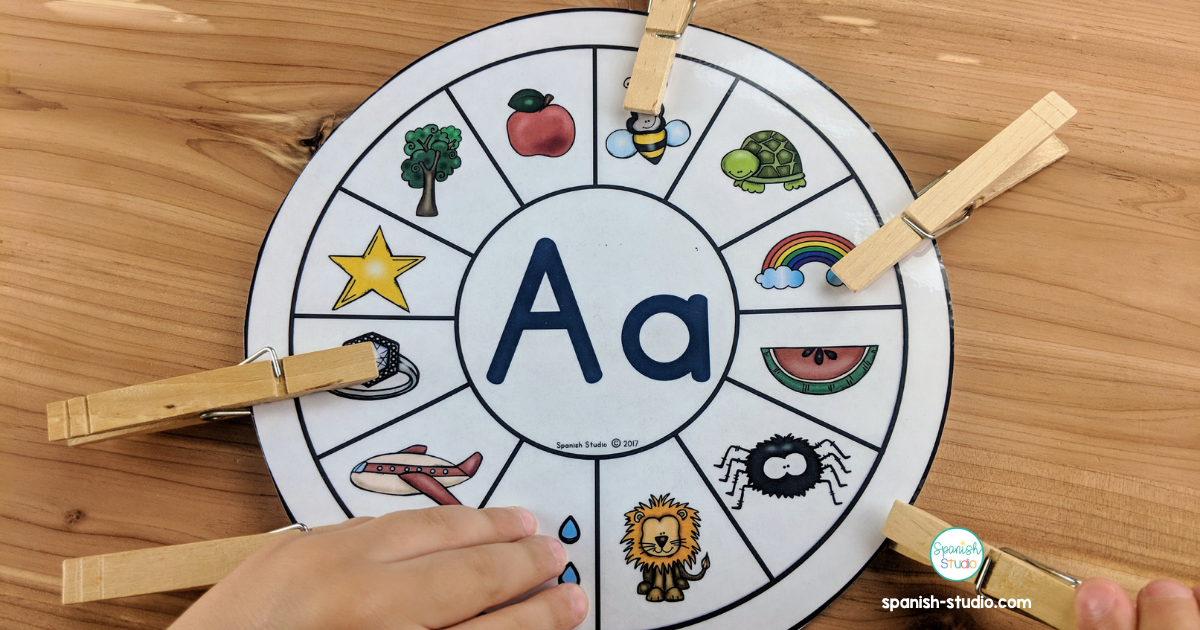
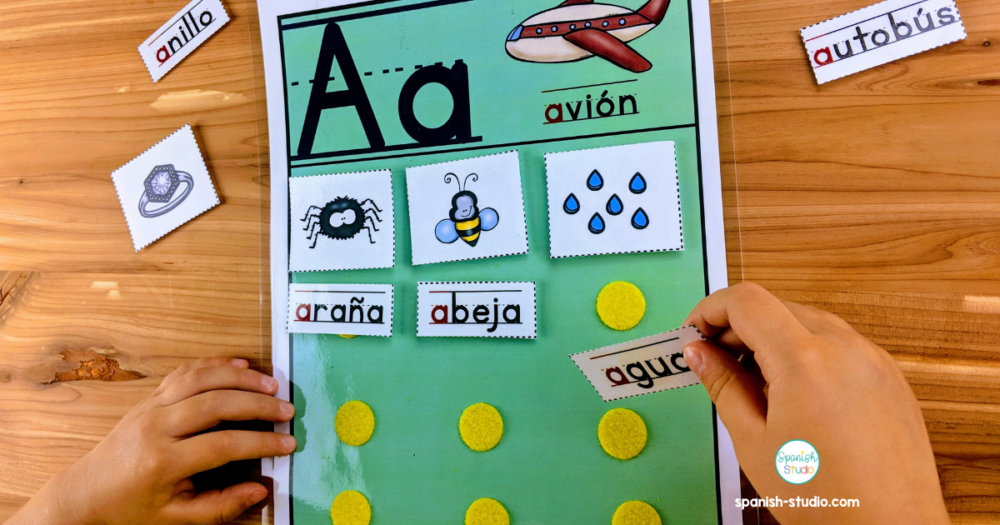
Centers give kids a chance to practice independently, and they let you rotate the same letter through several different activities. A few that work well:
- letter matching games
- alphabet puzzles
- beginning sound activities
- letter hunts around the room
- play dough letter mats
- alphabet bingo
For beginning sounds, my Beginning and Ending Sounds BUNDLE fits right into a center rotation.
Children need many chances to see, hear, and interact with letters before they become confident readers.
Practice the Alphabet in Spanish Every Day
You don’t need long lessons. Even 15–20 minutes of consistent practice adds up over time.
Practice fits into moments you already have: morning routines, story time, play time, writing, even car rides. For car rides, try Veo, veo (the Spanish version of I Spy): “Veo, veo una cosa que empieza con /s/…” (sol, semáforo, señal).
Most importantly, keep Spanish positive. When children feel successful and have fun, they stay motivated.
Common Mistakes When Kids Practice the Alphabet in Spanish
- Teaching only letter names. Names are nice to know. Sounds are what let kids read.
- Teaching everything at once. One sound at a time, with plenty of practice, goes further than the whole alphabet in a week.
- Leaving vowels for later. Without vowels, kids can’t blend syllables. Start with them.
- Using English sounds. Watch for “ee” for e and “eye” for i.
- Pronouncing the h. In Spanish, h is silent: hola sounds like “ola.”
- Skipping ñ, ll, ch and rr. They’re everywhere in Spanish words, so kids need them.
Practice Alphabet in Spanish: FAQs
How many letters are in the Spanish alphabet?
27. It’s the same as English plus ñ.
Are ch and ll still letters?
Not officially. Since 2010 they’re considered digraphs, two letters that make one sound. Kids still need to learn them for reading.
Should I teach letter names or sounds first?
Sounds. They’re what children use to read. Letter names can come along naturally through songs.
How long should kids practice the alphabet in Spanish each day?
About 15–20 minutes is plenty if you do it consistently.
Can I teach the Spanish alphabet if I’m not fluent?
Yes. Spanish sounds are consistent, so once you learn the five vowel sounds and the letters in the table above, you can teach them with confidence.
Interested in more?
Download my FREE Guide: “Simple Ways to Teach Spanish Like a Pro (even if you don’t speak Spanish)”