
It’s Sunday night, and tomorrow’s Spanish isn’t planned. Weather in Spanish is the shortest lesson you can teach, and it works whether you’re a parent trying to keep Spanish going between homework and dinner, or a teacher with a stack of papers still to grade. You don’t need a whole lesson. You need something short that works.
The weather is already outside the window, so kids can see it, feel it, and talk about it. It works from day one, and once you introduce it, it becomes part of your routine.
Weather in Spanish is a good place to start. The weather is already outside the window, so kids can see it, feel it, and talk about it. It works from day one, and once you introduce it, it becomes part of your routine.
Below you’ll find the phrases, a five-minute routine, a song, and four games. All of it is free to use.
How Do You Say Weather in Spanish?
Spanish has two words for it: el tiempo and el clima. Both are correct. El tiempo is what many people say in everyday conversation, and el clima is common in Latin America too. Use whichever your kids or students already hear.
To ask about the weather, you can say:
¿Qué tiempo hace hoy? (What’s the weather like today?)
¿Cómo está el clima hoy? (How’s the weather today?)
Weather in Spanish Phrases
Most of these start with hace (“it makes”) or está (“it is”). The capital letters show which part of each word to say louder. The sounds follow Latin American Spanish.
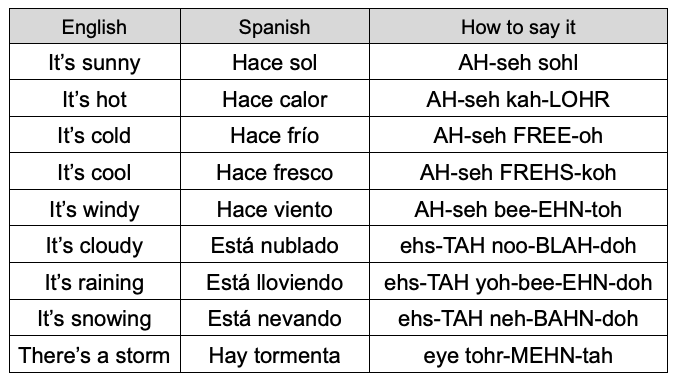
A Five-Minute Daily Routine
You don’t need a plan for this. You need the same five minutes every day.
Pick a time, like breakfast or the start of class. Look out the window together and ask ¿Qué tiempo hace hoy? Let them answer with one phrase: Hoy hace sol. If they only say sol, that’s fine. Say the full phrase back and keep going. Add an action to each one, like arms wide for the sun or shivering for hace frío, so they remember it without translating.
After a few days, add one more sentence, Hace frío. Me pongo un suéter. (It’s cold. I put on a sweater.) Now they’re connecting the weather to something they do.
I love how something as simple as asking “¿Cómo está el clima hoy?” each morning can build confidence over time. I talk more about how small, consistent routines strengthen language in this post on comprehensible input in the Spanish classroom.
If you’d like to add movement, this one helps too: How to Use Total Physical Response to Teach Spanish
Weather in Spanish Songs
Songs are a great way to introduce and practice any concept. My favorite is ¿Cómo está el clima? because of its simple lyrics and catchy rhythm. I also use other songs I find online, and I fit them into my daily routine. Look around until you find the ones that keep your students engaged.
I play a song several times, because language acquisition happens through repeated exposure in different contexts. The first time, we listen as a group. The second time, I point to flashcards or posters of the different types of weather. The third time, I act it out and ask my students to imitate me. Then I choose a student to act out the weather while the rest guess it.
Weather in Spanish Crafts
I love arts and crafts, and I use them as much as I can. Crafts help students practice and reinforce a concept while they develop their fine motor skills. A paper-plate weather wheel with a paper-fastener spinner is easy to make, and kids can spin it and say the phrase it lands on. You’ll find more ideas here: weather crafts and activities.
Flashcards and Pictures
Flashcards and pictures help children connect new words to what they already know. There are many ways to use them in a lesson.
Weather in Spanish Games
When students are engaged and having fun, they’re more likely to remember new words. Here are my four favorite weather games, and you can make all of them with index cards.
Weather Spoons
Play it like the card game Spoons, but match weather words instead of numbers. Make four cards for each weather word, and give each player four cards. At your signal, ¡Cambien! (Switch!), everyone passes one card they don’t want to the player on their left. When a player has four matching cards, they quietly take a spoon from the center. The others notice and grab spoons too, and the player left without a spoon loses.
Weather Spin the Wheel
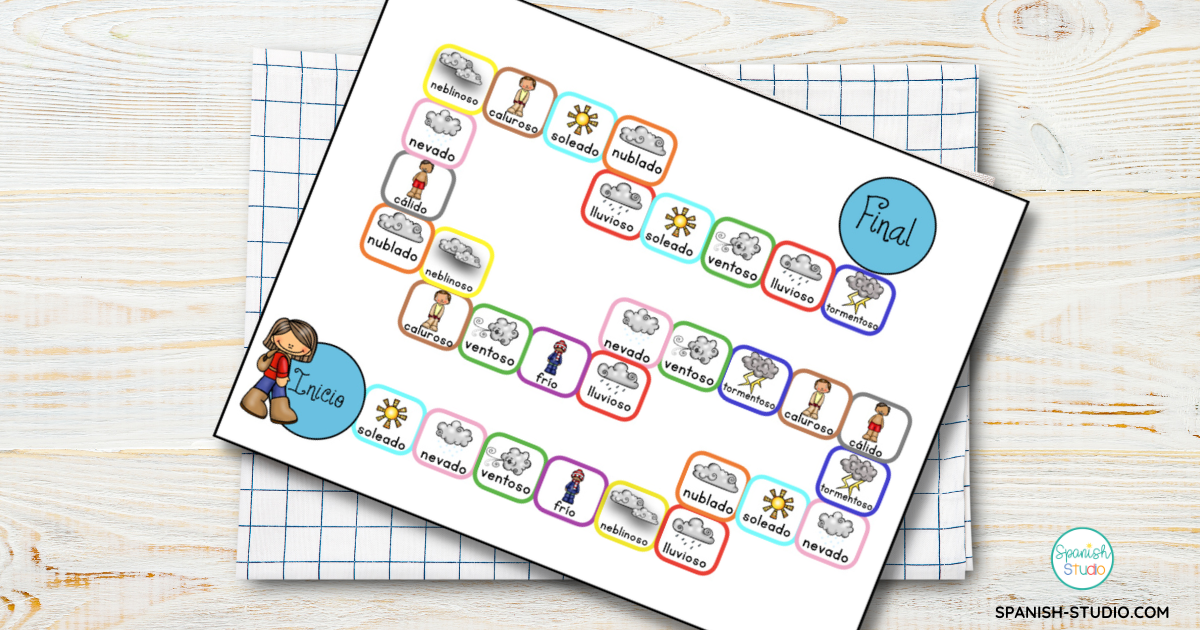
Students take turns spinning the wheel and moving their marker to the matching space on the board. On that space, they say what the weather is like. If they can’t say it, they move back two spaces, and the next player gets a chance to answer. If that player answers correctly, they move up two spaces. The first one to reach the end wins.
Weather Memory Game / Find the Match
Students use the cards to play the traditional memory game. For Find the Match, they walk around the room to find the person holding the same weather card.
Weather Puzzle
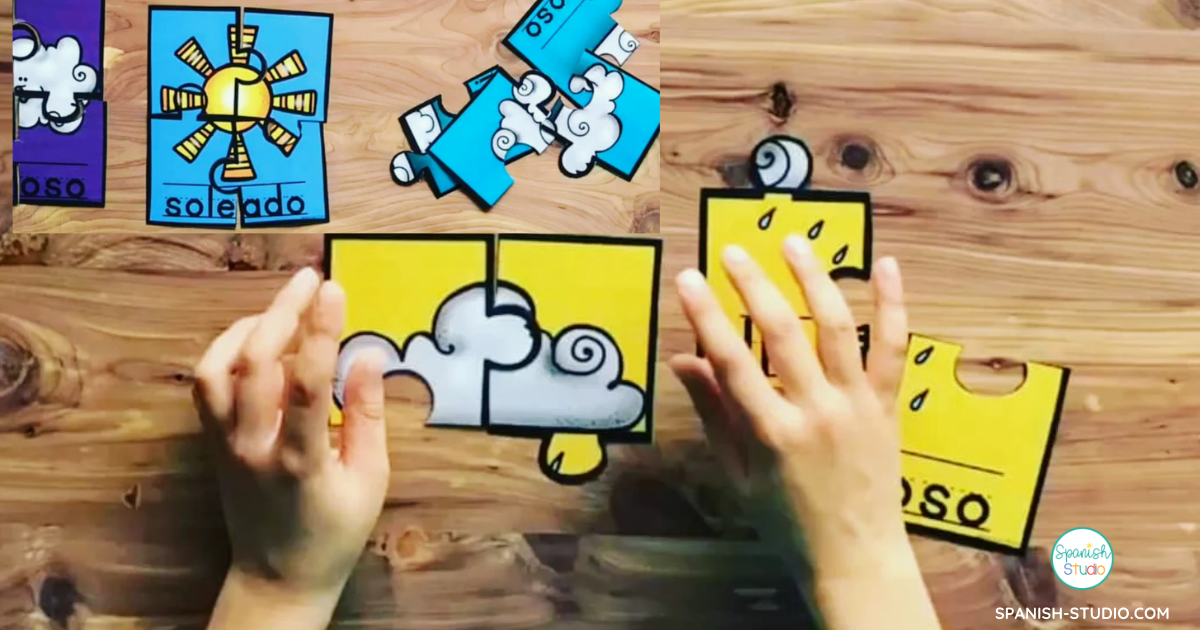
Students put the puzzle pieces in order to find the hidden picture. I use it both as an independent activity and as a center.
Ready-Made Weather in Spanish Resources
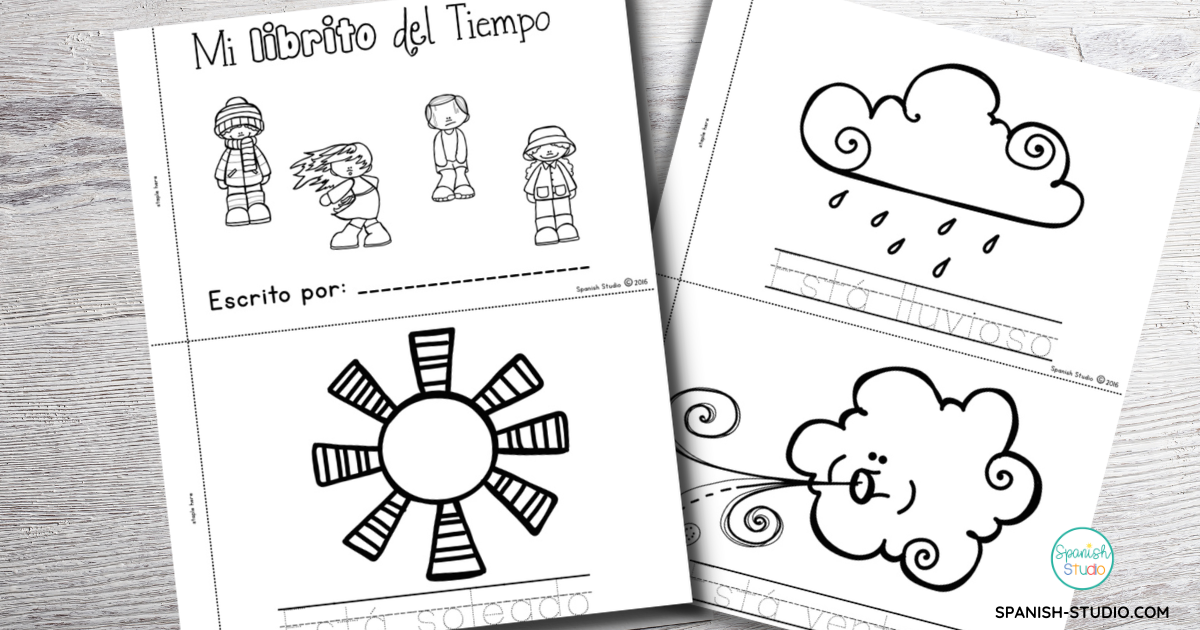
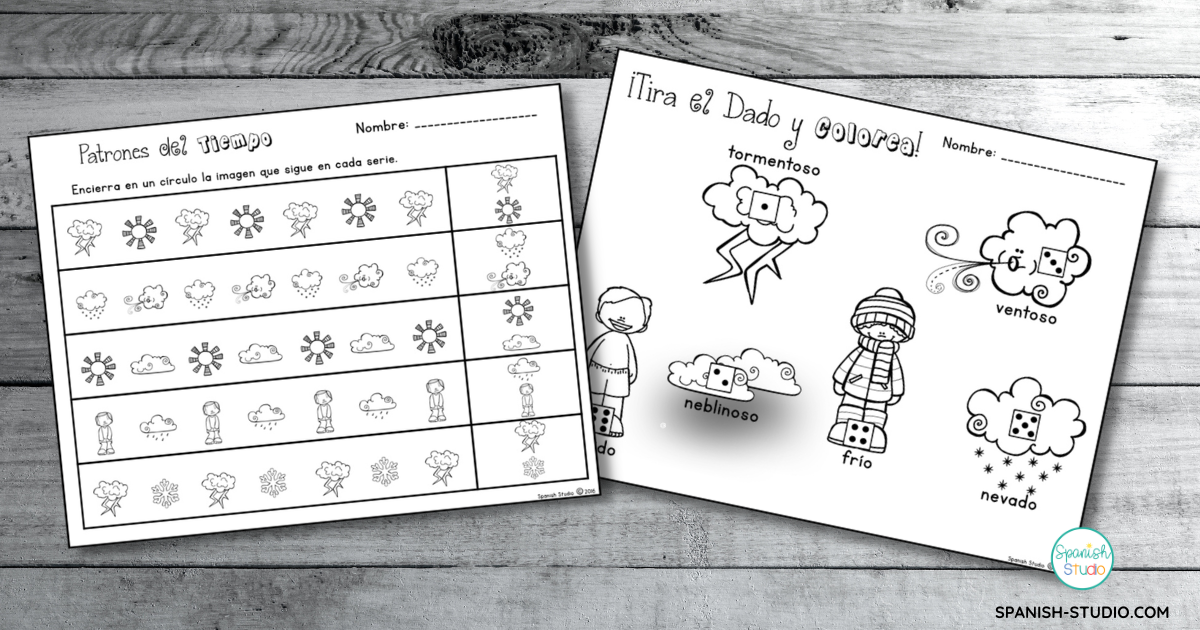
If you’d rather not make the cards and the board yourself, the four games above are in my pack: Weather in Spanish Games & Activities. Since the weather is getting colder, these two pair well with it: Clothes in Spanish (Fall) and Clothes in Spanish (Winter).
Weather in Spanish FAQ
How do you say weather in Spanish?
El tiempo or el clima. Both are correct.
How do you ask what the weather is like in Spanish?
¿Qué tiempo hace? or ¿Cómo está el clima?
How do you say “it’s sunny,” “it’s hot,” and “it’s cold” in Spanish?
Hace sol, hace calor, and hace frío.
What’s the difference between tiempo and clima?
El tiempo is what people usually say for the weather on a given day, and el clima is common for the overall climate of a place. Many people use both for daily weather.
How can I teach weather in Spanish to kids?
Ask about the weather at the same time every day, let them answer with one phrase, and add actions, songs, and games.
Is there a good song to teach weather in Spanish?
¿Cómo está el clima? is the one I use, because the lyrics are simple and catchy.
Interested in more?
Download my FREE Guide: “Simple Ways to Teach Spanish Like a Pro (even if you don’t speak Spanish)”