
Total physical response Spanish teaching is simple: you say a word or command and do the movement at the same time. Kids understand first and speak later, and nobody has to translate.
Let me start by asking you: have you ever been in a class with a teacher who speaks so fast that you don’t understand a thing? Or in a foreign country, trying to figure out what people are saying? How did you feel? Anxious for sure, confused maybe, and definitely like you wanted to run out of there and disappear.
That feeling is shared by most Spanish learners the first time they hear the language. It’s also why the strategy you choose matters so much. If you teach them well, you build their confidence, and that makes a huge impact in their lives.
And if you’ve ever had a child who understands your Spanish but answers in English, TPR is a good place to start. It gives kids a way to respond without having to speak yet.
What Is Total Physical Response (TPR)?
TPR stands for Total Physical Response. It’s the combination of language and movement to support language acquisition. Pairing a word with an action gives children a second way to remember it: they hear the word, they see what it means, and they do it.
It was developed by James Asher, a psychology professor, in the 1960s.
Why Total Physical Response Spanish Lessons Work
- Listening alone often isn’t enough. Kids need to connect words, phrases, and concepts to an action, a gesture, or a sign to remember them.
- It shows kids what you expect from them. That takes away some of the anxiety that comes with the unknown.
- It keeps them engaged. Moving beats sitting still and being quizzed.
Two Types of TPR
There are two ways to use TPR when you teach Spanish:
Instructional TPR happens when you give an instruction and act it out at the same time. If you say Siéntate (Sit down), you sit down too. Students copy your action, and that’s what you want: a physical and verbal response, even if it’s just repeating.
Educational TPR happens when you teach concepts. You act out actions, use props, and use visuals to teach a specific word or idea.
Watch this video to see both types in action and get ideas for your classroom or home.
Total Physical Response Spanish Commands
Start with a few of these and add more over time. The capital letters show which part of each word to say louder. The sounds follow Latin American Spanish.
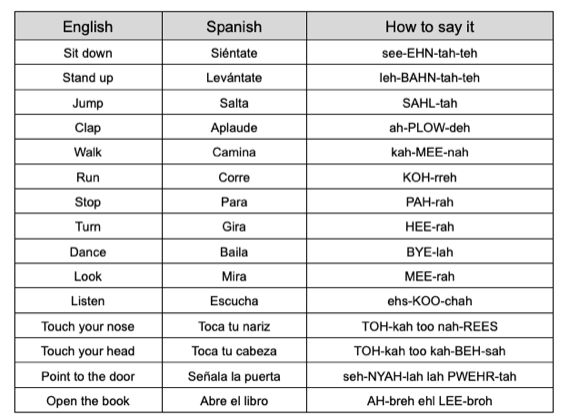
How to Start Total Physical Response Spanish Today
- Pick three or four commands. Salta, aplaude, siéntate, levántate. That’s enough for the first day.
- Say it and do it together. Say the command and do the action at the same time. Kids copy you.
- Say it and let them do it alone. Once they’re comfortable, say the command without doing the action. If they respond, they understood.
- Add the next few commands. Keep the earlier ones in the mix.
- Let them give the commands. When they’re ready, let a child be the leader. That’s how they start speaking, with no pressure.
Don’t correct mistakes. If a child does the wrong action, just show the right one and keep going. If they answer in English, say it back in Spanish.
Total Physical Response Spanish Games and Activities
Kids need many chances to review and practice Spanish. These games are a good way to do it.
Simon Says (Simón Dice)
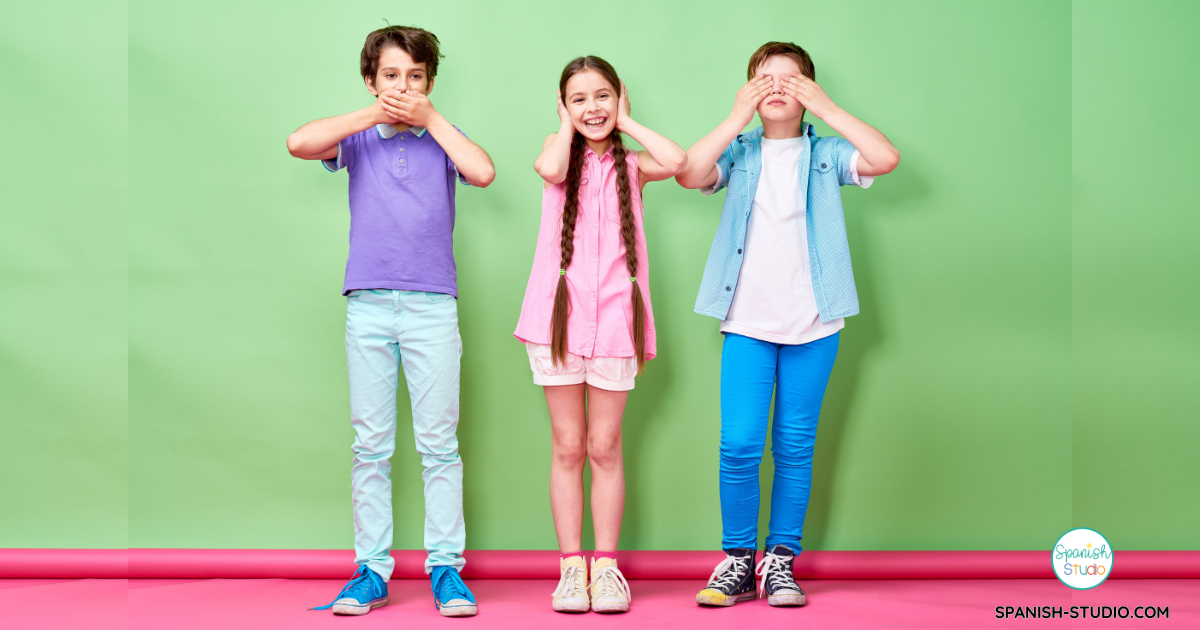
This is a great game to practice vocabulary with any level of student. You give commands and the kids follow them, but only when you say the magic words: Simón dice: toca tu nariz. If you leave them out, they stay still. You can use any vocabulary or content, and it works for children of all ages.
Songs
Singing Spanish songs is a great way to review and practice any concept. Children love to sing, dance, and make noise. Choose songs with specific vocabulary and add the actions, so they sing it and act it out.
Charades

In charades, a student acts out a word or phrase without talking and the rest of the group guesses it. Try acting out feelings, like asustado or emocionado, with this post: Emotions in Spanish That Go Beyond Vocabulary. Older kids can ask ¿Qué estoy haciendo? (What am I doing?) and answer Estás saltando (You’re jumping). It also works on problem-solving, creativity, and nonverbal communication.
Puppet Show
A puppet show is a performance where puppets act out human or animal actions. It’s great for practicing language, creativity, fine motor skills, and self-confidence. Give the puppets commands, and let the children make them respond.
Role Play
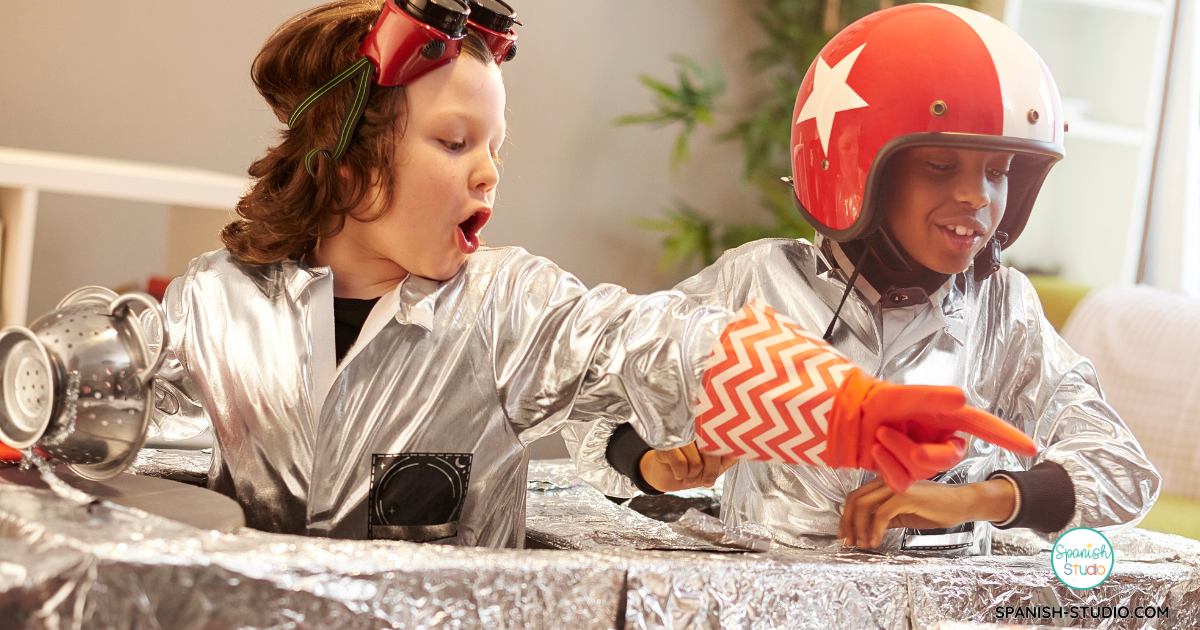
This is an extraordinary activity for communication skills, and it works with both little children and more advanced students. For the little ones, I give them a scenario and let their creativity shine. For older students, who may be more confident speaking out loud, I give them specific vocabulary to challenge them in addition to the scenario. A restaurant scene is a good place to start: ¿Qué quieres? Quiero pizza, por favor. (What do you want? I want pizza, please.)
Guess the Mime
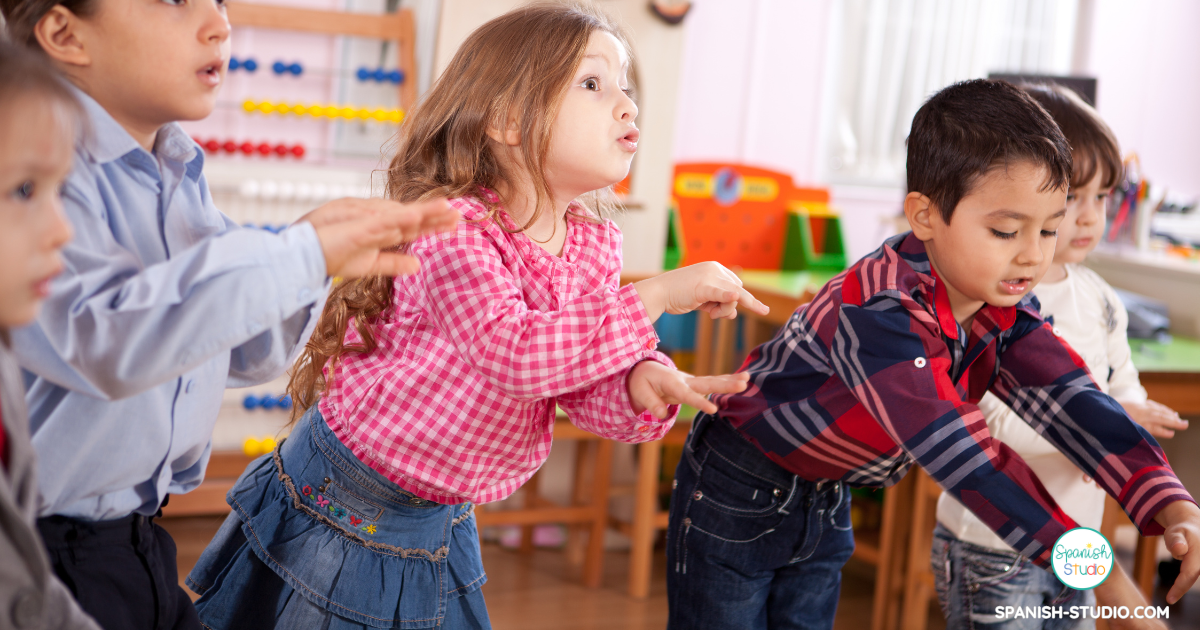
This is the TPR version of Pictionary. One child acts out an action or word, and the others guess. It’s excellent for vocabulary and language skills. ¡Adivina! (Guess!)
Ready-Made Total Physical Response Spanish Resources
Everything above is free to use. The part that takes time is the prep: choosing the vocabulary, making the cards and games, and putting it all together. I did that work so you don’t have to do it every time.
These two are built for TPR-style practice:
You’ll find more in my TPT store and in my shop on this site.
Total Physical Response Spanish FAQ
What is TPR in Spanish?
TPR stands for Total Physical Response. It’s a method that pairs words with actions, so kids understand the language by moving.
How do you use TPR to teach Spanish?
Say a command and do the action together. Then say it alone and let kids respond. Start with a few commands and add more over time.
What are good TPR commands in Spanish?
Siéntate, levántate, salta, aplaude, camina, corre, and toca tu nariz are all easy places to start.
Is TPR good for beginners?
Yes. Kids don’t have to speak, so it takes away pressure.
What ages is TPR good for?
All ages. Little ones love games like Simón Dice, and older students can take on role play and more vocabulary.
Can I use TPR if I don’t speak Spanish?
Yes. Start with the commands in the table above and practice the pronunciation first.
Who created TPR?
James Asher, a psychology professor, developed it in the 1960s.
What should I do alongside TPR?
Pair it with comprehensible input: Comprehensible Input: How to Speak Spanish Fluently! For more, see Key Strategies for Teaching Spanish Like a Pro and My Top 10 Spanish Reading Comprehension Strategies.
Interested in more?
Download my FREE Guide: “Simple Ways to Teach Spanish Like a Pro (even if you don’t speak Spanish)”