
Comprehensible input in Spanish means giving kids Spanish they can understand: language delivered in context, with visuals, gestures, and repetition, so the meaning is clear.
Do you want your kids to be fluent Spanish speakers? Are you going crazy trying to find classes, resources, and strategies that work? Let’s talk about comprehensible input. It changed how I think about teaching Spanish, and you can start using it today.
Have you ever wondered why it was so difficult to master Spanish in high school? Or why classes were so frustrating back then? I never experienced that with Spanish, since I’m a native speaker, but I did when I tried to learn French. After so many years, the only French I can speak is “Bonjour.”
My younger brother had the same classes I did in high school, and he can speak it fluently. The one tiny difference is that he spent two years living in France after graduating. He was surrounded by French he could understand in context. I learned it from isolated verb conjugations, memorized grammar rules, and repeated vocabulary words, with no context at all. And that’s not how language acquisition happens naturally.
Comprehensible Input Spanish: What It Means
Language acquisition happens when you understand what you’re receiving. In other words, when language is meaningful and delivered in a rich context, in a way we understand without having to think about it.
We can consciously apply grammar rules and verb conjugations when we write or take a test. But in real life, when we communicate, we don’t. When we speak, we don’t analyze the subject, the verb form, or the predicate. We just speak, because the language is already part of us.
So how does that happen in the classroom? How can learning Spanish be meaningful? With comprehensible input.
Input is the language we receive from our environment. Comprehensible simply means we receive it in a way that we understand. Comprehensible input isn’t a strategy or a teaching method. It’s a concept: language is acquired when we’re exposed to real, meaningful experiences that we can understand in a rich context. The idea comes from linguist Stephen Krashen, and the short version is that the best input is mostly language you already understand, with a little new language mixed in.
Comprehensible Input Spanish Examples for Kids
- Point and say it. Mira. Es un perro grande. El perro está en el parque. (Look. It’s a big dog. The dog is in the park.)
- Act it out. Yawn and rub your eyes: Estoy cansado. (I’m tired.)
- Draw while you talk. Dibujo una casa. La casa es azul. (I’m drawing a house. The house is blue.)
- Narrate your routine. Ahora nos ponemos los zapatos. (Now we put on our shoes.)
- Walk through a picture book. ¿Qué ves en la página? Veo un gato. (What do you see on the page? I see a cat.)
Every one of these does the same thing: it says the Spanish and shows the meaning at the same time.
How Do I Use Comprehensible Input With My Students?
Expose them to many different experiences and lots of repetition. Offer engaging, meaningful activities that children can relate to, and let them meet the same language again and again in different contexts.
Comprehensible Input Spanish Activities for Kids
Here are my favorite strategies and activities.
1. Calendar Talk
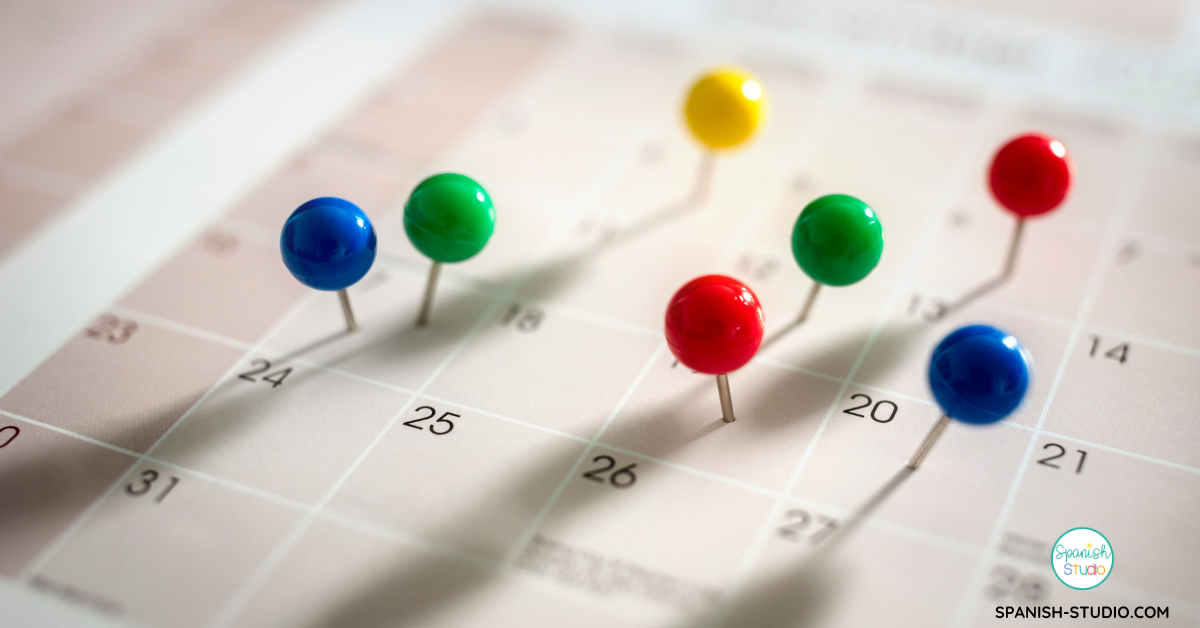
This is one of the simplest, richest comprehensible inputs you can give your students. I always start my day with the same routine: calendar talk. I use visuals to talk about the weather, the days of the week, the months of the year, the season, special celebrations, and what to expect today and in the coming days. It gives my children the chance to take part in rich conversations.
Try: Hoy es martes. Hace sol. Hoy vamos a leer un cuento. (Today is Tuesday. It’s sunny. Today we’re going to read a story.)
For more on the weather part: Weather in Spanish Activities for the Spanish Classroom
2. Sing Songs

Songs are an amazing tool when you teach or learn Spanish. I use songs as part of my teaching content, and we plan activities around a specific song. With puppets, visuals, games, and hands-on activities, we make sure it’s comprehensible. The simple lyrics and rhythm also make it easier for children to memorize.
3. Read Stories for Comprehensible Input Spanish

Reading is power, and it’s one of my favorite strategies. Every couple of months we do a novel study with an engaging story. We use visuals, vocabulary flashcards, reading comprehension, and writing activities. Every day, children also have a quiet time for independent reading, and they get to choose any book they like.
More ideas: My Top 10 Spanish Reading Comprehension Strategies
4. Build Background Knowledge
I use visual text support for any novel study, song, or text we work on. That way students can understand the context of the story and the words they don’t know. I organize the images and explanations in a PowerPoint or Google Slides presentation by chapter, and we discuss it together.
5. Use Visuals
Visuals are a magnificent way to help children understand what they’re hearing. I use them to scaffold learning: flashcards, puppets, real-life objects, images, and more.
Try: Mira. Esto es una manzana. (Look. This is an apple.)
6. Watch Movies or Videos

I love using movies and videos with a novel study. I read books that have a movie or video clip, and we compare and contrast the two. We also show a video, pause it, and talk about it.
Try pausing and asking: ¿Qué pasó? (What happened?) and ¿Qué crees que va a pasar? (What do you think will happen?)
7. Plan Hands-On Activities
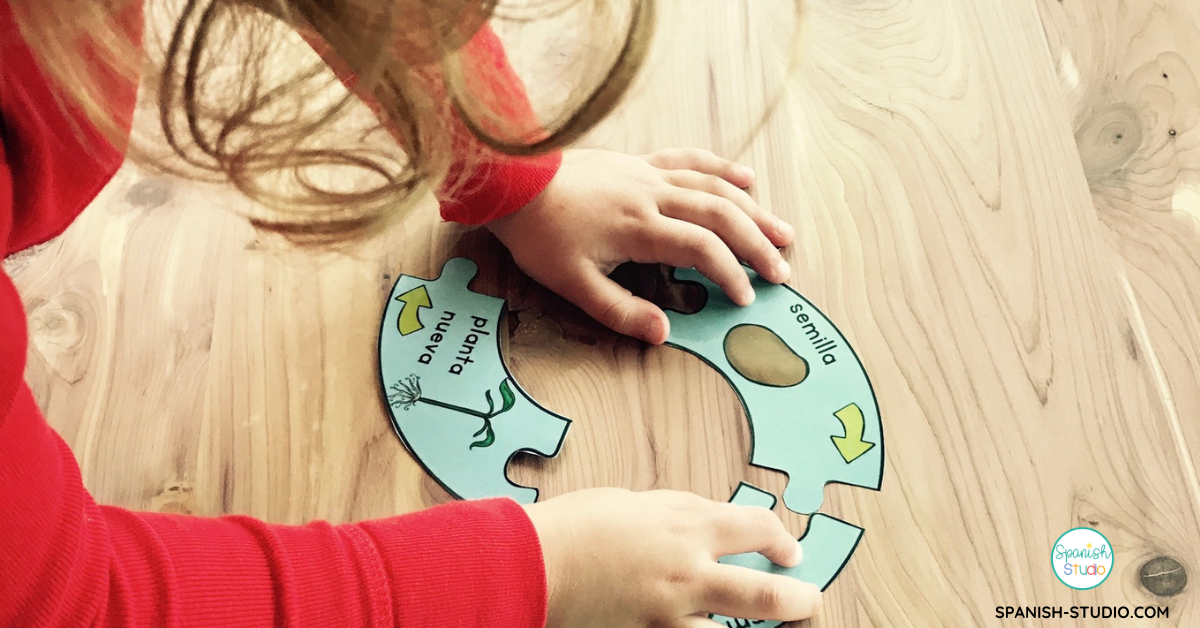
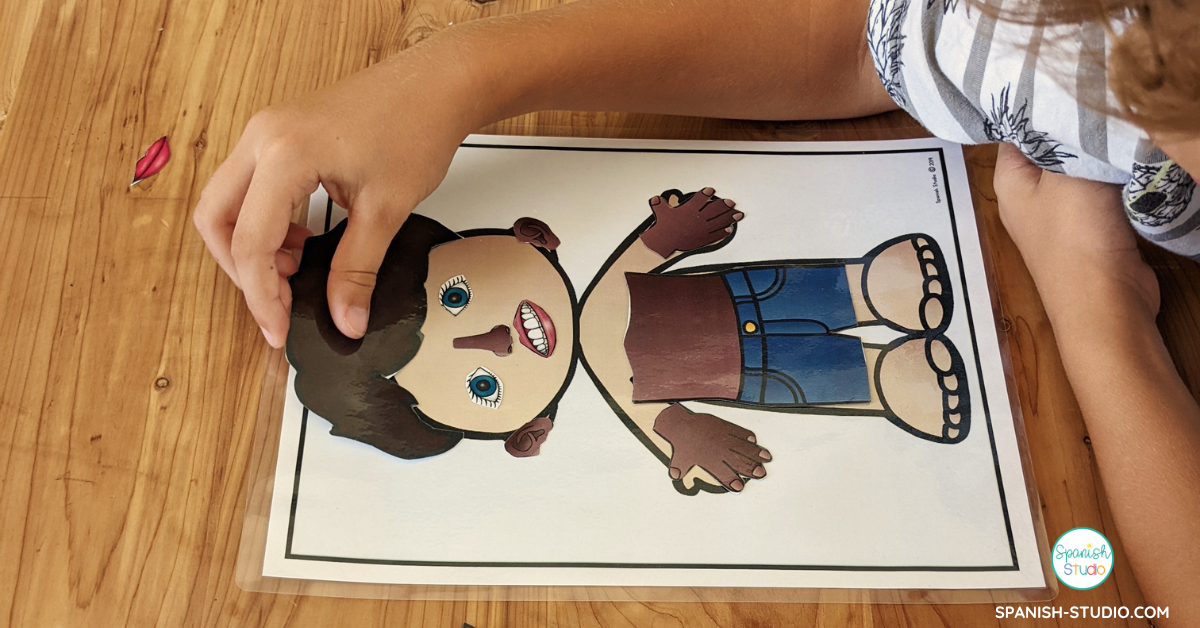
Hands-on activities are a great way to deliver comprehensible input. They make learning engaging, help children remember, and keep them focused and motivated. Children learn by doing, and that applies to a second language too.
8. Use Total Physical Response (TPR)
TPR is an approach to teaching a second language. It links listening to physical activity to support understanding. I love using it to practice listening and build vocabulary. I use it with games like Simon Says, skip counting with a tennis ball or a balloon, and hopscotch. It’s engaging and fun for students.
Here’s how I use it: How to Use Total Physical Response to Teach Spanish
9. Model, Model, Model
This is a must for any teacher, whether you teach a second language, math, or science. Modeling is one of the most useful strategies you can use in the classroom. I try to model everything I do and everything I want my children to do. When you model, there’s no chance for misunderstanding about what’s expected. It helps children understand what they’re being asked, and it connects Spanish words with actions.
Try: Mira cómo lo hago. (Watch how I do it.)
How to Tell If Your Input Is Comprehensible
You don’t need a test. Look for these signs:
- They follow a command like Siéntate without translating it.
- They point to the right picture when you name it.
- They laugh or react at the right moment in a story.
- They answer with a gesture, one word, or even in English.
That last one is normal. Understanding comes first, and speaking comes later. If they understand, the input is working.
What Gets in the Way of Comprehensible Input
- Translating every word. Kids stop paying attention to the Spanish and wait for the English.
- Speaking too fast, or without any support. If they can’t follow, it’s just noise. Slow down and add a picture or a gesture.
- Word lists with no context. Words stick when they show up inside a story, a song, or a routine.
Start Today: A 5-Minute Plan
- Pick one routine. Breakfast, getting dressed, or a bedtime story.
- Choose three to five words, and have a picture or a real object for each.
- Say each one in a short sentence, then say it again in a new sentence. Go slowly.
- Check that they understand. Ask them to point or act: Señala la manzana. (Point to the apple.) ¿Dónde está la manzana? (Where is the apple?)
- Do the same routine tomorrow. Repetition is what makes it stick.
Comprehensible Input Spanish at Home
You don’t have to teach a full lesson. Small moments do a lot:
- Narrate your routine in short Spanish sentences, with gestures: Ahora nos lavamos las manos. (Now we wash our hands.)
- Read picture books together and point to the pictures.
- Sing a song in the car or at dinner.
- Keep it short and regular. Five minutes a day is better than an hour once a month.
For more, see Key Strategies for Teaching Spanish Like a Pro.
Ready-Made Comprehensible Input Spanish Resources
Everything above is free to use. The part that takes time is the prep: finding the visuals, building the activities, and putting it all together. I did that work so you don’t have to do it every time.
A few to start with:
- Spanish Classroom Decor Bundle: a Spanish environment where students are surrounded by vocabulary
- Nursery Rhymes in Spanish: Math and Literacy Center Activities: repetition, movement, and vocabulary
- Close Reading in Spanish: Desert Animals: a text to read together
You’ll find more in my TPT store and in my shop on this site.
Comprehensible Input Spanish FAQ
What is comprehensible input in Spanish?
It’s Spanish that learners can understand, usually with help from pictures, gestures, and context, delivered with lots of repetition.
What are examples of comprehensible input in Spanish?
Pointing at a picture while you talk, acting out a word, drawing as you speak, narrating your routine, and reading a picture book together.
Who came up with comprehensible input?
Linguist Stephen Krashen.
Is comprehensible input a teaching method?
No. It’s a concept. There are many ways to deliver it, like stories, songs, visuals, TPR, and games.
Is comprehensible input the same as immersion?
No. Being surrounded by Spanish only helps if kids can understand it.
Can kids learn Spanish with comprehensible input alone?
Understanding is the foundation, but kids also need chances to speak, read, and write. Use it alongside those.
Can I use comprehensible input if I don’t speak Spanish?
Yes. Start with a few phrases, a picture, and a gesture, and repeat them. Simple and clear is better than long and fast.
How do I get started?
Pick one routine, like calendar talk or a bedtime story, and do it in Spanish every day.
Interested in more?
Download my FREE Guide: “Simple Ways to Teach Spanish Like a Pro (even if you don’t speak Spanish)”