
Tildes in Spanish are the written accent marks (á, é, í, ó, ú) that show which syllable to say louder. Whether a word needs one depends on three simple rules: where the stress falls, and how the word ends.
Teaching las tildes can feel like one of those tricky grammar lessons we wish came with a magic wand. I get it. Explaining agudas, graves (or llanas), and esdrújulas, and why tildes pop up in some words but not others, can feel overwhelming, especially with elementary students. But don’t worry! With engaging, hands-on activities, you can turn this topic into something accessible, fun, and memorable.
Here’s a step-by-step guide, including some of my favorite activities that I’ve used with my own kids and students.
What Are Tildes in Spanish?
Tildes are the small accent marks (´) that change how a word is pronounced and sometimes even what it means. For example, tú (you) and tu (your) look almost the same, but the tilde makes them different words. Teaching this early also helps students read and write more accurately in Spanish.
One note: the wavy line over the ñ is called a virgulilla, although many people also call it a tilde. In this post, tildes means the accent marks on vowels.
Tildes in Spanish: The 3 Rules
Every Spanish word has one strongest syllable, called the sílaba tónica. The type of word depends on where that syllable is, and the type tells you whether it needs a tilde.
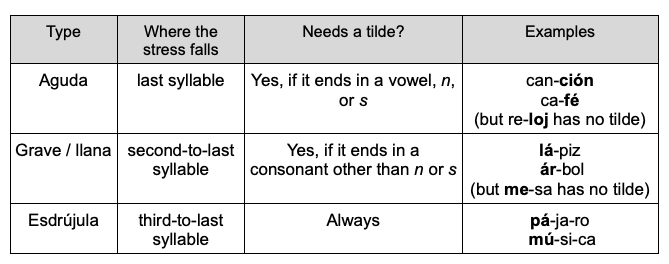
Llanas are the most common type of Spanish word, and most of them end in a vowel, n, or s, so they don’t need a tilde.
There’s also a fourth type, sobresdrújulas, with the stress on the fourth-to-last syllable or earlier. They always have a tilde, and they usually appear when pronouns are attached to a verb: cómpramelo (buy it for me), cómetelo (eat it).
Building a Foundation: Syllables and the Sílaba Tónica
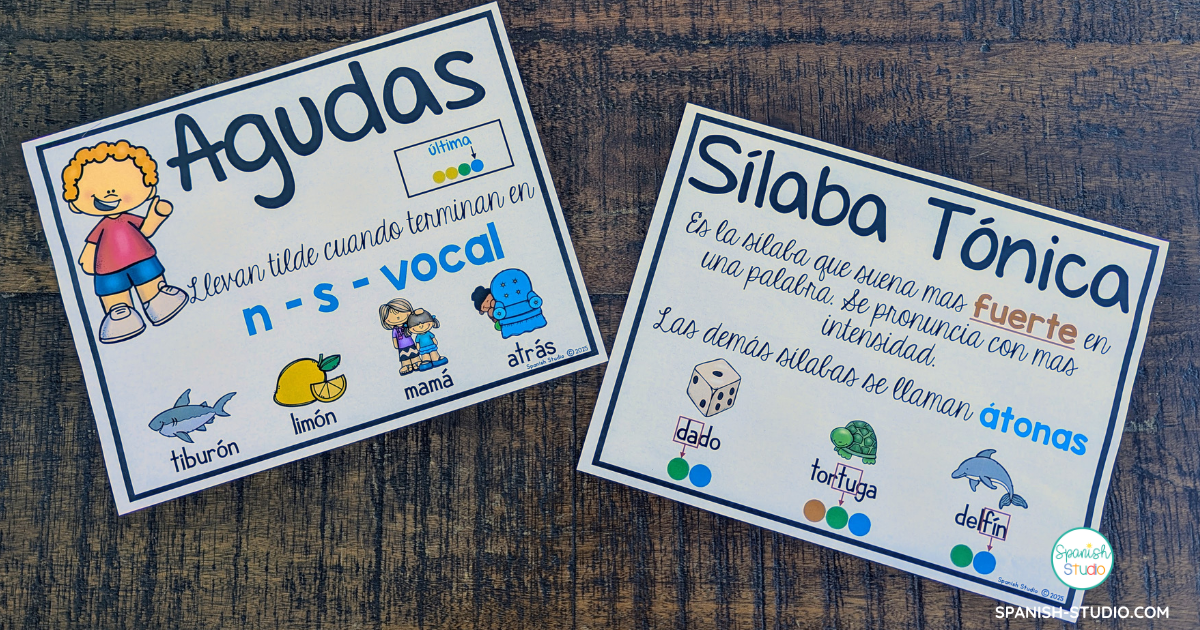
Before you teach the rules, start with the basics: breaking words into syllables and finding the sílaba tónica (the strongest syllable). Once students can do that, the rest starts to click. For more on this step, see Syllables in Spanish.
- Syllable Sorting: Write the syllables of common words on cards. Students arrange the cards into complete words, then find the sílaba tónica by clapping, tapping, or marking it with a sticker.
- Syllable Puzzles: Write syllables on colorful index cards. Students piece the words together and clap the strongest syllable once they’re done.
Simplify the Rules with Visuals
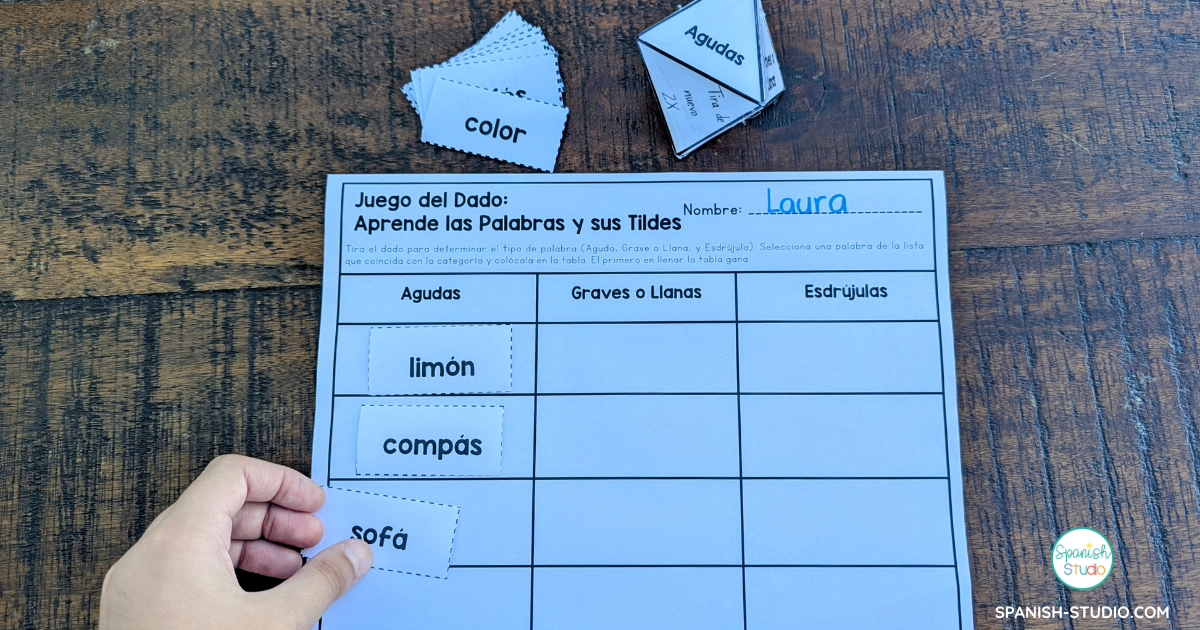
Grammar rules can feel overwhelming, so visuals help. Use anchor charts or posters that show the three types of words. Keep the rules short, add colorful examples, and display the charts where students can see them during the lesson.
If you’re looking for more ways to teach foundational grammar, check out my post How to Teach Nouns in Spanish in 3 Easy Steps. It’s full of practical strategies that can help build your students’ understanding of Spanish grammar.
Hands-On Activities for Teaching Tildes in Spanish
Interactive activities keep students engaged while they practice. Try these:
- Cut-and-Glue Sentences: Give students sentences with words that need tildes and some that don’t. They find the sílaba tónica in each word, decide if it needs a tilde, and sort the words into agudas, graves, or esdrújulas.
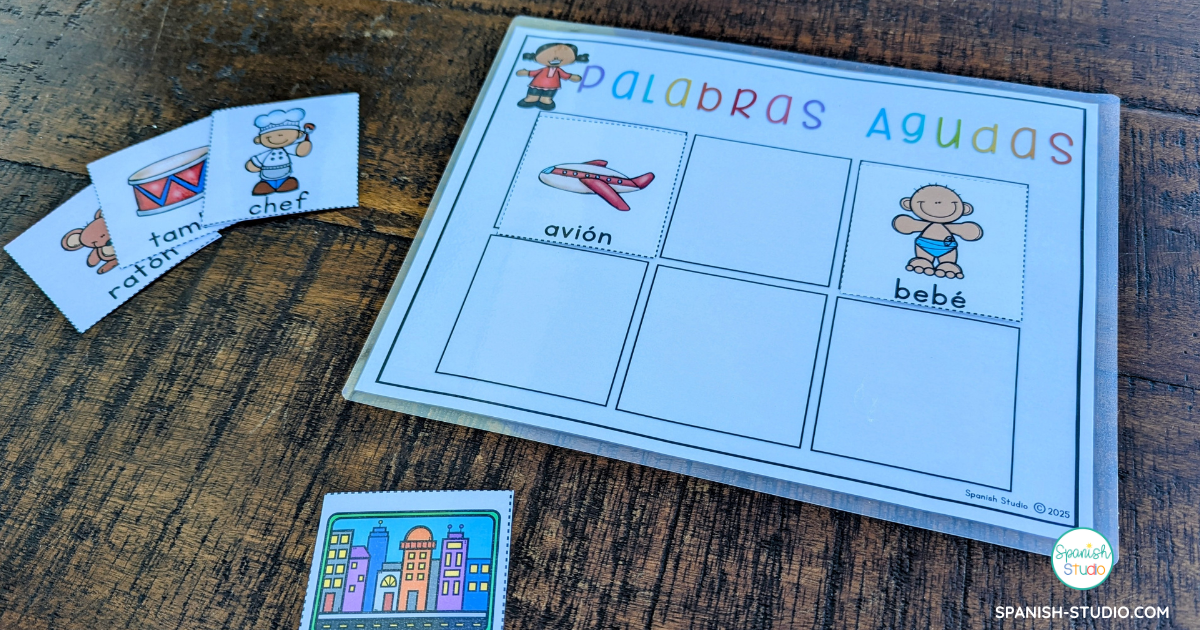
- Sorting Mats: Make mats labeled agudas, graves, and esdrújulas. Students sort word cards onto the right mat. For bonus points, they explain why each word belongs there.
Games to Make Learning Tildes Fun
Kids learn best when they’re having fun. Here are two ways to turn the lesson into a game:
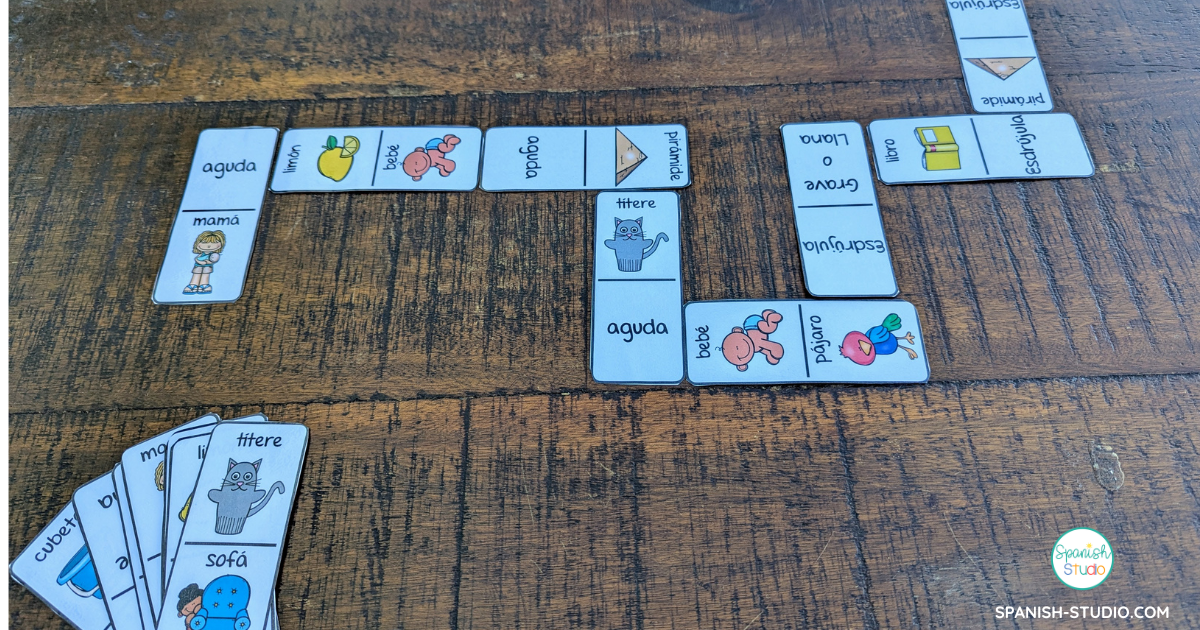
- Tilde Match-Up: Make puzzles where one piece has a word (like camión) and another shows its syllables (ca-mión), its type (aguda), or why it has a tilde. Students match the pieces.
- Classroom Relay: Place word cards at one end of the room and three bins labeled agudas, graves, and esdrújulas at the other. Students run to grab a card, decide which bin it belongs in, and place it there. It also combines movement with learning.
Two Tildes Kids Meet Early
Question words. Qué, cómo, dónde, cuándo, quién, and cuál always have a tilde when they ask a question: ¿Dónde está el gato? (Where is the cat?)
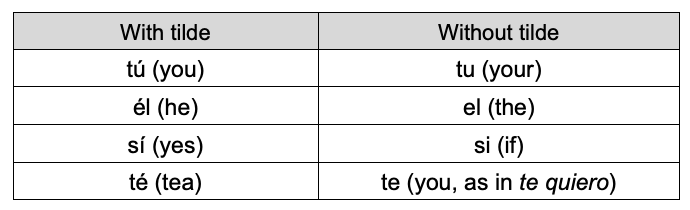
Words that look alike. Some tildes tell two words apart:
Connecting Tildes in Spanish to Real-World Texts
Show students how tildes appear in real texts, so they see why they matter.
Tilde Hunt: Give students a short story and ask them to highlight the words with tildes, decide whether each is aguda, grave, or esdrújula, and discuss why some words have tildes and others don’t. As a result, they see the practical use of las tildes.
Start Teaching Tildes in Spanish Today: A 10-Minute Lesson
- First, write five words on the board: canción, lápiz, pájaro, mesa, reloj. Leave the tildes off.
- Then clap the syllables of each word together.
- Next, find the sílaba tónica. Ask ¿Cuál es la sílaba tónica? Say each word again, and let students feel the strongest syllable.
- After that, sort the words: canción and reloj are agudas, lápiz and mesa are llanas, and pájaro is esdrújula.
- Finally, check how each word ends. Canción ends in n and lápiz ends in z, so they need tildes. Pájaro is esdrújula, so it always does. Mesa and reloj don’t need one.
Ready-Made Tildes in Spanish Resources
Everything above is free to use. However, the part that takes time is the prep: making the posters, word cards, and games. I did that work so you don’t have to.
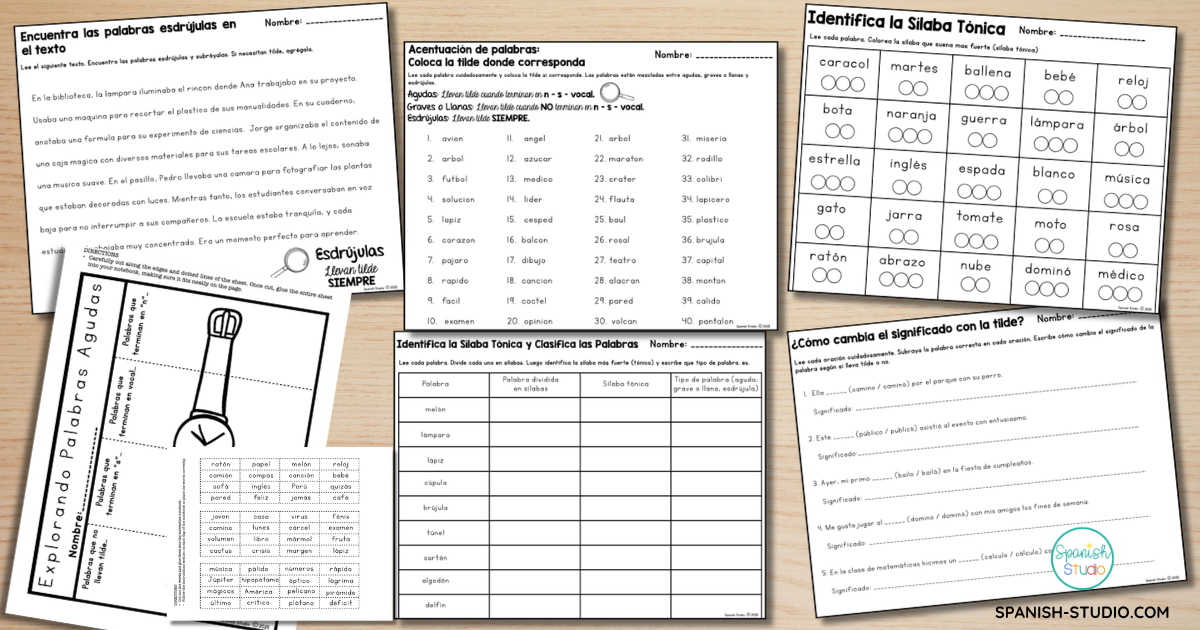
My Las Tildes / Spanish Accents: Interactive Activities for the Classroom pack has posters that explain the rules for agudas, graves or llanas, and esdrújulas, plus games and hands-on activities.
You’ll find more in my TPT store and in my shop on this site.
Tildes in Spanish FAQ
What are tildes in Spanish?
Tildes are the written accent marks on vowels (á, é, í, ó, ú). They show which syllable to stress and help tell similar words apart.
How do you know when a Spanish word needs a tilde?
Find the strongest syllable, decide if the word is aguda, grave, or esdrújula, and check how it ends. Esdrújulas always need a tilde.
What are agudas, llanas, and esdrújulas?
They’re types of words based on where the stress falls: the last syllable (agudas), the second-to-last (llanas or graves), or the third-to-last (esdrújulas).
What are sobresdrújulas?
Sobresdrújulas (also spelled sobreesdrújulas) are words with the stress on the fourth-to-last syllable or earlier. They always need a tilde. They usually appear when a verb has pronouns attached, like cómpramelo (buy it for me) or dígaselo (tell it to him).
What’s the difference between a tilde and the stress?
The stress is the sound, and the tilde is the written mark. Not every stressed syllable gets a tilde.
Is the ñ a tilde?
The wavy line over the ñ is properly called a virgulilla, although many people also call it a tilde.
How do I teach tildes to kids?
Start with syllables and the sílaba tónica, then teach the three rules with visuals, sorting activities, and games.
Interested in more?
Download my FREE Guide: “Simple Ways to Teach Spanish Like a Pro (even if you don’t speak Spanish)”