
Did you know most kids can name a circle and a square in Spanish before they can count to ten? That’s because shapes in Spanish, known as figuras geométricas, show up everywhere in a child’s world, long before formal lessons ever begin.
Teaching shapes in Spanish isn’t just about vocabulary. It’s one of those rare topics that quietly builds math skills (size, position, spatial reasoning), problem-solving, and even early writing skills — all while feeling like play, not a lesson.
I integrate shapes in Spanish into almost every theme I teach, because once kids can identify figuras geométricas, they start noticing them everywhere: on street signs, in their toy bins, on their dinner plate. Here’s exactly how I introduce and reinforce shapes in Spanish for kids, through vocabulary, books, songs, and games that actually work.
In this post:
- Complete Shapes in Spanish Vocabulary List
- How to Describe a Shape in Spanish
- Best Books to Teach Shapes in Spanish
- Shapes in Spanish Songs Kids Love
- Hands-On Shapes in Spanish Games and Activities
- FAQ
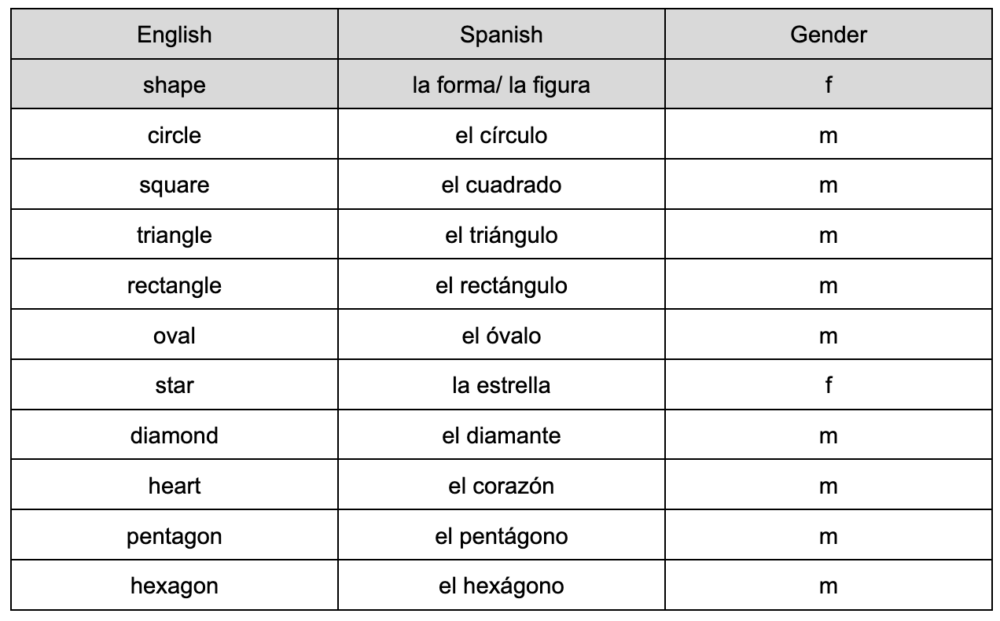
Complete Shapes in Spanish Vocabulary List
How to Describe a Shape in Spanish
Once kids know the names of shapes, the next step is using them in a sentence. The easiest pattern phrase to teach is:
“Tiene la forma de un/una ___” (It has the shape of a ___)
For example:
- La pelota tiene la forma de un círculo. (The ball has the shape of a circle.)
La caja tiene la forma de un cuadrado. (The box has the shape of a square.)
This single phrase turns passive vocabulary into something kids can actually use in real conversation, a small shift that makes a big difference.
Why Teaching Shapes in Spanish Matters
Knowing shapes in Spanish helps children expand their vocabulary, understand math concepts such as size and position, develop problem-solving skills, organize visual information, cultivate writing skills, and build spatial relations.
I like to introduce shapes in Spanish to my children through a variety of fun and engaging activities.
Best Books to Teach Shapes in Spanish
Stories are the best resource to introduce and teach any concept. I use any book that has shapes and read it to my students using the TPRS teaching strategy. Some suggestions that I really like are:
Formas: This short book tells the story of Jacinto and how he discovers figuras geométricas everywhere he goes exploring with his sister Rosa. The simple text and images make it a fun, engaging book to read.
El Señor Cuadrado y sus amigos: This book tells the story of Mr. Square and his desire to be different. When Mr. Square meets his new friends, he starts exchanging body parts with them, with the goal of changing and looking different. This is a great book to reinforce the concept, identify the different figuras geométricas, and talk about the importance of acceptance and diversity.
Shapes in Spanish Songs Kids Love
Songs are a valuable tool when it comes to teaching Spanish. The rhythm of the music and rhyme of the lyrics help children understand new vocabulary, improve listening skills and pronunciation, and learn in a relaxed and fun environment. Some song suggestions I use all the time:
Las Formas (Luli Pampín): This song is a great one, not only to help children identify and name the figuras geométricas in Spanish, but also to understand the characteristics of each shape.
La Canción de las Figuras Geométricas: With this song, children practice identifying the figuras geométricas in Spanish, and also the number of sides each shape has. It helps children practice number correspondence.
Figuras Geométricas: I love the rhythm of this song. It’s catchy and fun. It also makes a comparison of the objects we can find around us that are shaped in different ways.
Figuras Geométricas (alt. version): Another great song, catchy with simple lyrics to help children learn the basic figuras geométricas in Spanish. It also helps children identify the shapes they can find in their environment.
Hands-On Shapes in Spanish Games and Activities
Implementing games and hands-on activities in the Spanish classroom helps motivate children in the learning process. It increases student participation and engagement, and helps develop important skills such as collaborative work, communication, and critical thinking. This is a great example of TPR (Total Physical Response) in action, pairing language with movement and hands-on discovery.
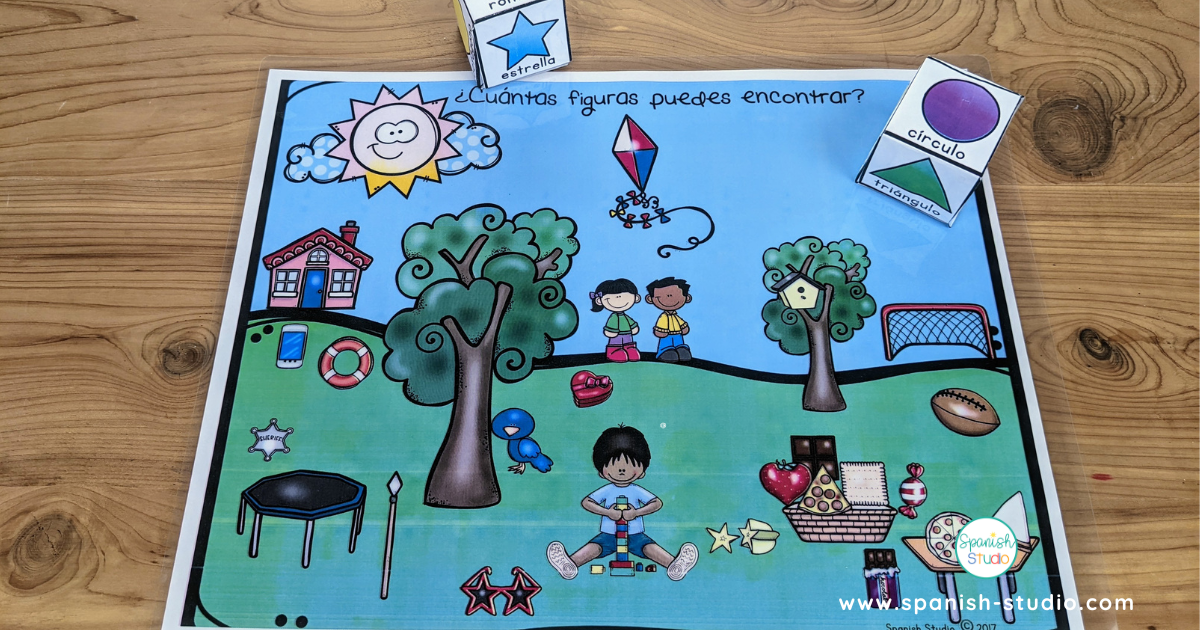
Roll and Find:
This game can be played both as an independent and/or centers activity. Students roll the shape dice and then find an item shaped like the one on their dice on their mat.
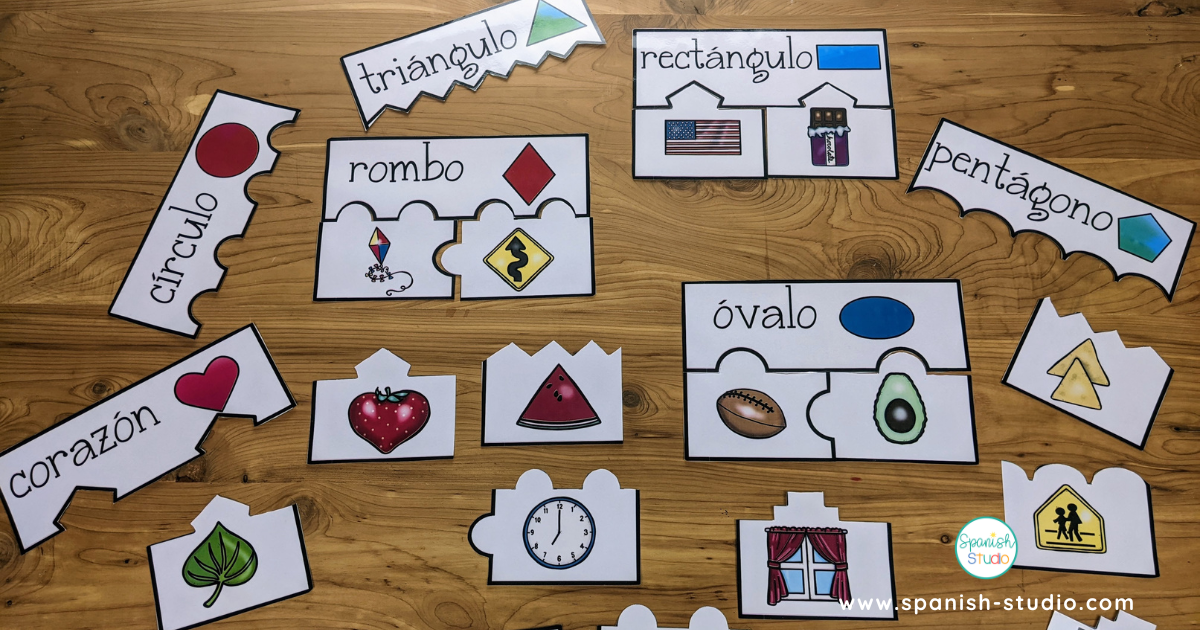
Shapes Puzzles:
Students sort and match real-world figuras geométricas.
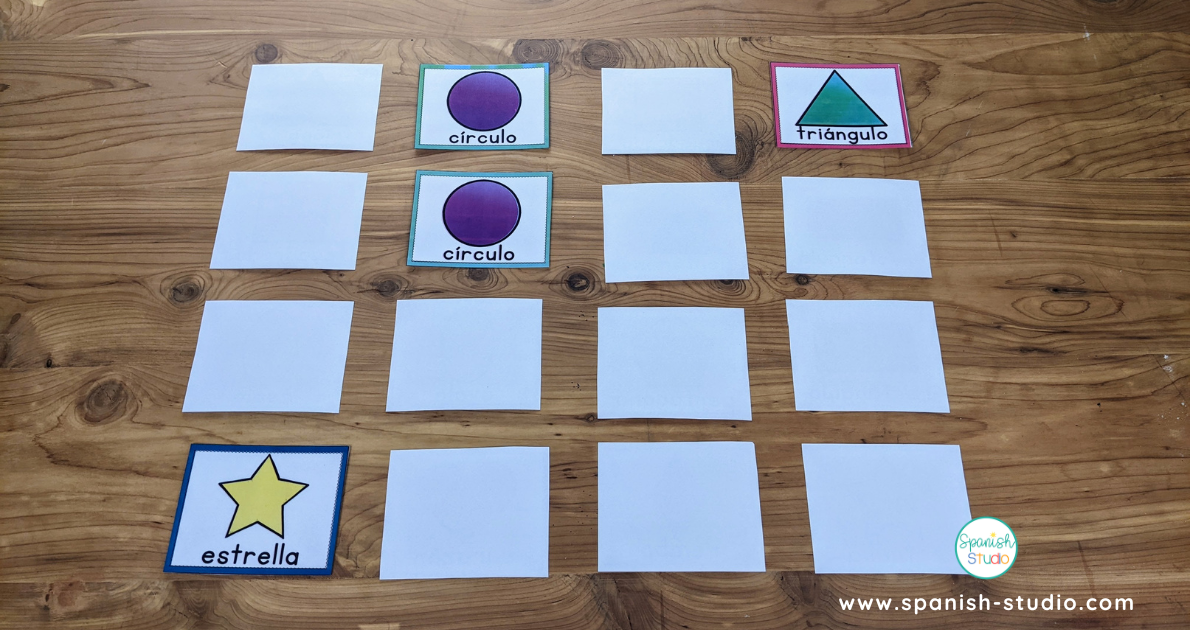
Memory Game / Find the Match:
Students use the cards to play the traditional Memory Game, or to Find the Match by going around the classroom to find another person with the same card.
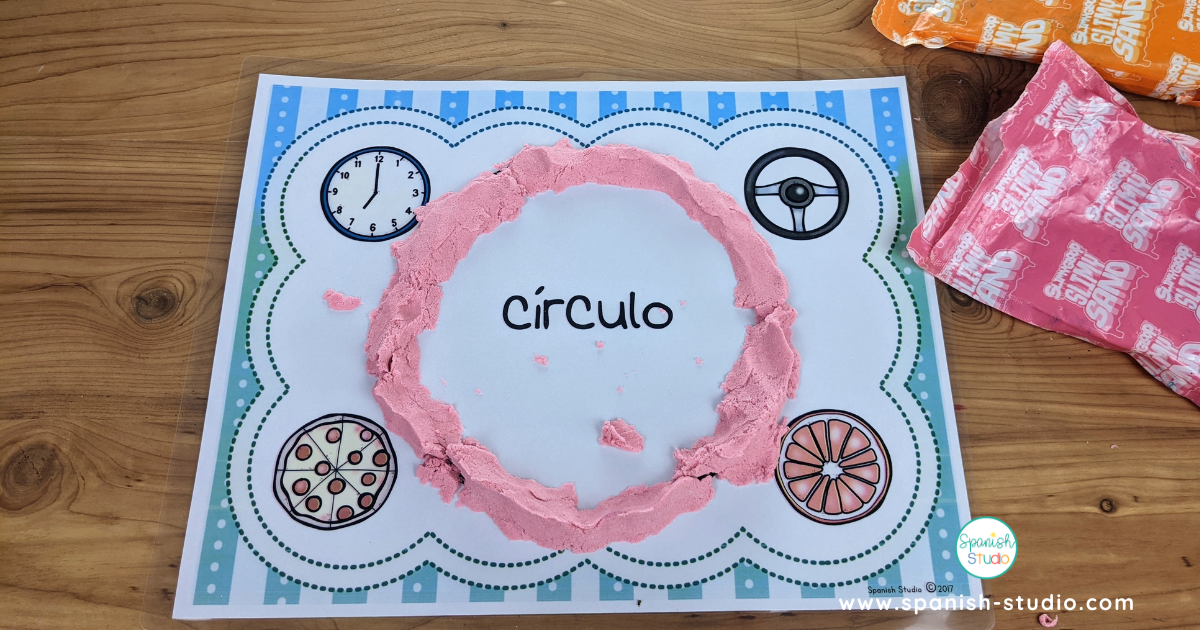
Shapes Play Dough Mats:
Students use the mats to model the figuras geométricas using play dough. It can also be used to glue different items, such as stickers, rice, or glitter.
Building Shapes:
In this activity, students color, cut, and sort the different figuras geométricas to form and discover a hidden animal.
Shapes Spoons Game:
This game is designed to be played just like the card game Spoons. Each player takes turns passing one card they don’t want to the player on their left, usually at one player’s signal to “Switch.” When a player has 4 matching cards, they quietly take a spoon from the center. As other players notice, they quietly take a spoon until one player is left without one. That player loses. It’s a fun, hands-on approach to practicing 2D shapes.
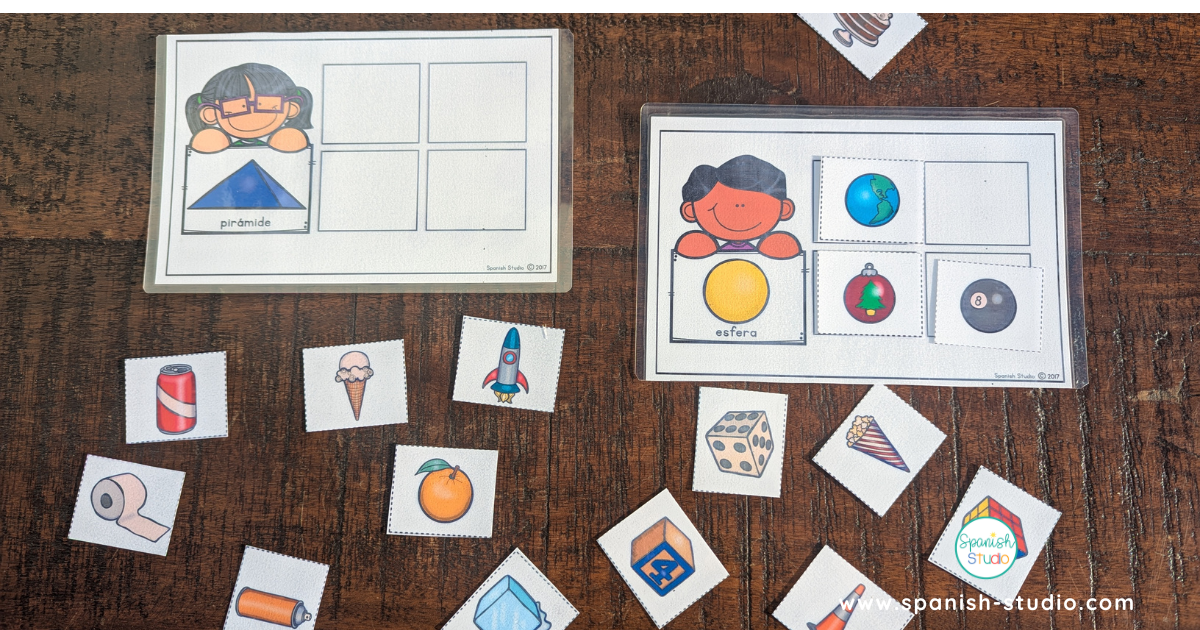
Sorting Mats:
Students sort different objects into the correct shape category.
Frequently Asked Questions About Shapes in Spanish
How do you say shapes in Spanish?
Shapes in Spanish are called “figuras geométricas”, for example, círculo (circle), cuadrado (square), triángulo (triangle), and rectángulo (rectangle). You may also see the more general word “forma” used, especially outside a math context.
What’s the difference between “forma” and “figura” in Spanish?
“Forma” is the general, everyday word for shape. “Figura,” especially in the phrase “figuras geométricas,” is more commonly used in a math or geometry context.
What age should kids start learning shapes in Spanish?
Most children can begin recognizing basic figuras geométricas as early as age 2-3, especially through books, songs, and hands-on play.
What’s the best way to teach shapes in Spanish to beginners?
Start with real objects and books using the TPRS method, pairing the shape word with something visual and tangible works better than flashcards alone.
How do you say “it has the shape of” in Spanish?
“Tiene la forma de un/una ___”, for example, “La pelota tiene la forma de un círculo” (The ball has the shape of a circle).
Interested in more?
Download my FREE Guide: “Simple Ways to Teach Spanish Like a Pro (even if you don’t speak Spanish)”